
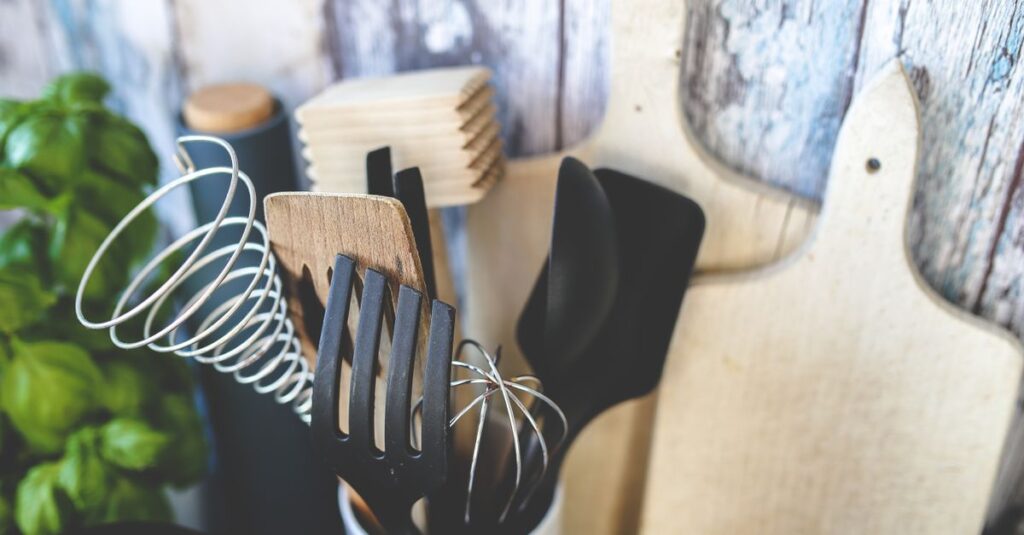
Your kitchen drawers are full of single-purpose tools doing one job while capable of five. These 15 kitchen hacks with everyday gadgets unlock the hidden second lives of tools you already own — no new purchases required. Each hack takes a familiar gadget and puts it to work in a way its marketing never mentioned, saving you time, dishes, or money. The best part: because these are tools you already reach for, the hacks slot into your cooking without any new learning curve.
Cutting and Prep Gadgets, Reimagined
1. Use kitchen shears to spatchcock a chicken in two minutes
Forget wrestling a whole bird with a chef\’s knife. Sturdy kitchen shears cut straight up both sides of the backbone, letting you flatten the chicken for even roasting. Why it works: shears give you far more leverage and control than a knife on bone and cartilage, and the two short cuts are safer than one long knife stroke near your fingers. A spatchcocked chicken roasts in about 45 minutes instead of 75, with crispier skin all over because every part sits at the same height.
2. Grate frozen butter with a box grater for flaky pastry
Freeze your butter solid, then grate it on the large holes of a box grater directly into your flour. Why it works: flaky pastry depends on pea-sized pieces of cold butter staying separate until they hit the oven, where they release steam and create layers. Grating frozen butter produces perfect, uniform shards in seconds — faster and more consistent than cutting with knives, and your warm hands never touch the butter to melt it.
3. Press fresh ginger through a garlic press for instant paste
Peel a knob of ginger and squeeze it through your garlic press. Why it works: the press\’s tiny holes shred the fibrous ginger into a fine paste while trapping the stringy fibers inside the chamber. You get smooth, potent ginger paste in seconds with no mincing and no fibrous bits in your stir-fry. It also works for softened lemongrass hearts and even anchovies for dressings.
4. Turn a bench scraper into your fastest ingredient transporter
After chopping, scoop everything up with a bench scraper instead of ferrying handfuls or balancing piles on a knife blade. Why it works: the wide, straight edge slides under chopped food and carries three times what your hands can, in one trip, with nothing falling on the floor. Professional cooks use bench scrapers constantly for exactly this reason — it is the most underrated five-dollar tool in the kitchen, and it doubles as a dough cutter.
5. Make paper-thin vegetable chips with a mandoline (plus the guard)
Slice potatoes, sweet potatoes, or beets on a mandoline slicer at 2mm, toss with oil and salt, and bake until crisp. Why it works: uniform 2mm slices dehydrate and crisp at exactly the same rate, which is impossible by hand. Always use the guard or a cut-resistant glove — mandolines are famously the most dangerous tool in home kitchens precisely because they are so effective. The result is chips better than most bagged ones, for pennies.
Cooking Gadgets Doing Double Duty
6. Blend one-jar mayonnaise with an immersion blender
Crack an egg into a tall jar, add oil, mustard, and lemon, then plunge an immersion blender to the bottom and blend upward slowly. Why it works: starting at the bottom creates the emulsion exactly where the egg meets the oil, and the blender\’s vortex pulls oil down gradually — the same principle as drizzling oil drop by drop, automated. You get thick mayonnaise in 60 seconds with one jar to wash instead of a food processor\’s five parts.
7. Speed up every boil with an electric kettle
Boil water in your electric kettle and pour it into the pot instead of waiting for the stovetop. Why it works: electric kettles heat water roughly twice as fast as most stovetops because the heating element is in direct contact with the water and the vessel is insulated. Pasta night drops from a 15-minute wait to five. It also gives you instant hot water for blooming gelatin, dissolving bouillon, or warming a teapot.
8. Use a digital thermometer for perfect fried and jammy eggs
A instant-read digital thermometer is not just for meat. Pull fried eggs when the whites hit 70°C (160°F) for fully set whites and runny yolks, or check jammy boiled eggs by timing plus a quick yolk check. Why it works: doneness is temperature, not time — pan thickness, burner power, and egg starting temperature all vary. The thermometer removes the guesswork from the most timing-sensitive two minutes in breakfast cooking.
9. Bake pizza on an inverted sheet pan as a pizza steel substitute
Flip a heavy rimmed sheet pan upside down, preheat it in your oven\’s hottest setting for 45 minutes, and launch your pizza onto it. Why it works: the preheated metal stores thermal energy and blasts it into the dough\’s underside on contact, mimicking the effect of a pizza stone or steel. You get a crisp, leopard-spotted crust from a pan you already own. A light dusting of semolina on the pan prevents sticking.
10. Mist oil with a spray bottle for lighter, even roasting
Fill a clean food-safe spray bottle with olive oil and mist vegetables instead of drizzling. Why it works: spraying atomizes the oil into a fine, even coat using a fraction of the amount — about a teaspoon versus a tablespoon per tray. Vegetables roast crisper with fewer calories, and air-fryer foods come out golden without pooling oil. Refillable sprayers beat aerosol cans, which contain propellants and cannot be refilled.
Cleaning, Measuring, and Storage Gadget Hacks
11. Dry herbs and wash berries in a salad spinner
Beyond lettuce: spin washed berries to remove the water that makes them mold, fluff fresh herbs dry so they chop cleanly, and even spin rinsed quinoa to remove excess water before toasting. Why it works: centrifugal force removes surface water in seconds without bruising delicate produce — far gentler and faster than towel-drying. Dry berries can last days longer in the fridge, and dry herbs will not turn to mush under your knife.
12. Grate garlic into a paste with a microplane
Skip mincing: drag peeled garlic across a microplane grater for an instant smooth paste. Why it works: the microplane\’s tiny etched teeth rupture more cell walls than chopping, releasing more of the pungent allicin compounds — so microplaned garlic tastes noticeably stronger and distributes evenly through dressings, marinades, and sauces with no chunks. It also turns hard cheese into snow and citrus zest into fragrant ribbons.
13. Use silicone muffin cups as mise en place bowls
Portion prepped garlic, spices, and chopped herbs into silicone muffin cups lined up on a tray. Why it works: a standard 12-cup setup holds an entire recipe\’s worth of small ingredients in a tidy, washable row that slides into the dishwasher afterward. It replaces a pile of ramekins and keeps your prep organized like a cooking show — which genuinely makes cooking calmer and faster when the pan is hot and timing matters.
14. Turn an over-the-sink colander into bonus counter space
An extendable over-the-sink colander or cutting board creates a prep station above your sink basin. Why it works: small kitchens run out of counter before they run out of cooking ambition. Rinse vegetables directly into the colander, chop on the board version, and let scraps fall straight into the sink for easy disposal. You have effectively added two square feet of workspace without remodeling anything.
15. Portion cookie dough and meatballs with a spring-loaded scoop
A cookie scoop set portions dough, meatballs, falafel, and even muffin batter into identical mounds. Why it works: uniform portions bake and cook evenly — no more tray where half the cookies are burnt and half are raw. The spring release drops each portion cleanly with zero sticking, and it is dramatically faster than rolling by hand. Three sizes cover everything from truffles to burger patties.
Why Second Uses Beat New Gadgets
Every gadget on this list earned its drawer space for its original job. Giving each one a second and third job multiplies the value of tools you already own while keeping your kitchen uncluttered — the opposite of the unitasker trap. The next time a tempting single-purpose gadget catches your eye, ask whether something you already own can do the job. The answer, more often than not, is yes.
Make These Gadgets Last: Quick Care Tips
Second-use hacks only pay off if the gadgets survive daily duty. A few low-effort habits protect the tools behind these tricks:
- Hand-wash shears and dry them immediately. Kitchen shears cut acidic foods and raw poultry; a quick hand-wash prevents pivot corrosion, and separating the blades on models designed for it lets you clean the hinge where gunk hides.
- Keep mandoline blades sharp and guarded. Rinse the blade after starchy vegetables before residue hardens, dry it fully to prevent micro-rust on the edge, and always store it with the guard on — a protected blade stays sharper and your fingers stay safer.
- Check your thermometer\’s accuracy occasionally. An ice-water bath should read 0°C (32°F); if yours drifts, recalibrate per the manufacturer\’s instructions. A thermometer reading five degrees high quietly overcooks everything you make.
- Clean oil sprayers monthly. Disassemble and wash with hot soapy water so rancid residue never taints fresh oil. If the pump weakens, a soak in warm vinegar water usually restores full spray pressure.
- Store microplanes with their covers on. Those etched teeth are razor-sharp and surprisingly delicate; the plastic cover the tool shipped with is the cheapest blade insurance you will ever own.
Treated well, every gadget in this guide lasts for years — which means these fifteen hacks keep paying dividends long after you have forgotten where you first learned them.
Frequently Asked Questions
What is the most versatile kitchen gadget most people underuse?
Kitchen shears, by a wide margin. Beyond spatchcocking chicken, they cut pizza cleanly, snip herbs directly into pots, trim pastry, open packaging, cut bacon into lardons, and halve grapes for toddlers. A good pair replaces half a drawer of specialized cutters, yet most cooks reach for them only to open bags.
Are mandoline slicers really that dangerous?
They command respect, not fear. Nearly all mandoline injuries happen when cooks skip the guard or glove for \”just one more slice.\” With the guard on or a cut-resistant glove worn, a mandoline is no more dangerous than a sharp knife — and it produces uniformity no knife can match. Never use one while distracted or rushing.
Can I use any spray bottle for cooking oil?
Use only bottles rated food-safe, since regular spray bottles may leach chemicals and their seals can degrade in oil. Dedicated oil sprayers use a pump mechanism with no propellants and disassemble for cleaning. Clean yours monthly with hot soapy water, because rancid oil residue will taint everything you spray.
Will an immersion blender really make mayonnaise that easily?
Yes — the tall-jar immersion method is famously reliable because the narrow jar forces the emulsion to form from the bottom up. Use a room-temperature egg, keep the blender head flat on the jar\’s bottom for 20 seconds, then tilt and lift slowly. If it breaks, blend in another yolk and it will come back together.
Why grate frozen butter instead of just using cold butter?
Frozen butter grates into thin shards that stay distinct in dough far longer than cubed cold butter, which your warm hands start melting the moment you handle it. More distinct butter pieces mean more steam pockets in the oven, which means flakier pie crust, biscuits, and scones. It is the fastest path to professional-level lamination without a pastry degree.
What should I look for when buying kitchen shears?
Choose shears that come apart for cleaning, since food and grease hide in the pivot. Look for sturdy, slightly serrated blades that grip slippery poultry skin, comfortable handles that fit your hand, and ideally a built-in bone notch or bottle opener. Good shears last decades; flimsy ones bend on the first chicken backbone.
