
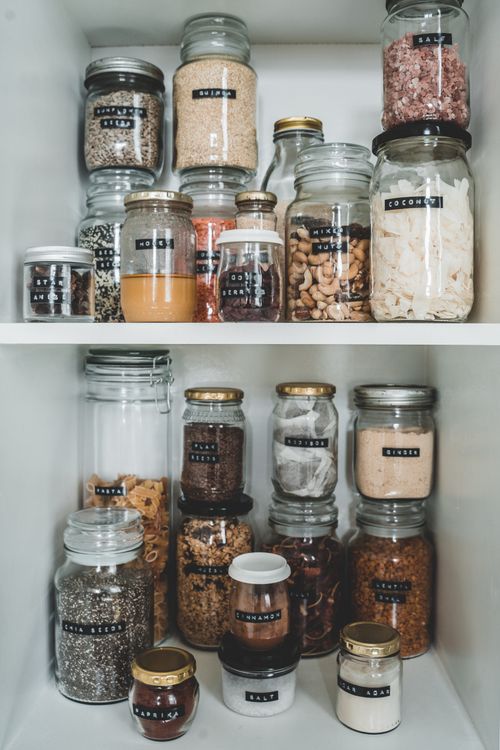
The best glass food storage containers of 2026 are the Pyrex Simply Store Set (18-piece) for its durable tempered glass, secure BPA-free lids, and unbeatable value — with the Bayco Glass Containers (24-pack) as the best bulk/meal-prep pick for its locking lids and uniform sizes, and the Rubbermaid Brilliance Glass as the best premium pick for crystal-clear stain-resistant glass and airtight latches. Glass containers don\’t stain, don\’t absorb odors, go from freezer to microwave to table, and outlast plastic by years.
Plastic containers warp, stain orange from tomato sauce, and absorb garlic odors permanently — and concerns about microplastics have many cooks switching. Borosilicate and tempered soda-lime glass solve all of it: non-porous, thermally stable, and endlessly reusable. This research-based guide compares the eight best glass food storage containers of 2026 based on published specifications (glass type, lid mechanisms, capacity ranges), and aggregated long-term owner reviews, plus a buying guide covering lids, sets vs singles, and thermal shock.
Best Glass Food Storage Containers 2026: Quick Comparison
| Model | Glass Type | Lid Style | Set Size | Standout Feature | Best For |
|---|---|---|---|---|---|
| Pyrex Simply Store 18-pc | Tempered | BPA-free snap | 9 containers | Value, proven durability | Best overall |
| Bayco 24-pack | Borosilicate | Locking (4-hinge) | 12 containers | Uniform meal-prep sizes | Best meal prep |
| Rubbermaid Brilliance Glass | Stain-resistant glass | Latching airtight | Various | Crystal clear, airtight | Best premium |
| OXO Good Grips Smart Seal | Borosilicate | 4-locking-tab | Various | Leakproof guarantee | Best leakproof |
| Prep Naturals 10-pack | Borosilicate | Locking | 5 containers | 3-compartment options | Best portion control |
| Anchor Hocking TrueSeal | Tempered | Locking | Various | American-made glass | Best value locking |
| Greener Chef 12-pc | Borosilicate | Bamboo + silicone | 6 containers | Plastic-free lids | Best plastic-free |
| Ello Duraglass 8-pc | Tempered | Silicone sleeve + lid | 4 containers | Drop protection | Best for kids/lunch |
Why Glass Beats Plastic for Food Storage
Glass is non-porous: tomato sauce, turmeric, and beet juice rinse off instead of staining permanently, and garlic and curry odors don\’t embed. It\’s thermally versatile — freezer to microwave to oven (lid off) without warping or chemical concerns — and it doesn\’t scratch into microplastic-shedding surfaces over time. A glass container bought today will still be going strong in a decade; plastic containers average a couple of years before warping, staining, or lid failure retires them.
The economics favor glass too. A quality glass set costs 2–3x a plastic set upfront but lasts 5x longer, making it cheaper per year while performing better throughout. And for meal prep specifically, glass\’s microwave-to-table ability (reheat and eat from the same dish) eliminates extra dishes — the workflow advantage that makes glass the meal-prep standard.
Glass is non-porous, thermally versatile, and lasts a decade where plastic lasts two years. For meal prep, the reheat-and-eat-from-one-dish workflow makes glass the standard.
How We Researched These Picks
We did not conduct hands-on lab testing. Our rankings are based on published specifications (glass type — borosilicate vs tempered soda-lime, lid mechanisms, capacity ranges, temperature ratings), leakproof claims, and aggregated long-term owner reviews from major retailers, cross-checked against meal-prep and kitchen-organization recommendations published through 2026. We weighted seal reliability, durability reports, stackability, and value.
1. Best Overall: Pyrex Simply Store 18-Piece Set
Why it stands out: Pyrex is the default for a reason: tempered glass that\’s survived generations of kitchens, secure-fitting BPA-free lids, and a 9-container size range covering everything from sauces to salads. The glass is microwave, dishwasher, and freezer safe; the price per container is unmatched. Decades of owner experience confirm the durability — these are the containers your grandmother\’s still using.
Key specs: 18 pieces (9 containers + 9 lids); tempered glass; BPA-free lids; microwave/dishwasher/freezer safe; stackable.
Who should buy it: Everyone starting or upgrading storage. Watch for: snap lids (not locking) — fine for fridge, less ideal for leakproof transport.
Amazon CTA: Check the current price of the Pyrex Simply Store Set on Amazon
2. Best Meal Prep: Bayco 24-Pack Glass Containers
Why it stands out: Bayco built its reputation on meal prep: uniform rectangular containers with four-hinge locking lids that are genuinely leakproof, borosilicate glass that handles thermal shock better than tempered, and bulk packs sized for a week of prepped meals. The locking lids survive backpack transport, and the uniform footprint stacks beautifully in fridges. The meal-prep community\’s default for good reason.
Who should buy it: Weekly meal preppers. Watch for: uniform sizes — supplement with a varied set for general storage.
Amazon CTA: Check the current price of the Bayco 24-Pack on Amazon
3. Best Premium: Rubbermaid Brilliance Glass
Why it stands out: Brilliance glass is engineered to stay crystal clear — stain-resistant and remarkably transparent, so you can see contents at a glance. The airtight latching lids with secure seals are genuinely leakproof, the glass is lighter than standard containers, and the stackable design is space-efficient. It\’s the premium experience: everything just works a little better.
Who should buy it: Buyers wanting the best regardless of price. Watch for: premium pricing; lighter glass needs normal care (it\’s still glass).
Amazon CTA: Check the current price of Rubbermaid Brilliance Glass on Amazon
4. Best Leakproof: OXO Good Grips Smart Seal
Why it stands out: OXO\’s four-locking-tab lids create a seal the brand backs with confidence — these are the containers for soups, dressings, and lunch bags where leaks are catastrophic. Borosilicate glass handles freezer-to-microwave transitions, the containers nest efficiently, and the fill lines help with portioning. When leakproof is the priority, locking tabs beat snap lids.
Who should buy it: Lunch packers and soup storers. Watch for: four tabs take seconds longer to open/close than snap lids.
Amazon CTA: Check the current price of the OXO Smart Seal on Amazon
5. Best Portion Control: Prep Naturals 10-Pack
Why it stands out: Prep Naturals offers 3-compartment containers that keep proteins, carbs, and vegetables separated — the bento-style layout that makes portion-controlled meal prep actually work. Borosilicate glass with locking lids, sized for standard meals, in packs built for a week of prepping. For fitness-focused eaters, the compartment design enforces portions without thinking.
Who should buy it: Portion-conscious meal preppers. Watch for: compartments limit flexibility for single-dish meals.
Amazon CTA: Check the current price of Prep Naturals Containers on Amazon
6. Best Value Locking: Anchor Hocking TrueSeal
Why it stands out: Anchor Hocking\’s TrueSeal line brings locking lids to tempered American-made glass at a value price. The containers are sturdy, the lids seal reliably, and the brand\’s century-plus of glassmaking shows in the quality. For buyers wanting locking-lid security without premium pricing, TrueSeal is the sweet spot.
Who should buy it: Value buyers wanting locking lids. Watch for: tempered (not borosilicate) — avoid extreme thermal shock.
Amazon CTA: Check the current price of Anchor Hocking TrueSeal on Amazon
7. Best Plastic-Free: Greener Chef 12-Piece
Why it stands out: Greener Chef pairs borosilicate glass with bamboo lids and silicone seals — no plastic touching your food at all. The bamboo lids are attractive enough for table serving, the silicone gaskets seal well, and the set covers common sizes. For households eliminating plastic from food contact entirely, this is the complete answer.
Who should buy it: Plastic-free households. Watch for: bamboo lids need hand-washing and occasional oiling; not microwave-safe (remove lid).
Amazon CTA: Check the current price of the Greener Chef Set on Amazon
8. Best for Kids/Lunch: Ello Duraglass 8-Piece
Why it stands out: Ello wraps tempered glass in protective silicone sleeves — drop protection for lunchboxes, backpacks, and kid hands. The airtight lids leakproof the contents, the sleeves add grip, and the containers still go from fridge to microwave (sleeve on). The best glass option where breakage is a real concern.
Who should buy it: Parents and commuters. Watch for: sleeves add bulk; fewer size options than standard sets.
Amazon CTA: Check the current price of the Ello Duraglass Set on Amazon
Glass Container Buying Guide
Borosilicate vs Tempered Glass
Borosilicate resists thermal shock best — safer for freezer-to-oven transitions. Tempered soda-lime (Pyrex, Anchor Hocking) is tougher against impacts and cheaper, but more vulnerable to extreme temperature swings. For typical fridge-to-microwave use, both excel; for oven use or extreme transitions, borosilicate has the edge.
Lid Types: Snap vs Locking vs Bamboo
Snap lids (Pyrex Simply Store): fast, fine for fridge storage. Locking lids (4-hinge): leakproof for transport — essential for lunch bags and soups. Bamboo + silicone: plastic-free and attractive, but hand-wash and not microwaveable. Match the lid to the job: locking for transport, snap for home, bamboo for plastic-free.
Sets vs Individual: Building Your Collection
Starter sets (Pyrex 18-pc) cover general needs cheaply. Meal preppers should add uniform locking containers (Bayco) in bulk. Specialty needs — compartments, rounds for salads, small sauce containers — fill in individually. Avoid the trap of 30 mismatched containers; a curated set of 10–15 quality pieces beats a chaotic drawer.
Thermal Shock and Care
Never move glass directly from freezer to a hot oven (or boiling water) — extreme rapid temperature change can shatter even borosilicate. Fridge-to-microwave is fine; let frozen containers thaw slightly before oven use. Always remove lids (or vent them) before microwaving, and avoid extreme temperature swings as a habit.
Pro Tips
- Cool before sealing: Let hot food cool to room temp (under 2 hours for safety) before lidding and refrigerating — sealing steam creates condensation and sogginess.
- Leave headspace for freezing: Liquids expand — fill to ¾ for freezer storage to prevent lid-popping.
- Label with dates: Painter\’s tape and a marker on the lid — the 3–4 day leftover rule is easier to follow when dated.
- Store lids separately: Nest containers, file lids vertically in a rack — the classic chaos drawer is avoidable.
- Vent when microwaving: Crack the lid or use the vent — sealed containers build steam pressure.
- Deodorize with baking soda: A baking soda paste removes any lingering odors from lids (glass itself won\’t hold them).
Food Storage FAQs
Are glass food storage containers better than plastic?
Yes for most uses — glass doesn\’t stain, absorb odors, or warp; handles freezer-to-microwave transitions; and lasts far longer. Plastic wins on weight, drop-resistance, and price. For daily food storage and meal prep, glass is the better long-term investment.
Can glass containers go from freezer to microwave?
Yes — that\’s a core advantage, but avoid extreme shocks (don\’t add boiling water to a frozen container). Let frozen glass sit a few minutes, remove or vent the lid, and microwave normally. Borosilicate handles transitions better than tempered.
How do I prevent my containers from leaking?
Use four-hinge locking lids for anything liquid or transported — snap lids aren\’t reliably leakproof. Check silicone gaskets for food debris and damage, don\’t overfill, and replace worn gaskets. OXO Smart Seal and Bayco locking lids are proven leakproof designs.
What size containers do I need for meal prep?
24–32 oz rectangular containers suit standard meals; 3-compartment versions help portion control. A week\’s prep for one person needs 5–7 containers plus a few small ones for sauces and snacks. Uniform sizes stack best in the fridge.
How long do leftovers last in glass containers?
3–4 days refrigerated for most cooked foods (USDA guideline) — glass\’s airtight seals help reach the full window. Freeze what you won\’t eat in time; properly sealed glass keeps frozen meals well for 2–3 months. Date everything.
Can you bake in glass food storage containers?
Oven-safe glass containers (check the rating — many handle to 450°F+) work for baking, but remove lids first and avoid thermal shock. They\’re great for baked pasta, gratins, and meal-prep bakes that go straight to storage. Not all storage glass is oven-rated — verify yours.
How do I organize mismatched container lids?
Switch to uniform sets (the real fix), nest containers by size, and file lids vertically in a dish rack or organizer. Discard containers missing lids and lids missing containers — the \”maybe it\’ll match\” drawer is where kitchen sanity goes to die.
Building a System: The 15-Piece Starter Kit
Instead of accumulating random containers, build deliberately. A practical starter system: 4 large rectangles (32–40 oz) for meal prep mains, 4 medium (20–28 oz) for sides and salads, 4 small rounds (8–16 oz) for sauces, snacks, and dressings, 2 large rounds for salads and serving, and 1–2 compartment containers if you portion-control. That\’s 15–16 pieces covering 95% of storage needs — and because they\’re uniform within brands, lids interchange and everything stacks.
Buy in this order: a general set first (Pyrex Simply Store), then bulk locking rectangles for meal prep (Bayco), then specialty pieces individually. Resist novelty shapes — rectangles stack best in fridges, rounds suit salads and serving. And standardize on one or two brands: mixed collections are where lid chaos begins.
