
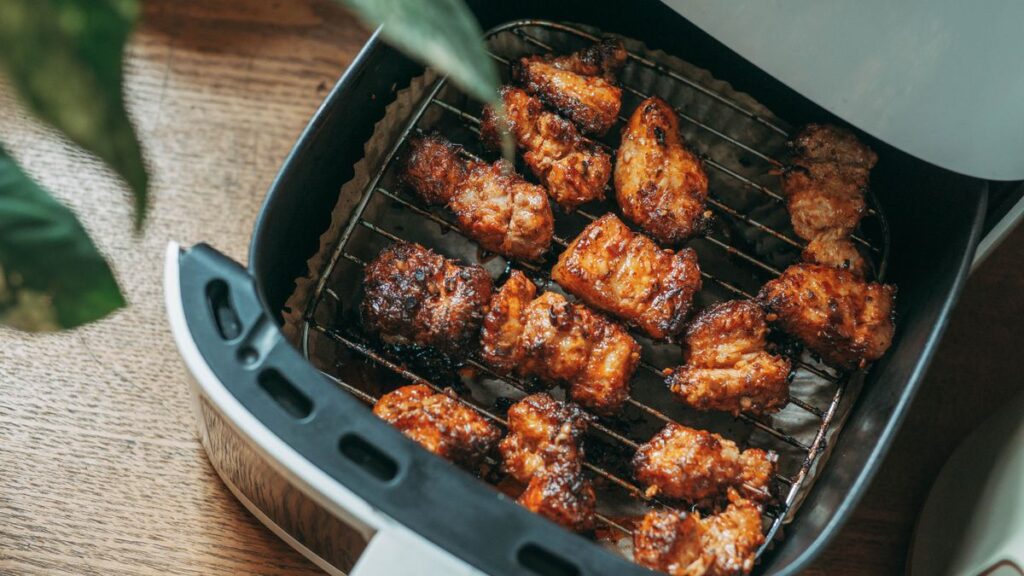
If you can only keep one countertop appliance, the air fryer vs microwave debate matters more than ever in 2026. Here is the short answer: an air fryer wins for anything you want crispy, browned, or roasted, while a microwave wins for pure speed, reheating liquids, and defrosting. Most busy kitchens benefit from both, but if crispiness matters to you, the air fryer is the one to keep.
Both appliances promise fast food with minimal effort, yet they cook in completely opposite ways. Understanding those differences is the key to choosing wisely, because the wrong pick means soggy fries or a ten-minute wait for reheated soup. This guide compares them head to head on texture, speed, versatility, energy use, health, and cost, so you can decide with confidence.
How Each Appliance Actually Cooks
Before comparing results, it helps to know what is happening inside each machine. The cooking method explains nearly every difference you will taste.
Air fryer: a small, fierce convection oven
An air fryer is essentially a compact convection oven with a powerful fan. A heating element warms the air, and the fan circulates that hot air rapidly around the food at temperatures typically between 175°F and 400°F (80°C to 200°C). The perforated basket lets hot air reach every surface, which is why food browns and crisps with only a teaspoon or two of oil.
Because the cooking chamber is small, it preheats in two to three minutes, far faster than a full-size oven. Popular models like the Cosori TurboBlaze and Ninja AF101 use basket capacities of 4 to 5.5 quarts, enough for two to four servings. The Maillard reaction, the browning that creates flavor and crunch, happens readily in this dry, circulating heat.
Microwave: exciting water molecules
A microwave oven uses electromagnetic waves at 2.45 GHz to make water, fat, and sugar molecules vibrate, generating heat from within the food itself. There is no hot air and no browning element in a standard model, which is why microwaved food steams rather than crisps.
Microwaves excel at speed because energy penetrates food directly instead of conducting inward from the surface. A standard countertop microwave draws 900 to 1,200 watts and reheats a bowl of soup in about two minutes. Inverter models from Panasonic deliver steadier power at low settings, reducing the rubbery edges that plague older microwaves.
Air Fryer vs Microwave: Head-to-Head Comparison
The table below summarizes the key differences, followed by a detailed breakdown of each category.
| Category | Air Fryer | Microwave |
|---|---|---|
| Best for | Crispy, browned, roasted foods | Reheating, defrosting, steaming |
| Texture | Crisp and golden exterior | Soft, steamed texture |
| Typical cook time | 8–25 minutes | 1–5 minutes |
| Preheat needed | 2–3 minutes | None |
| Energy per use | Lower for small batches | Lowest overall |
| Versatility | Fries, wings, roasts, bakes, reheats crisply | Reheats, defrosts, melts, steams, pops corn |
| Cleanup | Basket and tray, usually dishwasher-safe | Wipe the interior cavity |
| Counter footprint | Medium to large | Large |
| Average price 2026 | $80–$200 | $70–$180 |
Crispiness and texture: air fryer wins by a mile
This is the least debatable round. Hot circulating air drives moisture off the food surface, creating the crunch that makes french fries, chicken wings, and breaded cutlets satisfying. A microwave does the opposite: it heats water inside the food, and escaping steam softens coatings. Reheat pizza in a microwave and the crust goes limp; reheat it in an air fryer at 375°F for three to four minutes and the cheese re-melts while the crust re-crisps.
Frozen snacks are the clearest demonstration. Mozzarella sticks, samosas, and spring rolls emerge from an air fryer audibly crunchy with a light spritz of oil, while the microwave leaves them pale and chewy. If texture is your priority, the air fryer is the obvious winner.
Speed: microwave wins for reheating
For pure speed, nothing beats a microwave. Reheating leftovers takes one to three minutes with zero preheat. An air fryer needs two to three minutes to preheat plus five to ten minutes of cook time for the same leftovers, though the result tastes noticeably better.
The gap narrows for cooking from raw. An air fryer cooks chicken thighs in about 20 minutes including preheat, while a microwave would take roughly 12 minutes but produce rubbery, unevenly cooked meat. Speed without quality is a hollow victory, so consider what you are actually cooking.
Versatility: it depends on your cooking style
Microwaves handle a surprising range of tasks: defrosting meat safely, melting chocolate and butter, steaming vegetables, cooking rice, popping popcorn, and softening ice cream. They are the Swiss Army knife of reheating.
Air fryers cover a different range: roasting vegetables, cooking proteins from fresh or frozen, baking small-batch cookies and muffins, toasting, and reviving anything fried. Many 2026 models add dehydrate, proof, and grill functions. Neither appliance replaces a stovetop or oven entirely, but the air fryer replaces the oven more often for small households.
- Choose the air fryer if you cook proteins, frozen foods, and roasted vegetables regularly.
- Choose the microwave if your main needs are reheating coffee, leftovers, and quick defrosting.
- Keep both if you have the counter space; they complement rather than duplicate each other.
Energy use: both beat a full oven
Running a full-size electric oven at 400°F draws around 2,000 to 5,000 watts and heats your whole kitchen. An air fryer typically draws 1,400 to 1,800 watts but finishes faster in a smaller chamber, using roughly half the energy of an oven for the same batch of fries. A microwave uses 900 to 1,200 watts for very short bursts, making it the most energy-efficient option for reheating single portions.
For small households, either appliance meaningfully cuts electricity bills compared with heating a full oven for one or two servings. The microwave edges ahead on pure efficiency; the air fryer wins when the alternative is oven-cooking something that needs browning.
Health and nutrition
Air fryers earned their reputation by delivering fried-style crunch with up to 75 percent less oil than deep frying, according to manufacturer-cited studies. Less oil means fewer calories with satisfying texture, which helps explain the appliance\’s staying power. Microwaving preserves nutrients well because cook times are short and little water is needed; steamed microwave vegetables retain more vitamin C than boiled ones.
Neither appliance is inherently unhealthy. The health factor comes down to what you cook: an air fryer full of breaded frozen snacks is still processed food, and a microwave full of vegetables is still nutritious. Use the air fryer to make healthier versions of crispy cravings, and the microwave for quick, gentle reheating.
Cost and counter space
Prices overlap heavily. Decent air fryers run $80 to $200 in 2026, with dual-basket and smart models at the top end. Countertop microwaves run $70 to $180, with inverter and convection-microwave combos costing more. Both occupy significant counter space, and owning both is a real commitment in a small kitchen.
Durability is comparable: expect five to eight years from either with normal use. Air fryer nonstick baskets eventually wear and may need replacement, while microwave doors and turntables rarely fail. Factor in replacement baskets ($20–$40) when budgeting for an air fryer.
Which Should You Buy? Practical Buying Tips
Match the appliance to your actual habits, not aspirational ones. Ask yourself what you cooked last week, not what you imagine cooking next year.
- Buy the air fryer first if you eat frozen foods, chicken, roasted vegetables, or anything breaded more than twice a week. Look for at least 5 quarts of capacity for a family, a dishwasher-safe basket, and a temperature range up to 400°F or higher.
- Buy the microwave first if you mostly reheat leftovers, warm drinks, defrost meat, and cook for one. An inverter model reheats more evenly and is worth the small premium.
- Consider a combo if space is tight: microwave-air fryer combination units exist in 2026, though they cost more and each function performs slightly below a dedicated unit.
- Check your cookware: air fryers need no special dishes, while microwaves require microwave-safe containers. Metal never goes in a microwave.
- Measure your counter before ordering. Both appliances need clearance around vents, and an air fryer needs several inches behind it for hot exhaust.
2026 Trends: The Lines Are Blurring
The most interesting development in 2026 is convergence. Manufacturers now sell combination appliances that air fry, microwave, bake, and convection-cook in one chassis. Breville\’s combi-wave style ovens and similar models from Toshiba and Panasonic aim to end the either-or debate entirely, though at $300-plus they cost as much as both appliances separately.
Smart features are the other trend. Wi-Fi-connected air fryers with app-guided cooking programs and microwaves with humidity sensors that adjust time automatically are moving from premium to mid-range. Voice control through Alexa and Google Home is increasingly standard. These features are genuinely useful for beginners but optional for experienced cooks.
Sustainability is also shaping design: brands are advertising longer-lasting ceramic nonstick baskets, replaceable parts, and energy-saving eco modes. If you are replacing an aging appliance in 2026, the new generation is more efficient and more repairable than models from five years ago.
5 Mistakes to Avoid When Choosing Between Them
Shoppers routinely regret this purchase for avoidable reasons. Sidestep these five traps and you will love whichever appliance you bring home.
Mistake 1: Buying for aspirational cooking. The air fryer only saves you if you actually cook the foods it excels at. If your freezer holds no frozen snacks and you never roast vegetables, that shiny basket becomes a dust collector. Audit last month\’s meals before you buy, not next year\’s imagined ones.
Mistake 2: Ignoring the household count. A 2-quart air fryer cannot serve a family of five, and a giant microwave overwhelms a dorm-style kitchen. Air fryer capacity should roughly match your household: 3–4 quarts for one or two people, 5-plus quarts for families. Microwaves follow the same logic with 0.9 cubic feet suiting most couples.
Mistake 3: Forgetting about ventilation. Air fryers vent hot air from the rear and need several inches of clearance; tucking one under low cabinets traps heat and shortens its life. Microwaves need clearance too, especially over-range models. Measure your spot, including height, before ordering.
Mistake 4: Assuming one replaces the other. They overlap far less than marketing suggests. The air fryer cannot defrost a chicken breast in minutes or reheat soup in ninety seconds; the microwave cannot crisp anything. Buying an air fryer and donating the microwave usually ends with a microwave reappearing within months.
Mistake 5: Skipping the wattage check on old wiring. Air fryers draw 1,400–1,800 watts, which can trip breakers in older kitchens when the toaster runs simultaneously. If your kitchen shares a 15-amp circuit with other heavy appliances, plan which devices run together or consult an electrician before adding a high-draw appliance.
Frequently Asked Questions
Can an air fryer replace a microwave?
Partially. An air fryer reheats pizza, fries, and breaded foods far better than a microwave, and it cooks raw proteins beautifully. But it cannot defrost a chicken breast in minutes, reheat soup as fast, or warm a mug of milk in ninety seconds. Most people who ditch the microwave miss it within a month.
Which uses less electricity, air fryer or microwave?
The microwave uses less electricity per task because it runs at lower wattage for shorter times. An air fryer typically draws 1,400 to 1,800 watts for 10 to 25 minutes, while a microwave draws 900 to 1,200 watts for one to five minutes. Both are far cheaper to run than a full-size oven.
Is air-fried food actually healthier than microwaved food?
It depends on the food, not the appliance. Air frying uses far less oil than deep frying, cutting calories while keeping crunch. Microwaving preserves nutrients well thanks to short cook times. Neither method adds anything unhealthy; the ingredients you choose matter far more than the appliance.
Can you put aluminum foil in an air fryer?
Yes, aluminum foil is safe in an air fryer as long as it does not block all airflow or touch the heating element. Do not put foil in a microwave, where it causes sparking. This is one practical advantage of the air fryer for easy cleanup and wrapping.
What cooks better in a microwave than an air fryer?
Liquids and soft foods: soup, oatmeal, steamed vegetables, melted chocolate, defrosted meat, and reheated coffee all favor the microwave. Anything needing browning, crisping, or roasted flavor favors the air fryer. Delicate reheating of sauces also works better with a microwave\’s gentle, even energy.
Should I buy a microwave-air fryer combo unit in 2026?
Combo units save counter space and suit small kitchens, but each function is usually a step below a dedicated appliance, and they cost $250 to $400. Buy one if space is your top constraint; otherwise, two dedicated mid-range appliances give better results for similar money.
The Bottom Line
In the air fryer vs microwave matchup, there is no universal winner, only the right tool for your habits. Choose the air fryer if crispy texture, roasted flavor, and healthier fried-style food drive your cooking. Choose the microwave if speed, reheating, and defrosting dominate your routine. If your budget and counter allow, owning both covers nearly every quick-cooking scenario, and 2026\’s combo units offer a respectable middle path for tight kitchens.
