
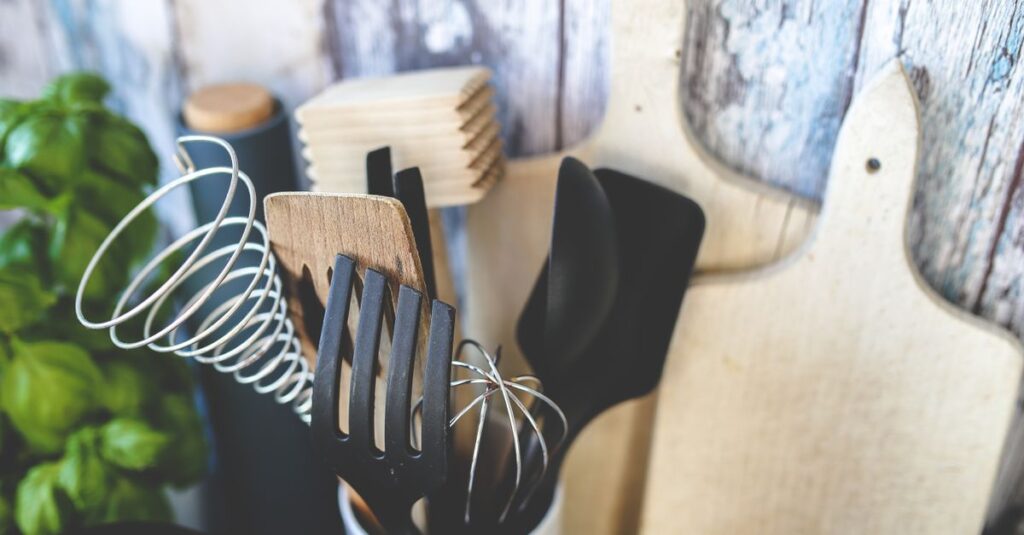
Small kitchen gadgets 2026 prove you do not need a big kitchen to cook big flavors. Short answer: the year\’s best compact tools match full-size performance for one-to-two-person households while folding, nesting, or disappearing into drawers. This guide covers the compact trend, the smartest space-saving picks by category, and how to build a tiny-kitchen toolkit that actually works.
More people cook in small kitchens than ever, and manufacturers finally design for them first rather than shrinking big appliances as an afterthought. Here is how to equip a compact kitchen without compromise.
The Compact Design Trend in 2026
Three forces drive the 2026 compact wave: urban living with genuinely tiny kitchens, minimalism as a lasting lifestyle, and engineering that finally delivers full performance in small packages. Slim-profile air fryers, 3-cup food processors, collapsible tools, and nesting cookware sets are designed from scratch for small spaces rather than scaled down reluctantly.
The key insight: compact works when capacity matches household size. A 3.5-quart air fryer is perfect for one or two people, wasteful for six. Buy for the household you have, and compact tools stop feeling like compromises.
Space-Saving Picks by Category
Cooking appliances
Slim air fryers (3–4 quart) from brands like Cosori and Ninja handle daily cooking for couples while occupying half the counter of family models. Compact toaster ovens with air-fry modes replace both a toaster and a fryer. A 3-quart Instant Pot-style multicooker covers pressure cooking, slow cooking, and rice for small households without the 6-quart footprint.
- Rule: 3–4 quart capacity serves 1–2 people; do not buy bigger \”just in case.\”
- Vertical wins: tall, narrow appliances use less counter than wide, short ones.
- Lid trick: pressure-cooker lids that also air-fry eliminate a second appliance entirely.
Prep tools
A quality immersion blender with chopper and whisk attachments replaces a countertop blender, food processor, and hand mixer for most small-kitchen tasks, living in a single drawer. Compact 3-cup food processors handle daily chopping without the 14-cup bowl\’s storage burden. Nesting measuring cups, collapsible colanders, and folding cutting boards reclaim drawer and cabinet space.
Cookware
Detachable-handle cookware sets, popularized by brands like Carote , stack pans compactly and move from stovetop to oven to table. One good 10-inch skillet, one 2-quart saucepan, and one Dutch oven cover most small-kitchen cooking; everything beyond that should justify its cabinet space with weekly use.
Storage and organization
Magnetic knife strips free an entire drawer or counter block. Over-sink dish racks and roll-up drying mats disappear when not in use. Wall-mounted rails with hooks hold utensils, and inside-cabinet-door organizers hide spices and wraps. In small kitchens, organization gadgets are as valuable as cooking gadgets.
The Minimalist Toolkit: What You Actually Need
A well-equipped small kitchen needs fewer tools than most people own. The honest essentials:
| Category | The One Tool | Why It Wins |
|---|---|---|
| Blending/prep | Immersion blender set | Blends, chops, whisks; drawer storage |
| Fast cooking | 3–4 qt air fryer | Replaces oven for small batches |
| One-pot meals | 3-qt multicooker | Pressure, slow, rice in one |
| Knives | 8-inch chef\’s knife | Does 95% of cutting tasks |
| Pans | 10-inch skillet + saucepan | Daily drivers, stack neatly |
| Precision | Thermometer + scale | Tiny tools, huge results |
| Brewing | Gooseneck kettle | Tea, coffee, instant meals |
Everything beyond this list should pass the weekly-use test. Small kitchens punish \”maybe someday\” purchases with clutter that makes daily cooking harder.
Layout Tips That Multiply Space
- Go vertical: walls hold knives, utensils, pots, and spices that would consume drawers and counters.
- Decant ruthlessly: bulky packaging wastes cabinet space; transfer staples to stackable square containers.
- One in, one out: every new gadget must replace or clearly outperform something you own.
- Use dead zones: the cabinet above the fridge, inside door panels, and under-sink areas all store real tools.
- Fold and nest: prefer collapsible and nesting versions of colanders, bowls, measuring cups, and storage.
Buying Tips for Compact Gadgets
- Check real dimensions, not just capacity: a \”compact\” appliance that is tall may not fit under your cabinets.
- Prioritize multifunction: in small kitchens, every tool should do at least two jobs well.
- Test the weight: compact tools you lift daily (kettles, blenders) should feel effortless, not just small.
- Avoid mini versions of bad designs: a terrible full-size gadget shrunk down is still terrible. Read reviews of the specific compact model.
- Plan the home first: know exactly where a new tool will live before buying. No home, no purchase.
2026 Compact Innovations Worth Watching
Cordless appliances are the exciting frontier: battery-powered immersion blenders, kettles, and even compact food processors cut cord clutter, the bane of small counters. Fold-flat appliances, from collapsible kettles to folding air fryers in concept stages, promise tools that vanish into drawers. Magnetic modular systems let attachments share one motor base, shrinking the multi-gadget footprint to a single dock.
Expect the compact category to keep growing as urbanization continues; it is a structural trend, not a fad.
Small-Kitchen Layouts That Actually Work
Tools matter, but layout multiplies their value. These principles turn cramped kitchens into efficient ones.
The work triangle, compressed: Even in galley kitchens, keep the sink, stove, and prep area within a few steps. Store prep tools (knives, boards, bowls) between sink and stove, cooking tools (spatulas, oils, spices) beside the stove, and cleaning supplies under the sink. Every frequently used item should live at its point of use, not across the kitchen.
Vertical is your extra cabinet: A magnetic knife strip, a wall rail with hooks for utensils and small pans, and shelf risers inside cabinets can double effective storage without renovation. The backs of cabinet doors hold spice racks, wrap organizers, and measuring tools. In rentals, adhesive and tension-mounted options achieve most of this without drilling.
Clear the counters ruthlessly: A small counter buried under appliances is unusable; the same counter with one daily appliance and clear space is a joy. Store weekly-use appliances in accessible cabinets, not on the counter. The discipline of putting tools away after use matters more in small kitchens than any organizer.
Mobile and multi-use surfaces: A rolling cart adds prep space and storage that tucks away when not needed. A large cutting board over the sink creates instant extra counter. Fold-down tables serve as prep stations in truly tiny kitchens. Think of surfaces as flexible, not fixed.
The One-In-One-Out Maintenance System
Small kitchens stay functional through discipline, not just good purchases. The one-in-one-out rule is the entire maintenance system: every new tool that enters must replace something or prove it earns space the old tool did not.
Quarterly audits keep entropy at bay: Every three months, pull everything from one cabinet or drawer and ask of each item: did I use this in the last 90 days? Items failing the test get donated, relocated to deep storage, or discarded. Kitchens accumulate aspirational tools silently; audits evict them.
The 30-day new-gadget quarantine: When a new tool arrives, keep its box for 30 days. If you have not reached for it weekly by day 30, return or donate it before it becomes permanent clutter. This habit alone prevents most small-kitchen regret purchases.
Gift boundaries help too: Well-meaning relatives gift single-use gadgets relentlessly. A polite wishlist of consumables (good olive oil, quality spices) or experiences redirects generosity away from your drawers. Your kitchen, your rules.
Small-Kitchen Cooking Strategies
Limited space demands adapted techniques. These strategies make small-kitchen cooking genuinely enjoyable rather than merely tolerable.
Mise en place is mandatory, not optional: In a big kitchen you can chop as you go; in a small one, clutter compounds instantly. Prep everything before heating any pan: chopped ingredients in small bowls, spices measured, tools laid out. The French discipline of \”everything in its place\” was invented for constrained professional kitchens and applies perfectly at home.
Cook in sequence, not parallel: Small stoves have two usable burners and small counters hold one cutting board. Plan meals as sequences: cook grains first and hold them, then proteins, then quick vegetables in the same pan. One-pot and sheet-pan meals are small-kitchen superpowers because they collapse the whole dinner into a single vessel.
Clean as you go, aggressively: In a tiny kitchen, a sink full of dishes eliminates your prep space. Wash tools the moment they are done: the cutting board while the pan heats, the prep bowls while food rests. This rhythm keeps the small workspace continuously usable and makes cooking feel calm instead of chaotic.
Embrace the capsule menu: Rotate 10–15 mastered meals rather than attempting endless variety. Deep familiarity with a compact repertoire means faster shopping, less waste, and better results than ambitious variety executed poorly. Small kitchens reward mastery over novelty.
Renters\’ Guide: Upgrades Without Renovation
Tension and adhesive solutions: Tension rods create under-sink storage divisions; adhesive hooks hold utensils inside cabinet doors; magnetic strips mount with heavy-duty adhesive rated for the weight. Most small-kitchen organization needs zero drilling, protecting your security deposit.
Portable power: A quality portable induction burner adds a \”third burner\” anywhere with an outlet, invaluable for small stoves. Rolling carts add prep space and storage that moves where needed. Countertop ovens reduce dependence on terrible rental ovens without any installation.
What to ask landlords about: Over-range microwaves can sometimes be replaced with landlord approval; better lighting (battery LED strips) transforms usability; and a decent faucet aerator is a five-minute upgrade most landlords welcome. Document everything and keep originals for move-out.
Invest in movables, not fixtures: Every dollar should go into tools you take with you: great knives, the multicooker, quality containers. Avoid customizing the rental itself beyond reversible tweaks. Your toolkit compounds across apartments; the apartment does not follow you.
Frequently Asked Questions
What size air fryer is best for a small kitchen?
For one or two people, 3–4 quarts is ideal: it cooks real meals while fitting small counters and cabinets. Larger households need 5-plus quarts. Measure your available counter depth and height clearance before choosing, since \”compact\” models vary widely.
Can one appliance replace several in a tiny kitchen?
Yes, strategically. A multicooker with an air-fryer lid replaces a pressure cooker, slow cooker, rice cooker, and air fryer at about 80 percent performance each. An immersion blender set replaces a blender, mini-processor, and hand mixer. Two or three smart combos cover nearly everything.
How do I store appliances in a small kitchen?
Use daily tools on the counter, weekly tools in accessible cabinets, and monthly tools in high or deep storage. Appliance garages, rolling carts, and over-fridge cabinets all help. The real secret is owning fewer appliances: every eliminated tool is storage solved.
Are compact appliances less powerful?
Not necessarily. Many compact models use the same wattage as full-size versions in smaller chambers, which can actually cook faster. Where compacts compromise is capacity, not power. Check wattage and reviews rather than assuming small means weak.
What is the best way to organize a tiny kitchen?
Zone by task (prep, cooking, brewing), go vertical with walls and door backs, decant into stackable containers, and enforce one-in-one-out. Clear counters matter more than clever organizers: a clean small counter beats a cluttered large one for actual cooking.
Should I buy a full knife set for a small kitchen?
No. One excellent 8-inch chef\’s knife plus a small paring knife handles nearly everything, stored on a magnetic strip that uses zero counter or drawer space. Block sets waste precious room on knives you will never reach for.
What is the single best upgrade for a tiny kitchen?
A rolling cart. It adds prep surface, storage, and serving space that moves where needed and tucks away after. No other purchase multiplies a small kitchen\’s functionality so dramatically for so little money. Choose one with locking casters and a butcher-block top for maximum versatility.
How do I keep a small kitchen from feeling cluttered?
Limit visible items to daily essentials, store everything else behind closed doors, and choose a cohesive color palette for visible tools. Visual calm comes from concealment and consistency more than from minimalism alone. A small kitchen with hidden storage feels twice its size.
The Bottom Line
Small kitchen gadgets 2026 make compact cooking genuinely uncompromised: right-sized appliances, multifunction tools, and clever storage designed for real apartment life. Build around a few hardworking multitaskers, enforce the weekly-use rule ruthlessly, and use your walls. A small kitchen with the right tools cooks better than a big kitchen full of clutter, and 2026 is the best year yet to prove it.
