
You cook five nights a week and have exactly eleven minutes of cleanup tolerance afterward. The top 5 kitchen cleaning gadgets for busy cooks are chosen for one metric above all: minutes saved per use. Each tool below earns its place by attacking the specific bottlenecks that make weeknight cleanup feel endless — the greasy pan that needs soaking, the stovetop splatter, the pile of dishes, the mystery smell. Pair them with the 10-minute nightly reset routine at the end of this guide, and your kitchen stays guest-ready on a schedule that respects your actual life.
What Busy Cooks Actually Need From Cleaning Gadgets
Forget showroom kitchens. A busy cook\’s cleaning arsenal must satisfy three brutal requirements. First, zero setup time: if a tool needs assembly, charging decisions, or a manual, you will not use it at 9 p.m. Second, forgiveness: it must work on the pan you forgot to soak and the spill you noticed an hour late. Third, speed over perfection: a tool that gets surfaces 90 percent clean in two minutes beats one that achieves 100 percent in twenty. Every gadget below was evaluated against these three tests, not against laboratory ideals.
The Top 5 Kitchen Cleaning Gadgets for Busy Cooks
1. Electric Spin Scrubber: The Weeknight Game-Changer
Time saved: 10–15 minutes per deep-clean session. If you buy one cleaning gadget this year, make it this one. The spinning brush head does the agitation work your tired arm refuses to do at the end of a long day, powering through stovetop grease rings, sink stains, and the baked-on splatter inside the microwave. The extension handle is the busy cook\’s secret weapon: you can scrub the stovetop, the sink, and the floor around the trash can without bending, kneeling, or switching tools. For weeknight use, keep it charged on a hook under the sink with the flat brush attached — grab, scrub for 90 seconds, rinse, done. The jobs that used to become \”weekend projects\” (grout lines, oven door glass, range hood filters) shrink into something you handle while pasta water boils. A cordless electric spin scrubber with multiple heads typically costs $30 to $50, and it is the rare gadget whose buyer feedback consistently says \”I wish I had bought this years ago.\” Busy-cook tip: run it over the stovetop every night while dinner rests. Ninety seconds of prevention beats a twenty-minute weekend degreasing session.
2. Soap-Dispensing Dish Brush with Stand: Ditch the Sponge Cycle
Time saved: 5 minutes daily, plus the end of sponge shopping forever. Busy cooks wash dishes daily, which makes the dish brush the highest-frequency tool in the kitchen. A soap-dispensing model keeps detergent in the handle — one button press, perfect amount, no glugging from the bottle with wet hands. The brush lives in its drip stand on the sink edge, always within reach, always dry between uses. Compared to sponges, bristles rinse clean in seconds and do not develop that sour smell by Thursday, which means you stop rewashing \”clean\” dishes that smell like mildew. The replaceable head is the economic kicker: swap a $4 head every couple of months instead of buying new sponges constantly. At $10 to $15, a dish brush with soap dispenser and holder pays for itself within two months of replaced sponge purchases. Busy-cook tip: wash as you cook — the brush\’s always-ready placement makes it frictionless to clean a cutting board during the three minutes your sauce simmers.
3. Handheld Steam Cleaner: The Chemical-Free Speed Demon
Time saved: 15–20 minutes on greasy jobs; zero time spent rinsing chemicals. The steam cleaner is for the jobs busy cooks postpone until they become emergencies: the greasy film on the range hood, the splatter inside the microwave, the sticky residue around stove knobs. Pressurized steam above 100°C melts grease on contact and sanitizes simultaneously, with no spray-wait-wipe-rinse chemical cycle. Fill the tank, wait three minutes for heat-up, and blast. The microwave interior — a classic weeknight horror show — takes about two minutes: steam, wipe with a cloth, done. No fumes, no residue near food, no \”keep the kids out of the kitchen\” warnings. A capable handheld pressurized steam cleaner costs $40 to $80. Busy-cook tip: do a two-minute steam pass on the stovetop and microwave every Sunday while meal prepping. Maintenance steaming takes a tenth the time of rescue cleaning.
4. Roll-Up Over-Sink Dish Rack: Reclaim Your Counter
Time saved: 5 minutes daily of counter Tetris, plus permanent counter space. In a busy kitchen, the dish rack is a permanent squatter on prime counter real estate. A roll-up over-sink rack (silicone-coated steel rods that unroll across the sink) holds washed dishes over the basin so they drip where water belongs, then rolls into a drawer when you are done. No stagnant drip tray to empty and scrub, no rack occupying counter during tomorrow\’s prep. For cooks who hand-wash as they go — the single best busy-kitchen habit — it means washed items have an instant landing zone without a production. A sturdy roll-up dish drying rack over sink costs $15 to $25. Busy-cook tip: pair it with the wash-as-you-go habit: cutting board and knife get washed during simmer time, land on the rack, and your post-dinner cleanup is just plates.
5. Microfiber Cloth System (Color-Coded 12-Pack): The Paper Towel Killer
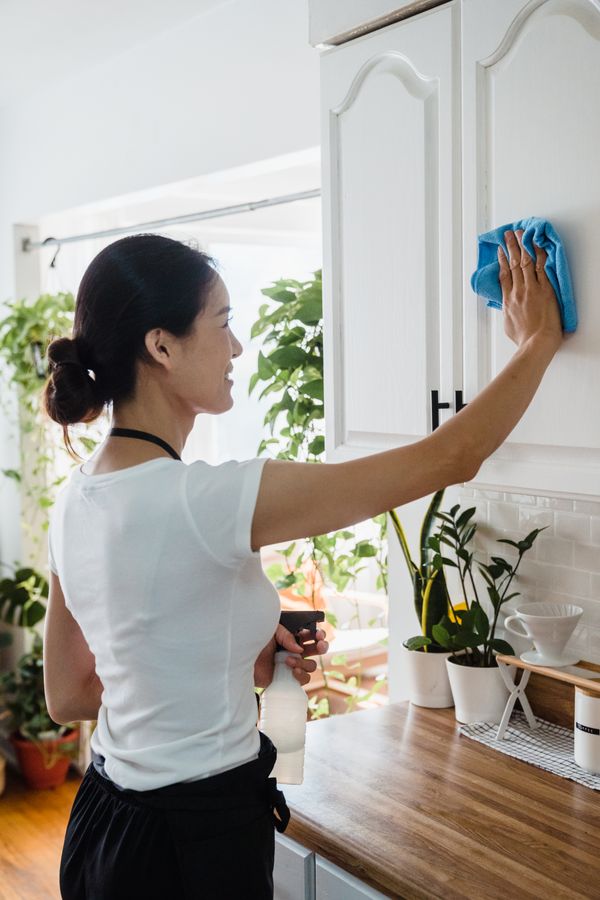
Time saved: 3–5 minutes daily; hundreds of dollars over the cloths\’ lifetime. Busy cooks reach for paper towels reflexively, but microfiber cleans better and never runs out mid-spill. The split fibers trap grease and moisture that paper towels just push around, so counters and stovetops get truly clean in one pass instead of three. Color-coding is the system that makes it work under time pressure: blue for glass and mirrors, yellow for counters, green for appliances — no hesitation about which cloth to grab, no cross-contamination worry. Keep a small basket of clean cloths under the sink and a mesh laundry bag hanging nearby for used ones; when the bag is full, it goes in the wash (no fabric softener, ever). A microfiber cleaning cloths 12-pack costs $12 to $18 and replaces an estimated 500-plus paper towel rolls over its life. Busy-cook tip: dampen one cloth at the start of dinner prep and keep it on the counter. Ninety percent of weeknight spills get handled in seconds instead of becoming sticky archaeology.
The 10-Minute Nightly Reset: Your New Non-Negotiable
Gadgets only work inside a system. This nightly routine, done while the kettle boils or the news plays, keeps a busy cook\’s kitchen permanently under control:
- Minutes 0–2: Clear and scrape. Scrape plates into trash or compost, stack dishes by the sink, wipe big crumbs into your hand. Do not wash anything yet — just stage.
- Minutes 2–5: Wash the cooking tools. Hot soapy water, dish brush, the pan/pot/cutting board/knife from dinner. These are the items that become miserable if left overnight. Everything lands on the roll-up rack.
- Minutes 5–7: Wipe surfaces. Damp microfiber across the stovetop, counters, and sink edge. If the spin scrubber is handy, give the stovetop a 60-second pass.
- Minutes 7–9: Dishes and dishwasher. Load the dishwasher or wash remaining plates and glasses. Wipe the sink basin — a clean sink makes the whole kitchen feel clean.
- Minutes 9–10: Reset for morning. Take out trash if full, set out the coffee setup, hang fresh dish towel. Walk away to a kitchen that greets you kindly at 7 a.m.
The psychology matters as much as the cleanliness: a reset kitchen removes the morning dread that makes busy people skip cooking and order takeout. Ten minutes tonight protects tomorrow\’s home-cooked dinner.
The 20-Minute Weekly Deep Clean (Pick a Day, Protect It)
Once a week, spend twenty focused minutes on the jobs the nightly reset skips:
- Steam-clean the microwave interior and stovetop (5 min with the steam cleaner).
- Spin-scrub the sink basin, faucet base, and grout lines (5 min).
- Empty and wipe the fridge\’s most tragic shelf; toss expired items (5 min).
- Drop a cleaning pod in the disposal, wipe cabinet fronts with microfiber (5 min).
Set a timer. Twenty minutes with the right gadgets covers what used to be a lost Saturday morning, because powered agitation and steam do the work that used to require soaking, scrubbing, and swearing.
What Not to Buy: Gadgets Busy Cooks Should Skip
Honesty requires the other side of the list. These popular items waste a busy cook\’s money, time, or both:
- Single-use electric gadgets with tiny jobs. Electric can openers, dedicated egg separators, and over-engineered specialty tools solve problems you do not have while occupying outlets and drawers. A good manual tool is faster to grab, easier to clean, and never needs charging.
- Giant multi-piece cleaning systems. If it needs a wall-mounted dock, three attachments, and a companion app, you will not deploy it on a Tuesday night. The best busy-cook tools are grab-and-go: a brush, a steamer, a cloth — no setup ritual required.
- Miracle sponges and pastes at luxury prices. Most perform like ordinary melamine foam or baking soda at five times the cost. Buy the generic version and put the savings toward the spin scrubber, which has an actual motor doing actual work.
- Overcomplicated storage organizers. A simple two-tier under-sink shelf earns its keep, but elaborate pull-out carousel systems often hold less, clean harder, and break sooner. Simple, sturdy, and wipeable wins every time.
The rule is simple: if a gadget does not save you measurable minutes on a weeknight, it does not belong in a busy cook\’s kitchen — no matter how clever the commercial looked.
Frequently Asked Questions
What is the single best cleaning gadget for someone who hates cleaning?
The electric spin scrubber, because it converts the worst part of cleaning — the physical scrubbing — into holding a handle while a motor does the work. Reluctant cleaners consistently report actually using it, which is the only metric that matters. A gadget that stays in the box has a time-saved value of zero, no matter how impressive its specifications.
How do busy cooks keep the kitchen clean with kids?
Lower the bar strategically and systematize ruthlessly. The 10-minute nightly reset still applies, but assign age-appropriate jobs: kids can wipe tables, load the roll-up rack, and take out trash. Keep the steam cleaner and spin scrubber as adult tools, and accept that \”clean enough\” on weeknights beats a spotless kitchen nobody has time to enjoy.
Are expensive cleaning gadgets worth it over cheap ones?
Up to a point. The jump from a $6 sponge habit to a $12 dish brush is enormous; the jump from a $12 brush to a $40 brush is marginal. Spend where the mechanism matters — motors, steam pressure, bristle quality — and save where it does not. Replaceable heads and solid warranties beat premium branding as value indicators.
Can I really clean the whole kitchen in 10 minutes a night?
Yes, once the system is running. The first week takes longer because you are also clearing backlog. But a kitchen that gets the nightly reset never accumulates the baked-on, piled-up disasters that make cleaning feel endless. The 10 minutes maintains; it is the absence of the routine that creates the three-hour weekend rescue missions.
What cleaning tasks should busy cooks just outsource or skip?
Skip perfection on inside-the-oven deep cleans more than twice a year — a steam pass handles the rest. Outsource or batch the jobs you truly hate if budget allows; a monthly two-hour professional clean plus your nightly reset beats a resentful weekly deep-clean you keep postponing. The goal is a kitchen that supports your cooking life, not a museum.
Do microfiber cloths really replace paper towels completely?
For kitchen cleaning tasks, essentially yes — wiping, dusting, polishing, and spill cleanup. Keep a small roll of paper towels for the few jobs microfiber should not do: draining fried foods, handling raw meat juices you do not want in the laundry, and cleaning up broken glass. Everything else, the color-coded cloth system handles better, cheaper, and with less waste.
