
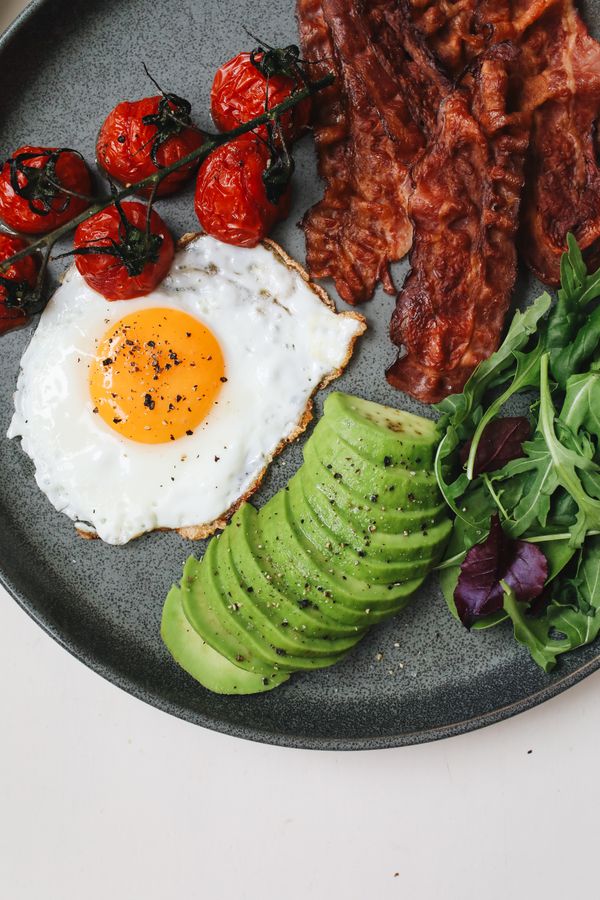
Keto meal prep for beginners works best as a component system, not a rigid menu: cook 2–3 proteins, 2–3 vegetables, and 1–2 sauces in about 90 minutes on Sunday, then mix and match them into different meals all week. This approach keeps keto effortless without the boredom of eating identical containers for five days — and it eliminates the \”nothing keto to eat\” moments where diets go to die.
This guide walks you through the complete beginner system: the 90-minute Sunday session step by step, which foods prep well (and which don\’t), exact storage times, reheating methods that don\’t ruin texture, the containers worth buying, and how to scale the system as it becomes habit. This is a framework for building your own weeks — not a prescribed day-by-day meal plan.
Why Component Prep Beats \”Meal Prep\” for Keto
Traditional meal prep — five identical chicken-and-broccoli containers — fails for two reasons: boredom by Wednesday, and keto\’s need for higher fat, which doesn\’t portion neatly into identical boxes. Component prepping (batch-cooking versatile building blocks) solves both:
- Variety without extra work: shredded chicken becomes tacos Monday, salad topping Tuesday, and soup Wednesday — same prep, three different meals
- Fat added fresh: oils, cheese, avocado, and dressings go on at serving time, so textures stay right and portions stay flexible
- Adapts to hunger: hungrier days get bigger protein portions; lighter days get salad-forward bowls — no rigid container math
- Forgiving: if you skip prep one week, the system degrades gracefully instead of collapsing entirely
The 90-Minute Sunday Session (Step by Step)
Here\’s the exact sequence. The trick is overlapping: while the oven and slow cooker work, you\’re prepping the next items.
Minutes 0–15: Start the long cooks
- Preheat oven to 400°F (200°C). Get a sheet pan of seasoned chicken thighs or drumsticks in immediately.
- Start the slow cooker: pork shoulder or beef chuck with salt, pepper, garlic, and a splash of broth — 6–8 hours on low, or use a pressure cooker for 60–90 minutes if you\’re short on time.
- Put a dozen eggs on to boil (hard-boiled eggs = the week\’s emergency protein).
Minutes 15–45: Vegetables and second protein
- Second sheet pan: broccoli florets, cauliflower, zucchini, or Brussels sprouts tossed in olive oil and salt — roast 25–30 minutes.
- Brown 1–1.5 kg of ground beef or turkey in a large skillet with taco or Italian seasoning — portion for bowls, salads, and lettuce wraps.
- Wash and chop raw veg: lettuce, cucumbers, celery, bell peppers — store in containers with a paper towel to absorb moisture.
Minutes 45–75: Sauces and assembly
- Make one sauce: garlic aioli (mayo + garlic + lemon), ranch from a seasoning packet + sour cream, or chimichurri. Sauces are the variety engine — the same chicken tastes new with a different sauce.
- Shred or slice the rested chicken; portion ground meat; peel the eggs.
- Cook cauliflower rice (fresh or frozen) if using — 5 minutes in a hot skillet.
Minutes 75–90: Pack and clean
- Portion proteins into containers (not full meals — components).
- Label everything with the date using masking tape and a marker.
- Clean as you go and you\’re done: ~90 minutes for a week of keto building blocks.
What Preps Well (and What Doesn\’t)
| Preps beautifully (4–5 days) | Preps okay (2–3 days) | Cook fresh / add at serving |
|---|---|---|
| Chicken thighs, pulled pork, beef chuck | Chicken breast (dries out) | Avocado (browns) |
| Ground beef/turkey (seasoned) | Roasted salmon (best day 1–2) | Fried eggs (rubbery reheated) |
| Hard-boiled eggs | Zucchini noodles | Fresh herbs |
| Roasted broccoli, cauliflower, Brussels sprouts | Cauliflower mash | Dressings with fresh dairy |
| Soups, stews, chili | Egg muffins / frittata slices | Crispy toppings (pork rinds, nuts) |
| Fathead dough items | Coleslaw (dressed, gets soggy) | Cheese (add fresh for melt) |
| Sauces: aioli, ranch, chimichurri, pesto | — | — |
The pattern: braised and roasted meats, sturdy vegetables, and sauces are prep gold. Delicate fish, crispy textures, and fresh garnishes belong to serving time.
Storage Times and Food Safety
| Food | Fridge | Freezer | Notes |
|---|---|---|---|
| Cooked chicken, beef, pork | 3–4 days | 2–3 months | Cool within 2 hours of cooking |
| Ground meat (cooked) | 3–4 days | 2–3 months | Portion flat in bags for fast thawing |
| Hard-boiled eggs (in shell) | 7 days | Not recommended | Peeled: 2–3 days in water |
| Roasted vegetables | 4–5 days | 2 months (texture softens) | Re-crisp in oven/air fryer |
| Soups and stews | 4 days | 3 months | Freeze in portions; leave headspace |
| Homemade sauces (mayo-based) | 5–7 days | No | Mayo doesn\’t freeze well |
| Cut raw vegetables | 4–5 days | No | Paper towel in container absorbs moisture |
The sniff-and-look rule is backup, not policy. When in doubt, throw it out — a $4 container of chicken isn\’t worth a ruined week. And cool food before sealing containers; trapped steam breeds bacteria and sogginess.
Reheating Without Ruining Everything
- Skillet > microwave for meats. Two minutes in a hot skillet with a splash of water (lid on) re-steams chicken and pork to juicy; microwaves turn them rubbery.
- Oven/air fryer for roasted veg. 400°F for 5–8 minutes re-crisps broccoli and Brussels sprouts. Microwaved roasted veg = steamed sadness.
- Microwave soups and ground meat freely — they\’re forgiving. Stir halfway.
- Add fats fresh after reheating: a knob of butter, drizzle of olive oil, or handful of cheese goes on after the heat, not before storage.
- Don\’t reheat fish twice and don\’t microwave it at the office unless you enjoy being unpopular.
Containers Worth Buying (and What to Skip)
- Glass containers with locking lids — the gold standard: no staining, no odors, oven/microwave/freezer safe. Buy a set of 10–12 in 2–3 sizes.
- Wide-mouth mason jars — perfect for sauces, chia pudding, and layered salads (dressing on the bottom).
- Silicone muffin cups — for portioning egg muffins and fat bombs; they pop out cleanly.
- Skip: flimsy disposable containers (they warp, leak, and stain), single-compartment-only sets (you need variety), and anything without a truly airtight seal.
Assembling Meals From Components: The Mix-and-Match Matrix
With prepped components, each meal is a 5-minute assembly. Pick one from each column:
| Protein | Vegetable base | Fat / flavor | Result |
|---|---|---|---|
| Shredded chicken | Lettuce + cucumber | Ranch + avocado | Chicken ranch salad |
| Ground beef (taco) | Cauliflower rice | Cheese + sour cream + salsa | Taco bowl |
| Pulled pork | Roasted broccoli | BBQ (sugar-free) + coleslaw | BBQ pork plate |
| Chicken thighs | Zucchini noodles | Alfredo sauce + parmesan | Chicken alfredo |
| Hard-boiled eggs + bacon | Spinach | Blue cheese + olive oil | Cobb-style salad |
| Ground beef (Italian) | Roasted cauliflower | Marinara + mozzarella | Deconstructed lasagna bowl |
Six preps → endless combinations. This is why component prep beats identical containers: the same Sunday work produces a week that doesn\’t feel like meal prep at all.
Scaling Up: From Beginner to Prep Pro
- Week 1–2: prep just proteins + one veg. Master the habit before the complexity.
- Week 3–4: add sauces and a second vegetable. Notice which components you actually use; drop the rest.
- Month 2: start a freezer stash — every soup or stew session, freeze two portions. Within a month you\’ll have a \”free week\” banked.
- Ongoing: theme your weeks loosely (Mexican week, Italian week, Asian week) so seasonings and sauces stay coherent and shopping stays simple.
No-Cook Keto Prep: The Zero-Stove Week
No time, no kitchen energy, or just hate cooking? A full prep week is possible without turning on the stove:
- Rotisserie chicken (2 birds): shred both; you now have protein for 6–8 meals. The single highest-ROI no-cook purchase.
- Deli meats and cheeses: turkey, roast beef, salami, cheddar, cream cheese — roll-ups with lettuce take 30 seconds.
- Pre-washed greens and pre-cut veg: salad kits (toss the sugary dressing packets, use your own oil and vinegar), baby carrots in moderation, celery sticks.
- Canned fish: tuna, salmon, sardines — mix with mayo and celery for instant salad.
- Ready-to-eat proteins: hard-boiled eggs (buy pre-boiled), cooked shrimp from the seafood counter, pre-cooked bacon.
- Assembly meals: charcuterie-style plates (meat + cheese + olives + nuts), lettuce-wrap tacos with rotisserie chicken, Cobb salads.
Thirty minutes of shopping and assembling replaces 90 minutes of cooking. It\’s slightly pricier than cooking from scratch, but dramatically cheaper than takeout — and it keeps keto effortless during your busiest weeks.
Meal Prep for One vs. Feeding a Family
Solo preppers
Your enemy is boredom and spoilage. Halve standard prep quantities, embrace the freezer (freeze half of every batch in single portions), and lean on versatile proteins that transform across meals — a pork shoulder becomes tacos, then BBQ bowls, then soup. Invest in smaller containers so portions stay appetizing rather than cavernous.
Family preppers
Your enemy is cooking twice. Use the \”base + add-on\” system: prep keto proteins and vegetables in bulk for everyone, then add a single carb side (rice, pasta, bread) for non-keto family members. Taco bars, burger nights, baked potato bars (you take chili and cheese, hold the potato), and pasta nights (your portion over zucchini noodles or palmini) let one kitchen serve two diets. Get kids involved in assembly — they\’re more likely to eat food they helped build.
Frequently Asked Questions
How much time does keto meal prep really take?
About 90 minutes for the full component system once you\’re practiced; 2 hours the first time while learning. Compare that to 30–45 minutes of daily cooking and decision-making — prep buys back 2–3 hours weekly plus eliminates weeknight stress.
Will I get bored eating prepped food all week?
Not with component prep — that\’s its entire point. Identical containers cause boredom; building blocks recombined with different sauces and formats stay interesting. If a component bores you, it\’s feedback: prep something else next week.
Can I meal prep salads for the whole week?
Prep the components (washed greens, chopped veg, cooked protein, dressing separately) and assemble daily — 3 minutes each morning. Fully assembled dressed salads survive ~2 days before wilting. Mason-jar salads (dressing at the bottom, greens on top) stretch to 4–5 days.
What\’s the cheapest way to start meal prepping?
Chicken thighs, ground beef, eggs, cabbage, frozen broccoli, and one homemade sauce. That\’s a full prep week for very little money. Buy containers once (glass sets are ~$25–35) and they\’ll last years.
How do I prep if I only have a tiny kitchen?
Sheet-pan cooking is your friend — two sheet pans in one oven cook an entire week of protein and veg with minimal dishes. A slow cooker adds capacity without using stove space. Wash as you go and even a galley kitchen works.
Should I count macros for prepped meals?
Weigh and log components once when you prep (e.g., \”150 g chicken thigh = X protein\”), then assembling logged meals all week takes seconds. Pre-logging the whole week on Sunday is the most efficient tracking method that exists.
Can I freeze prepped keto meals?
Soups, stews, cooked ground meat, pulled pork, and shredded chicken freeze excellently for 2–3 months. Avoid freezing mayo-based sauces, cream-heavy dishes (they can split — though they usually come back with stirring), and roasted veg you want crispy.
What if I hate leftovers?
Reframe: you\’re not eating \”leftovers,\” you\’re eating components cooked once and finished fresh. A chicken thigh reheated in a skillet with fresh garlic butter and new spices genuinely tastes like a different meal. And freeze half of every prep — future-you gets \”fresh\” variety from the freezer stash.
How far ahead can I safely prep keto lunches?
Cooked meats and roasted vegetables hold 4–5 days refrigerated; assemble salads fresh daily from prepped components. For a full 7-day week, freeze Thursday and Friday portions on Sunday and thaw overnight as needed — quality stays excellent.
What\’s the best day to do keto meal prep?
Sunday remains the default because it sets up the workweek, but the best day is whichever you\’ll actually do consistently. Wednesday-evening \’mini preps\’ (one protein + one veg, 30 minutes) rescue weeks where Sunday didn\’t happen.
Can I prep smoothies in advance?
Yes — portion berries, spinach, nut butter, and protein powder into freezer bags; dump into the blender with liquid each morning. Pre-blended smoothies keep ~24 hours refrigerated but separate and oxidize, so freezer packs beat ready-made bottles.
What\’s the biggest meal prep mistake beginners make?
Prepping foods they don\’t actually enjoy eating — five containers of bland chicken breast nobody wants becomes five containers of food waste and a takeout order. Prep foods you genuinely like, season boldly, and start with just 2–3 days\’ worth until you learn your real consumption patterns.
