
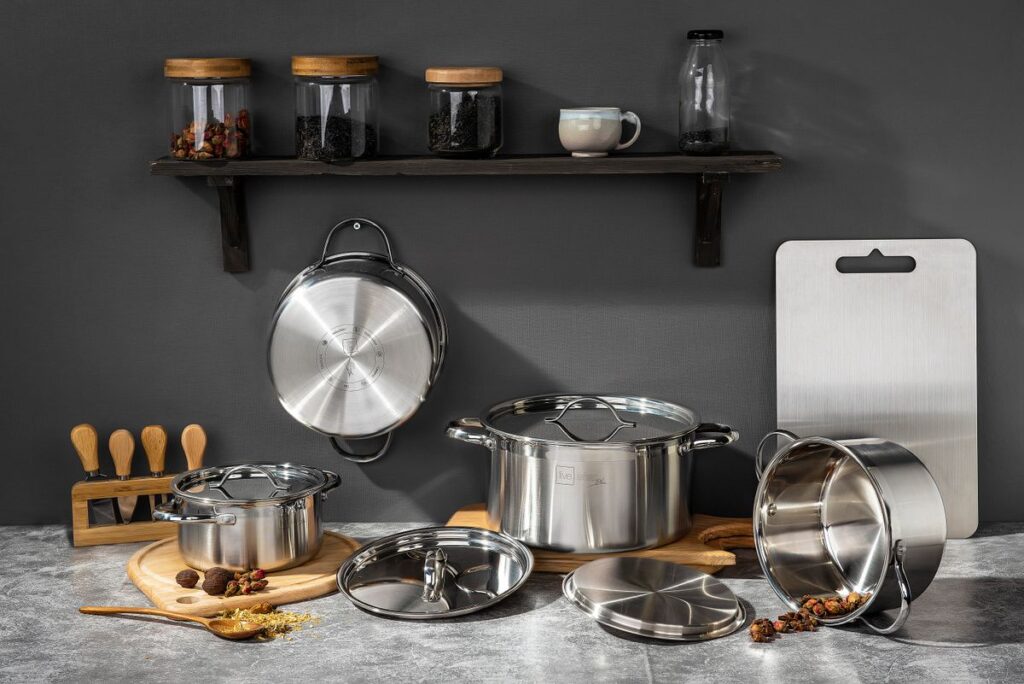
Learning how to use a wok on an electric stove requires adapting a technique born over gas flames — but it is absolutely doable with the right equipment choices and adjustments. The challenge is physics: electric burners deliver less concentrated heat than gas, they cycle on and off, and round-bottom woks cannot sit stably on flat electric surfaces. Yet millions of cooks stir-fry successfully on electric every day. This guide covers choosing the right wok for your burner type (coil, glass-top, or induction), heat-management tricks that compensate for lower BTU output, batch-size discipline, and the step-by-step adapted technique.
The Core Challenge: Heat Output and Contact
A restaurant gas wok burner outputs 100,000+ BTU of concentrated flame licking up the wok\’s sides; a typical home electric burner delivers the equivalent of 7,000–10,000 BTU across a flat disc. Electric elements also cycle — clicking on and off to maintain temperature — which creates heat fluctuations that gas never has. Additionally, the wok\’s curved shape is designed for flame contact up the sides; on a flat electric burner, only the bottom touches, shrinking the effective cooking surface. These are real constraints, but they are manageable: the adaptations below recover most of the performance gap. The key mindset shift is that on electric, you compensate with technique — smaller batches, longer preheats, and smarter wok selection — rather than raw power.
Choosing the Right Wok for Electric
Wok selection matters more on electric than on gas. Use a flat-bottom wok — non-negotiable on glass-top and induction, strongly preferred on coil. The flat base (typically 5–6 inches across) sits in full contact with the element, maximizing heat transfer; a round-bottom wok on a ring wobbles and leaves an air gap that kills efficiency. Choose carbon steel in a moderate thickness: too thin and the wok loses heat the moment food hits it; too thick and your burner cannot bring it to temperature. For most electric stoves, a 12 to 14-inch flat-bottom carbon steel wok around 1.5–2 mm thick is ideal. On induction specifically, verify the wok is induction-compatible (carbon steel is magnetic and works, but some very thin spun woks heat unevenly) and keep the diameter matched to your largest burner — oversized woks develop cold edges on induction.
| Burner type | Wok choice | Key tip |
|---|---|---|
| Coil electric | Flat-bottom carbon steel, 12–14 inch | Let the coil glow fully; it holds heat better than glass |
| Glass / ceramic top | Flat-bottom, perfectly flat base | Never slide the wok — lift to move, to protect the glass |
| Induction | Flat-bottom magnetic carbon steel or clad wok | Match wok diameter to burner; use power-boost if available |
Heat Management Tricks for Electric Stoves
Preheat longer. Give the wok three to five minutes on the highest setting — electric needs more time to saturate the steel with heat than gas does. The wok should be smoking before oil goes in.
Use the largest burner. Obvious but often ignored — the big burner delivers meaningfully more power and a wider heat footprint under the wok\’s flat base.
Engage power-boost. Many induction cooktops have a boost or power mode that temporarily exceeds the burner\’s rated output. Use it for the preheat and the searing phase.
Minimize cycling losses. On coil and glass tops, the element cycles off when it hits temperature. Keeping the wok in constant contact and cooking continuously reduces the impact; lifting the wok to toss lets the element cool and triggers longer off-cycles.
Consider a smaller wok. A 12-inch wok that your burner can keep ripping hot outperforms a 14-inch wok it cannot. Match the tool to the heat source.
Preheat serving plates. With lower heat, every degree counts — warm plates keep the finished stir-fry hot while you cook the next batch.
Batch Discipline: The Electric Wok\’s Golden Rule
On gas, you might get away with a full wok; on electric, batch discipline is everything. Cook proteins in half-batches or even third-batches, removing each to a plate before the next goes in. The math is unforgiving: doubling the food mass roughly doubles the heat the burner must supply, and electric burners have no reserve. A single crowded batch steams instead of sears — gray, soggy, and stuck. Two quick batches, each properly seared, take barely more total time and produce dramatically better food. As a rule of thumb, food should cover the wok\’s flat bottom in a single layer with a little space between pieces. When in doubt, split the batch.
Step-by-Step: Stir-Frying on Electric
1. Full mise en place. Everything cut, measured, and within reach — even more critical on electric, where you cannot afford delays that let the wok cool.
2. Preheat aggressively. Wok on the largest burner at maximum heat for 3–5 minutes until smoking. On induction, use boost mode.
3. Oil and aromatics. Add 1–2 tablespoons of high-smoke-point oil, swirl, then aromatics for 10–15 seconds.
4. Sear protein in small batches. Single layer, 30–60 seconds undisturbed for browning, toss until nearly done, remove to a plate. Repeat.
5. Vegetables in order. Hard vegetables first, quick ones after — each in quantities the burner can handle.
6. Recombine and sauce. Return everything, sauce around the perimeter, toss 15–20 seconds, serve immediately on warmed plates.
7. Reheat between batches. Let the wok come back to smoking for 30–60 seconds before the next batch goes in — do not rush this.
Adapting Recipes Written for Gas
Most stir-fry recipes assume gas-level heat. Adapt by halving batch sizes, extending preheat times, and accepting slightly longer per-batch cooking — the food still sears properly, it just needs the burner to keep up. Velveting proteins (cornstarch coating) is especially valuable on electric because it protects meat during the slightly longer cooking times. Consider par-cooking dense vegetables: blanch broccoli or carrots for 60 seconds before stir-frying so they need only a quick finish in the wok. And lean into sauces and aromatics — since electric produces less wok hei char, bold seasoning with ginger, garlic, fermented black beans, and chili compensates flavorfully.
Cleaning and Maintenance on Electric
Wok care is identical regardless of heat source: clean while hot with water and a brush, dry on the burner, oil lightly. One electric-specific note: on glass tops, lift — do not slide — the wok when cleaning around it or repositioning, since carbon steel can scratch glass-ceramic surfaces. Some cooks keep a dedicated thin cloth under the wok\’s contact area, but this insulates and reduces heat transfer; better to simply lift carefully. Seasoning maintenance matters even more on electric because you rely on the patina\’s nonstick properties to compensate for less aggressive searing — never let the wok sit wet, and re-oil after every use.
Induction Wok Cooking: Maximizing Boost Mode
Induction is arguably the best electric option for wok cooking — its magnetic field heats the steel directly and nearly instantly, closer to gas responsiveness than coil or glass-top. The key is boost (power) mode: most induction cooktops offer a temporary overdrive setting, typically for 5–10 minutes, that pushes the burner well beyond its rated output. Use boost for the entire preheat and the searing phase of each batch, dropping to high (not boost) for vegetable cooking to avoid tripping the time limit mid-batch. Match your wok diameter to the burner ring — induction heats only where the magnetic field contacts steel, so an oversized wok develops a screaming-hot center with lukewarm edges. A 12-inch flat-bottom wok on a large induction burner is the sweet spot. One caution: induction\’s intense, localized heat can warp thin woks over time — choose a wok of at least 1.8 mm thickness, preheat gradually for the first minute before engaging boost, and never boost an empty wok longer than needed to reach smoking.
Weeknight Wok Meals Designed for Electric Heat
Some dishes suit electric wok cooking better than others — choose recipes that play to the heat source\’s strengths. Vegetable-forward stir-fries excel because vegetables need less searing power than proteins; a rainbow of bell peppers, snap peas, mushrooms, and baby corn stir-fries beautifully on electric. Noodle dishes like chow mein and pad see ew work well since the noodles finish by steaming in sauce rather than hard searing. Egg-based dishes such as egg fried rice are ideal — the egg sets quickly at moderate heat. Velveted proteins (see our stir-fry guide) are more forgiving of slightly lower heat since the coating protects them. What to approach carefully: large cuts of beef for searing, which need maximum heat, and dishes depending heavily on wok hei char. For those, smaller batches and the hottest burner setting close most of the gap. Build your weeknight rotation around the forgiving dishes and save the high-heat showpieces for weekends when you can give them full attention.
Wok Rings, Diffusers, and Gadgets: What Helps on Electric?
The market offers several gadgets promising to improve wok cooking on electric — most disappoint, a few help. Wok rings (the metal collar that holds a round-bottom wok over a gas flame) are useless on electric: they lift the wok away from the element, creating an air gap that destroys heat transfer. Do not use them. Heat diffuser plates (flat metal discs between burner and pan) even out hot spots on gas but on electric they add thermal mass the burner must heat, slowing response — skip them for wok cooking, though they help with delicate simmering in regular pans. Flat-bottom woks with extra-thick bases are the genuinely useful \”gadget\”: the added mass stores heat that carries through the burner\’s off-cycles, smoothing electric\’s temperature fluctuations. Portable butane wok burners — the single-burner stoves used for hot pot — are the nuclear option: a $30–$50 butane burner on a balcony or patio delivers real gas flame to your round-bottom wok, producing genuine wok hei that no electric adaptation can match. Check local regulations on outdoor burner use, but for the serious stir-fry enthusiast in an electric-only home, it is the single biggest upgrade available.
Seasoning a Wok on Electric: Adjusted Method
Seasoning a carbon steel wok on electric needs small adaptations to the standard gas method. Because electric burners heat only the flat base directly, the wok\’s sloped sides season more slowly — compensate by using the oven for the initial seasoning: coat the wok in a micro-thin oil layer and bake it upside down at 230°C (450°F) for an hour, which heats the entire wok evenly, something no electric burner can do. Repeat two to three times for a solid base coat. For stovetop touch-ups between cooks, heat the wok on your largest burner at maximum until smoking, add a teaspoon of oil, and use a paper towel held in tongs to rub the oil up the sides where the burner does not reach directly. Tilt and rotate the wok over the burner to expose different sections of the wall to the heat. On induction, the seasoning process works the same but watch for overheating — induction\’s intense localized heat can burn oil into a sticky mess rather than smooth seasoning if you are not attentive. Finish every seasoning session with the wok dry, lightly oiled, and fully cooled before storage.
Frequently Asked Questions
Can you really stir fry on an electric stove?
Yes. With a flat-bottom carbon steel wok, proper preheating, small batches, and the largest burner, electric stoves produce excellent stir-fries. You get slightly less wok hei char than gas, but the technique and results are genuinely good — not a sad compromise.
Is a flat-bottom or round-bottom wok better for electric?
Flat-bottom, without question. Round-bottom woks cannot sit stably on electric burners and the air gap destroys heat transfer. Flat-bottom woks make full contact with the element, which is essential given electric\’s lower heat output.
Can I use a wok on an induction cooktop?
Yes, if the wok is magnetic — carbon steel works. Use a flat-bottom wok matched to your burner diameter and take advantage of boost mode. Avoid very thin spun woks, which can heat unevenly and warp on induction\’s intense, localized field.
Why does my stir fry steam instead of sear on electric?
Almost always overcrowding or insufficient preheat. Halve your batch size, preheat the wok until smoking (3–5 minutes), and let it recover between batches. Pat food dry — surface moisture is the other major steaming culprit.
Will a wok damage my glass stovetop?
A flat-bottom wok used carefully will not. Always lift rather than slide it, keep the bottom clean and smooth, and avoid dropping it. Carbon steel is softer than glass-ceramic, so scratches come from grit trapped underneath or dragging — both avoidable.
What size wok works best on electric?
12 inches is the sweet spot for most electric burners — the burner can keep it properly hot. A 14-inch wok works on large, powerful burners but often develops cool edges on standard electric. When uncertain, go smaller.
