
Intro
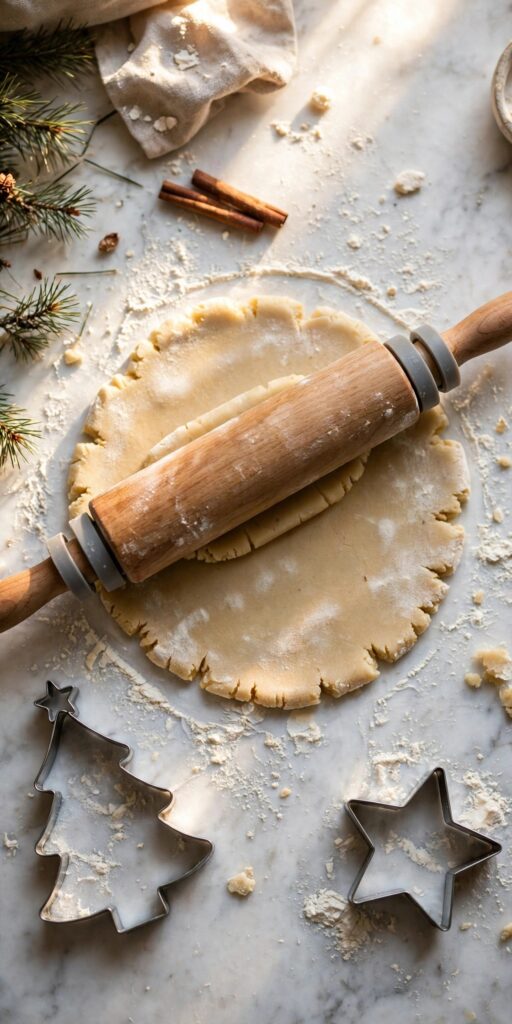
The best rolling pin for baking cookies is the difference between cut-outs that bake evenly and a tray of half-burnt, half-raw cookies. Christmas cut-out cookies need dough rolled to one consistent thickness — a quarter inch in the middle and an eighth at the edges means the thin spots brown too fast while the thick spots stay pale. An adjustable rolling pin with thickness rings solves that problem entirely: the rings set the height, so every cookie comes out the same thickness no matter how hard you press.
Below, we’ve researched the top-rated rolling pins available right now, comparing them for thickness control, material, length, and ease of cleaning, so you can pick the right pin for your Christmas cookie baking.
Our Top Picks
Joseph Joseph Adjustable Rolling Pin
The Joseph Joseph Adjustable Rolling Pin is our best overall pick for baking cookies. It comes with four pairs of removable silicone rings — 1/16, 1/8, 1/4, and 3/8 inch — so you can roll sugar cookie and gingerbread dough to the exact thickness your recipe calls for. The barrel has etched measurements printed along its length, so you can check the width of your dough without reaching for a ruler, and the rings pop on and off easily when you switch thicknesses mid-batch.
Pros:
- Four ring sizes (1/16, 1/8, 1/4, 3/8 inch) for precise thickness control
- Etched measurements on the barrel for checking dough width
- Rings are easy to swap between batches
- Well-balanced weight that rolls smoothly without extra pressure
Cons:
- Pricier than a basic wooden pin
- Silicone rings need to be kept track of between uses
- Best suited to small and medium doughs rather than very large sheets
Geesta Adjustable Wood Rolling Pin
The Geesta Adjustable Wood Rolling Pin is our best wood adjustable pick. Made from water-resistant teak wood, it comes with five adjustable food-grade plastic rings and laser-etched measurement guides in both inches and centimeters, so you can dial in thickness and width at a glance. At 23 inches long it handles wide sheets of cookie dough easily, and at around 2.6 pounds it has enough weight to roll evenly without tiring your arms.
Pros:
- Five thickness rings for fine control over dough thickness
- Laser-etched inch and centimeter guides on the barrel
- 23-inch length covers wide sheets of cookie dough
- Teak wood stays cool and resists moisture
Cons:
- Heavier than standard pins at around 2.6 pounds
- Plastic rings can feel less premium than the wood barrel
- Needs hand washing and occasional oiling like other wood pins
BIDFUL Adjustable Stainless Steel Rolling Pin
The BIDFUL Adjustable Stainless Steel Rolling Pin is our best stainless steel pick for cookie bakers who want precision and easy cleanup. The 17-inch barrel comes with four removable rings (1/16, 1/8, 1/4, and 3/8 inch) that set an exact dough thickness, and the smooth stainless surface is naturally nonstick — dough releases cleanly with a light dusting of flour. It is dishwasher safe, so cleanup after a big Christmas baking session is effortless.
Pros:
- Four removable rings for exact 1/16 to 3/8 inch thickness control
- Stainless steel surface resists sticking and wipes clean
- Dishwasher safe for easy cleanup
- Won’t warp, crack, or absorb odors like wood can
Cons:
- 17-inch length is shorter than some wood pins for very wide dough
- Steel can feel cold and slippery until it warms to room temperature
- Rings must be removed before dishwashing
J.K. Adams Maple Plain Rolling Pin
The J.K. Adams Maple Plain Rolling Pin is our best classic pick. This 19-inch American hard maple pin is the traditional workhorse that generations of bakers have reached for: smoothly sanded, perfectly balanced, and heavy enough to roll dough with gentle, even pressure. There are no rings or moving parts — just a solid piece of maple with comfortable handles — and with basic care it lasts for decades.
Pros:
- Solid American hard maple, built to last for years
- 19-inch length handles large sheets of cookie dough
- Smooth, balanced roll with even pressure
- No parts to lose or adjust
Cons:
- No thickness control — you judge thickness by eye
- Needs hand washing and occasional mineral oil treatment
- Heavier than tapered French-style pins
J.K. Adams French Rolling Pin
The J.K. Adams French Rolling Pin is our best French-style pick for bakers who want maximum control. This handle-free tapered pin is over 20 inches long, and because your hands rest directly on the barrel, you feel the dough’s thickness and resistance as you roll — a level of feedback no handled pin can match. The tapered ends make it easy to pivot and steer the dough, which is ideal for rolling out round sheets for cut-outs.
Pros:
- Direct hand-to-dough contact for precise control
- Tapered ends make it easy to steer and pivot dough
- Over 20 inches long for large batches
- Simple one-piece design with nothing to lose or break
Cons:
- No thickness rings, so even thickness takes practice
- Handle-free design has a learning curve for beginners
- Needs hand washing and occasional oiling
OXO Good Grips Nonstick Rolling Pin
The OXO Good Grips Nonstick Rolling Pin is our best easy-cleanup pick. Its steel core is coated in a smooth nonstick surface that dough slides off of, so sticky sugar cookie and gingerbread doughs release with barely any flour — a real advantage when you’re rolling batch after batch for Christmas. The comfortable handles stay put in your grip, and the pin is sturdy enough for daily baking without flexing.
Pros:
- Nonstick surface releases sticky dough with minimal flour
- Comfortable non-slip handles for a secure grip
- Steel core is sturdy and won’t flex under pressure
- Easy to wipe clean after baking
Cons:
- No thickness rings or measurement markings
- Nonstick coating needs gentle care to avoid scratches
- Heavier than a basic wood pin
Fulimax Adjustable Stainless Steel Rolling Pin
The Fulimax Adjustable Stainless Steel Rolling Pin is our best budget adjustable pick. This 17-inch stainless steel pin includes removable thickness rings from 1/16 to 3/8 inch, giving you the same even-thickness control as premium adjustable pins at a friendlier price. The steel barrel is smooth, easy to clean, and won’t absorb dough moisture, making it a solid choice for holiday baking on a budget.
Pros:
- Removable rings from 1/16 to 3/8 inch for precise thickness
- Budget-friendly for an adjustable stainless pin
- Smooth steel surface cleans up easily
- Won’t warp or absorb moisture
Cons:
- Rings can feel looser than on premium adjustable pins
- 17-inch length is modest for very wide dough sheets
- Fewer size options than some competitors
Buying Guide
Thickness rings — the key feature for cut-out cookies: Adjustable rings are the single most useful feature for Christmas cookies. Rings in 1/16, 1/8, 1/4, and 3/8 inch let you roll every batch to the exact thickness your recipe needs — 1/4 inch is the standard for sugar cookies and gingerbread, while 1/8 inch works for crisp, thin cut-outs. The Joseph Joseph, Geesta, BIDFUL, and Fulimax pins all include rings; classic pins like the J.K. Adams models rely on your eye and a steady hand instead.
Material — wood vs. stainless steel vs. nonstick: Wood pins (J.K. Adams, Geesta) feel warm and traditional, stay cool during rolling, and give good grip on the dough, but they need hand washing and occasional oiling. Stainless steel pins (BIDFUL, Fulimax) are naturally nonstick, dishwasher safe, and won’t warp or absorb moisture, but they can feel cold and slick at first. Nonstick-coated pins (OXO) release sticky dough with the least flour, which helps when you’re rolling many batches in a row.
Length — match the pin to your dough: A 17-inch pin handles standard cookie dough sheets and fits easily in a kitchen drawer. Longer pins — 19 to 23 inches like the J.K. Adams and Geesta — cover wide sheets of dough in fewer passes, which means more even thickness across the whole sheet. For Christmas cut-outs rolled in big batches, longer is usually better.
Handles vs. French style: Handled pins give a familiar, secure grip and are the easiest for beginners. French-style pins (no handles, tapered ends) put your hands directly on the barrel, giving you finer feedback about dough thickness and making it easier to steer the dough — but they take practice. If you roll cookies often, a French pin is worth learning; if you bake occasionally, a handled pin is more forgiving.
Cleaning and care: Stainless steel and nonstick pins clean up fastest — most can be wiped down or put in the dishwasher. Wood pins need hand washing and a light coat of food-safe mineral oil now and then to keep the wood from drying out. Whichever you choose, never soak a wood pin, and store rings with the pin so they don’t get lost between baking seasons.
FAQs
What thickness should I roll cookie dough to? Most cut-out cookie recipes call for 1/4 inch thick dough — thick enough to hold its shape and stay soft in the middle, thin enough to bake through evenly. Crisp cookies like thin ginger snaps work better at 1/8 inch. An adjustable pin with rings takes the guesswork out of hitting those numbers.
Do I need an adjustable rolling pin for cookies? Not strictly — bakers have rolled cookies with plain wood pins for generations. But if your cut-outs bake unevenly, with burnt edges and pale centers, an adjustable pin with thickness rings is the fastest fix. It guarantees every cookie in the batch is the same thickness, so they all finish baking at the same time.
How do I keep dough from sticking to my rolling pin? Lightly flour the pin and the work surface, and roll dough that is properly chilled — warm dough sticks to everything. Stainless steel and nonstick pins need less flour than wood. If dough still sticks, roll it between two sheets of parchment paper instead of directly on the counter.
Wood or marble rolling pin — which is better for cookies? Wood is the classic choice: it’s light, warm, and easy to control. Marble stays cold, which helps with butter-rich doughs like pie crust, but it’s very heavy and can crack if dropped. For Christmas cut-out cookies, a wood or stainless steel adjustable pin is the more practical choice.
How do I clean a wooden rolling pin? Wipe it with a damp cloth and mild soap, then dry it immediately — never soak it or put it in the dishwasher. Once in a while, rub in a thin coat of food-safe mineral oil to keep the wood from drying and cracking. Store it flat or hanging so it doesn’t warp.
Can I use a rolling pin for pie crust and pizza dough too? Yes — a good rolling pin is a multi-purpose tool. Adjustable pins are especially handy here, since you can switch rings for a thin pizza crust or a thicker pie crust. Just keep the pin clean between uses, and avoid using a floured pin on pizza dough if you don’t want flour in the crust.
