Intro
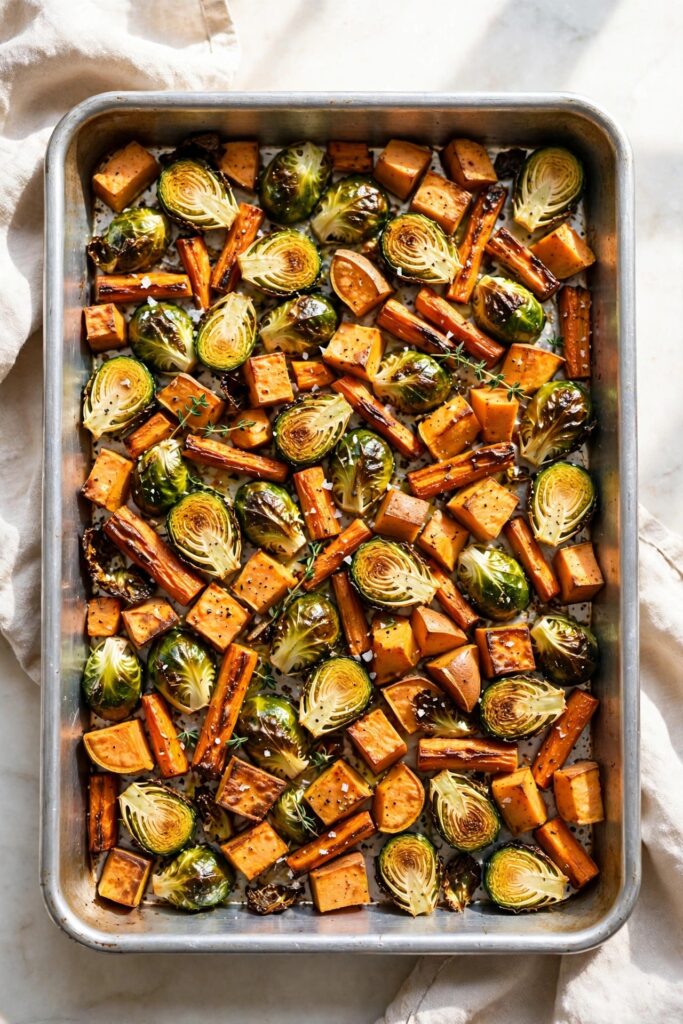
The best baking sheets for roasting vegetables are not the flimsy pans that pop and warp the moment the oven hits 425°F. Roasting vegetables is a high-heat job — broccoli, Brussels sprouts, and sweet potatoes want a hot oven, a single layer, and a pan that stays dead flat so every piece browns instead of steaming in a puddle of its own juices. A thin pan buckles, oil pools to one side, and half the tray comes out pale while the other half burns.
The buying question is material and rim construction. Heavy-gauge aluminum is the professional default: it heats fast and evenly, which is what gives roasted vegetables their caramelized edges. Stainless steel will not rust and has no coating to worry about, but it conducts heat less evenly, so browning can be patchy unless you rotate the pan. And the rim is what stops warping — a pan with an encapsulated or wire-reinforced steel rim holds its shape at roasting temperatures, while a thin rolled edge twists. Below, we have compared five rimmed half-sheet pans available right now, weighing warp resistance, browning, size, and cleanup.
Our Top Picks
Nordic Ware Naturals Half Sheet 2-Pack
The Nordic Ware Naturals Half Sheet 2-Pack is our best overall pick. It is the benchmark sheet pan for a reason: pure natural aluminum for fast, even heat, and an encapsulated galvanized steel rim that keeps the pan flat even at high roasting temperatures. It has been America’s Test Kitchen’s winning sheet pan for years running, and owners consistently report no warping after years of use. The 2-pack means a second pan is always ready when the first batch comes out — no waiting for a hot pan to cool.
Pros:
- Encapsulated galvanized steel rim resists warping, even at 500°F
- Pure aluminum heats fast and evenly for caramelized edges
- Two half sheets in the pack — roast two trays at once
- Fits standard home ovens at 17.9 x 12.9 inches with a 1-inch rim
Cons:
- Uncoated aluminum can react with acidic foods like tomatoes or citrus over long cooks
- Hand wash only — the aluminum discolors in the dishwasher
- No nonstick coating, so parchment or oiling is needed for sticky foods
USA Pan Half Sheet Baking Pan
The USA Pan Half Sheet Baking Pan is our best nonstick pick. Its dark nonstick surface browns noticeably better than bare aluminum — roasted vegetables come out with deeper caramelization and golden edges — while the Americoat silicone nonstick coating releases food with almost no oil. The pan is built from heavy-gauge aluminized steel with a corrugated surface that helps air circulate underneath, and it is the pick for anyone who hates scrubbing roasted-on drips.
Pros:
- Dark nonstick surface promotes deeper browning than bare aluminum
- Silicone nonstick coating releases vegetables with little or no oil
- Heavy-gauge aluminized steel with a corrugated base for airflow
- Easy cleanup — roasted-on drips wipe off instead of needing a soak
Cons:
- Nonstick coating means lower heat tolerance than bare aluminum and no metal utensils
- Coating will wear out over years of high-heat roasting, unlike bare metal
- Dark surface can over-brown delicate items if you do not watch the time
Vollrath Wear-Ever Half-Size Sheet Pan
The Vollrath Wear-Ever Half-Size Sheet Pan is our best restaurant-grade pick. This is the pan professional kitchens use: heavy 18-gauge aluminum with a wire-reinforced beaded rim, built to survive daily abuse at 500°F and beyond without warping. If you roast vegetables several times a week at high heat, this is the indestructible option — overkill for occasional bakers, but exactly right for a household that lives on sheet-pan dinners.
Pros:
- Heavy 18-gauge aluminum with a wire-reinforced beaded rim — no warping at any home-oven temperature
- The pan used in professional kitchens, built for daily high-heat roasting
- Even, fast heating across the whole surface with no hot spots
- Bare aluminum lasts a lifetime with basic care
Cons:
- No nonstick coating — parchment or oil is essential
- Plain commercial looks, no home-kitchen styling
- Heavier and more expensive than a basic grocery-store sheet pan
Wildone Baking Sheet with Rack
The Wildone Baking Sheet with Rack is our best pick with a rack. The included stainless steel cooling and roasting rack lifts vegetables off the pan surface, so hot air circulates underneath and every side crisps instead of the bottoms steaming in oil. The pan itself is stainless steel, so there is no coating to flake and nothing to react with acidic foods, and the set pulls double duty as a cooling rack for cookies and baked goods.
Pros:
- Included rack lifts vegetables for crisping on all sides
- Stainless steel construction — no coating, no rust, no reaction with acidic foods
- Doubles as a cooling rack for cookies and roasts
- Dishwasher friendly, unlike bare aluminum pans
Cons:
- Stainless steel browns less evenly than aluminum unless you rotate the pan
- The rack adds cleanup — two pieces to wash instead of one
- Rack wires can be fiddly to scrub when cheese or glaze bakes on
Umite Chef Aluminum Sheet Pan
The Umite Chef Aluminum Sheet Pan is our best oversized value pick. At 18 x 13 inches it is a full-size half sheet with room for a whole week’s worth of vegetables in a single layer — no batch cooking, no crowding, no steaming. The 0.8mm thick aluminum body with a reinforced steel rim delivers serious warp resistance for the price, and the bare aluminum browns just as well as pans costing twice as much.
Pros:
- Oversized 18 x 13-inch surface roasts a large batch in one layer
- Thick aluminum with a reinforced steel rim resists warping
- Excellent browning for the price — real caramelization, not pale steaming
- Good value for a heavy-gauge pan this size
Cons:
- Oversized dimensions may not fit smaller ovens — measure before buying
- Bare aluminum needs hand washing and can stain in the dishwasher
- No nonstick coating, so parchment is your friend for sticky glazes
Buying Guide
Buy a rimmed half sheet, not a flat cookie sheet: A rimmed pan with a 1-inch edge is what makes a baking sheet a roasting pan. The rim holds in oil and vegetable juices instead of letting them run onto the oven floor, and it gives the pan its structural stiffness. Flat cookie sheets have no rim and no place in a roasting roundup. Half sheet — about 18 x 13 inches — is the size to buy: it fits standard ovens and holds a full batch in a single layer.
Rim construction decides whether the pan warps: Cheap pans pop and buckle because their thin rims bend under heat stress. Look for an encapsulated galvanized steel rim (Nordic Ware), a wire-reinforced beaded rim (Vollrath), or a visibly reinforced steel edge (Umite Chef). A good rim feels solid when you flex the pan in the store — if it bends easily in your hands, it will bend in a 450°F oven.
Aluminum browns best, stainless lasts cleanest: Pure aluminum conducts heat fast and evenly, which is why it caramelizes vegetables so well. Stainless steel will not rust, never reacts with acidic foods, and goes in the dishwasher — but it browns less evenly, so rotate the pan halfway through. Nonstick dark pans (USA Pan) brown even deeper than bare aluminum but trade longevity for convenience. Pick the material that matches how you cook, not the one with the prettiest listing.
Gauge matters more than brand: Look for 18-gauge aluminum or heavy-gauge steel, roughly 1mm thick or better. Thinner pans are the ones that warp, develop hot spots, and need replacing every year. A heavy pan feels substantial in the hand and stays flat for a decade.
Give vegetables room — or buy the second pan: Crowded vegetables steam instead of roast, whatever pan you buy. A single layer with space between pieces is the rule. That is why the Nordic Ware 2-pack is so useful: two pans, two single layers, one oven. If you only own one pan, roast in two batches rather than piling everything onto one tray.
Use parchment for easy cleanup: Bare aluminum and stainless pans clean up far more easily with a sheet of parchment underneath — roasted-on sugars and glazes lift off with the paper instead of needing a soak and a scrub. It does not meaningfully slow browning at roasting temperatures.
FAQs
What is the best baking sheet for roasting vegetables? The Nordic Ware Naturals Half Sheet 2-Pack is our top pick — pure aluminum for even browning, an encapsulated steel rim that stays flat at high heat, and two pans so you can roast in single layers. For deeper browning with easy cleanup, the USA Pan Half Sheet is the nonstick alternative.
What size baking sheet is best for roasting vegetables? A rimmed half sheet, about 18 x 13 inches with a 1-inch rim, is the best size. It fits standard home ovens and holds a full batch of vegetables in a single layer — which is what lets them roast instead of steam.
Why does my baking sheet warp in the oven? Thin pans warp because uneven heating makes the metal expand at different rates, and a flimsy rim cannot resist the twist. A heavy-gauge pan with an encapsulated or wire-reinforced steel rim stays flat. Avoid putting a cold pan into a screaming-hot oven and never plunge a hot pan into cold water.
Is aluminum or stainless steel better for roasting vegetables? Aluminum browns better because it conducts heat faster and more evenly. Stainless steel is more durable, dishwasher safe, and never reacts with acidic foods, but it can brown unevenly unless you rotate the pan. For the best roasted vegetables, aluminum wins; for the easiest ownership, stainless wins.
Do I need a rack for roasting vegetables? You do not need one, but a rack helps: it lifts vegetables off the pan so hot air circulates underneath and the bottoms crisp instead of sitting in oil. The Wildone set includes one. Without a rack, spread vegetables in a single layer and flip them halfway through for the same effect.
Can I use a baking sheet at 450°F or higher? Yes — bare aluminum and stainless steel pans handle 450°F and beyond with no problem. Nonstick pans are the exception: check the coating’s maximum temperature in the listing, and keep dark nonstick pans a little cooler to protect the coating.