Intro
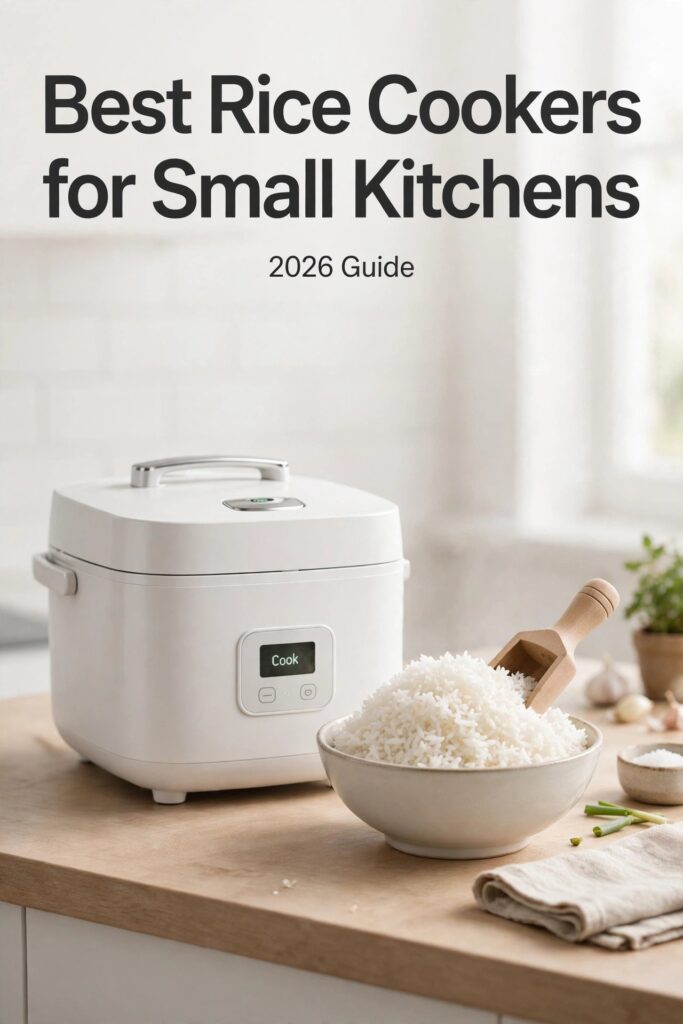
The best rice cooker for small kitchens is not the biggest or the most powerful one — it is the one that matches how much rice you actually cook and how much counter you actually have. A rice cooker earns its place in a small kitchen by doing one job perfectly with almost no effort: measured rice in, fluffy rice out, kept warm until dinner, with no pot to watch and no scorched bottom to scrub. The wrong size ruins that deal. Too big, and a half-empty pot cooks unevenly while hogging a whole cabinet shelf; too small, and you are running two batches on taco night.
The buying question is capacity, measured in uncooked cups. Rice roughly doubles as it cooks, so a 1-cup uncooked cooker makes about 2 cups cooked — enough for one person — while a 5.5-cup uncooked cooker makes about 10 to 11 cups cooked, enough for a family of four to six. For most small kitchens, the sweet spot is 3 to 4 cups uncooked: big enough for dinner plus leftovers, small enough to live on the counter or tuck into a cabinet. The second question is how much thinking you want the cooker to do. Basic one-button cookers boil until the water is gone; Micom and fuzzy-logic cookers sense temperature during the cook and adjust timing as they go, which is why 2026 roundups keep naming them for consistently fluffy rice across white, brown, and sushi rice. Below, we have compared six compact rice cookers available right now, weighing capacity, footprint, cooking technology, and the features that matter when counter space is tight.
Our Top Picks
Zojirushi Neuro Fuzzy NS-ZCC10 5.5-Cup
The Zojirushi Neuro Fuzzy NS-ZCC10 is our best overall pick. It is the rice cooker 2026 roundups keep naming first: Wirecutter’s top pick for seven years running, and the long-time favourite of Serious Eats and America’s Test Kitchen. Its Neuro Fuzzy microcomputer senses the batch in the pot and adjusts temperature and cooking time as it goes, so even a sloppy water measurement still turns out separate, fluffy grains — reviewers report it was the only cooker that still produced rice described as delicious when testers deliberately used the wrong rice-to-water ratio. It cooks 5.5 cups uncooked (about 10 cups cooked) and handles white, sushi, mixed, porridge, sweet, semi-brown, brown, and rinse-free rice, with a thick spherical nonstick pan and heaters on the bottom, sides, and lid for even cooking. It holds a 4.7-star average across more than 12,000 Amazon ratings, and a November 2026 roundup listed it at $165.49. At 10-1/8 by 13 by 8-1/8 inches it is the largest cooker here, but its retractable cord and the fact that it replaces a pot, a steamer, and a porridge pan earn it the counter space.
Pros:
- Fuzzy-logic cooking that forgives a wrong water measurement — the consensus top pick across 2026 roundups
- 5.5 cups uncooked (about 10 cups cooked) with eight menu settings, from sushi to porridge
- Surround heating (bottom, side, and lid) with a thick spherical nonstick pan
- Extended keep warm holds rice for hours without drying it out, plus a retractable cord
Cons:
- The largest footprint here at over 13 inches deep — measure your counter first
- Premium price: a November 2026 roundup listed it at $165.49, several times a basic cooker
- No induction heating at this price; the bigger 10-cup NS-ZCC18 is the step up for batch cooks
Zojirushi Micom NL-BAC05 3-Cup
The Zojirushi Micom NL-BAC05 is our best small Micom pick. It is the 3-cup version of Zojirushi’s microcomputer cooking, sized for one or two people: 3 cups uncooked (about 6 cups cooked) in a body roughly 9-3/8 by 12-7/8 by 7-7/8 inches, so it fits a small counter or a cabinet shelf where the 5.5-cup models will not. Micom technology adjusts cooking parameters automatically, and a triple heater warms the rice from the bottom, side, and top for even results. The menu covers white and sushi rice, brown rice, long-grain white rice, steel-cut oatmeal, quinoa, and cake, plus quick cooking — the quinoa and oatmeal settings are the ones that set it apart from the other small cookers here. It has a delay timer with two settings, automatic keep warm, extended keep warm, and a reheat cycle, and the removable steam vent cap allows high-temperature cooking without messy overflows.
Pros:
- Real Micom cooking in a true small-kitchen size — 3 cups uncooked for one or two people
- Triple heater (bottom, side, and top) for even cooking in a small pot
- Quinoa, steel-cut oatmeal, and cake settings alongside the rice menus
- Delay timer, extended keep warm, and reheat cycle for flexible meal timing
Cons:
- Priced well above basic 3-cup cookers — you are paying for the Micom chip
- 3 cups uncooked is too small for a family dinner or batch cooking
- Made in China, unlike the made-in-Japan Neuro Fuzzy, and the 500-watt heater is slower than the bigger Zojirushi
Dash Mini Rice Cooker 2-Cup
The Dash Mini Rice Cooker is our best tiny pick. It is the smallest cooker in this guide by a wide margin: a half-quart pot that cooks 1 cup uncooked (2 cups cooked), sized for a single serving of rice, oatmeal, soup, or stew. It has one job and one switch — add rice and water, press the button, and it flips to keep warm when the rice is done — and the removable nonstick pot lifts out for serving and easy cleaning. A recipe guide comes in the box, and the keep-warm function holds a single portion until you are ready to eat. For a studio apartment, a dorm room, an office desk, or a kitchen where a full-size cooker would live in a closet and never come out, the Dash Mini is the cooker that actually gets used because it takes up almost no space at all.
Pros:
- The smallest footprint here — a half-quart pot for a single serving
- One-button cooking with automatic keep warm; no menus to learn
- Removable nonstick pot for easy serving and cleaning, with a recipe guide included
- The cheapest way into a dedicated rice cooker, and small enough to store anywhere
Cons:
- 1 cup uncooked (2 cups cooked) is strictly one person — no leftovers, no guests
- No settings for brown rice, quinoa, or oatmeal; it is a one-button cooker
- The tiny pot means soups and stews are single-serving only, and the nonstick coating needs gentle utensils
Aroma Housewares ARC-914SBD 4-Cup
The Aroma Housewares ARC-914SBD is our best budget pick. It is the most-owned rice cooker in this guide by an enormous margin, with more than 65,000 Amazon ratings at a 4.5-star average, and a November 2026 roundup listed it at $34.14. It cooks 4 cups uncooked (2 to 8 cups cooked) in a 2-quart stainless-steel body measuring about 8.6 by 9.25 by 8.5 inches — compact enough for a small counter, big enough for a family dinner. Its Sensor Logic technology controls temperature through the cooking cycle, with digital presets for white rice, brown rice, steaming, and Flash Rice, plus a 15-hour delay timer and automatic keep warm. The included steam tray is the feature that earns it its place: rice cooks below while vegetables or fish steam above, so one cycle makes a side dish too.
Pros:
- The budget best seller — over 65,000 Amazon ratings at 4.5 stars, listed at $34.14 in a November 2026 roundup
- 4 cups uncooked (2 to 8 cups cooked) in a compact 2-quart stainless body
- Steam tray included, so rice and a vegetable side come out of one cycle
- White rice, brown rice, steam, and Flash Rice presets plus a 15-hour delay timer
Cons:
- Digital sensor cooking, not fuzzy logic — it follows a programmed schedule rather than reading the pot
- The inner pot is coated nonstick, not stainless, so it needs gentle utensils and hand washing
- No quinoa or oatmeal setting, and no clock display on the front panel
TIGER JBV-A10U 5.5-Cup
The TIGER JBV-A10U is our best one-pot-meal pick. It is the cheapest way into a real microcomputer rice cooker from one of the big three Japanese brands, with a November 2026 roundup listing it at about $110. Its Micom system adjusts cooking time and temperature by rice type and amount, and owners consistently report white rice close to the Zojirushi’s at less than half the price. The standout is the tacook synchronized-cooking tray: a BPA-free plate that steams vegetables or protein above the rice while it cooks, so dinner is a one-pot job with no flavour crossover. It holds 5.5 cups uncooked (about 11 cups cooked), has four automated settings (plain rice, brown rice, slow cook, and synchro-cooking), and keeps rice warm for up to 12 hours. It ships with a spatula, measuring cup, and a Tiger recipe cookbook, and holds a 4.6-star average across roughly 6,800 Amazon ratings.
Pros:
- Real Micom cooking for about $110, per a November 2026 roundup — the budget route to a Japanese microcomputer cooker
- Tacook tray steams a main dish above the rice, so one cycle makes dinner
- 5.5 cups uncooked (about 11 cups cooked) with a 12-hour keep warm
- Scratch-resistant nonstick inner pot, with a recipe cookbook included
Cons:
- One of the widest units here at 13.9 inches deep — it needs a dedicated spot, not a shared shelf
- Only four settings and no timer or clock display
- Inner pot is hand wash only, and there is no sushi or jasmine setting
Instant Zest 8-Cup
The Instant Zest 8-Cup is our best simple digital pick. It is the one-touch cooker from the makers of Instant Pot: 4 cups uncooked (8 cups cooked) with four pre-programmed settings for white rice, brown rice, quinoa, and oatmeal, and no pressure-cooking function to learn. It steams as well as it cooks rice, so grains, quinoa, and oatmeal all come out of the same compact pot, and the one-touch controls make it the easiest cooker here for a beginner — press the grain you are cooking and walk away. Reviewers praise it as a good budget cooker that makes acceptable rice with little fuss, though some note starchy water can leak if the pot is overfilled, so the fill lines matter. For a small kitchen that wants one simple digital cooker for everyday grains without a long menu to decode, the Zest is the straightforward choice.
Pros:
- One-touch cooking for white rice, brown rice, quinoa, and oatmeal — no pressure cooking to learn
- 4 cups uncooked (8 cups cooked) in a compact body from the makers of Instant Pot
- Steamer function included for grains and vegetables
- The simplest controls here — press one button and walk away
Cons:
- Only four settings and no fuzzy-logic adjustment — it follows a fixed program
- Reviewers report starchy water can leak if the pot is overfilled past the fill line
- Fewer menu options than the Zojirushi or Tiger picks, and no delay timer
Buying Guide
Start with capacity in uncooked cups: Rice roughly doubles as it cooks, so match the uncooked capacity to your household: 1 cup uncooked (2 cups cooked) feeds one person, 3 cups uncooked (about 6 cups cooked) suits one or two people with leftovers, 4 cups uncooked (8 cups cooked) covers a small family, and 5.5 cups uncooked (about 10 to 11 cups cooked) feeds four to six. A pot cooked half-empty can cook unevenly, so do not buy a family-size cooker for a one-person household — and do not buy a mini if you cook for guests.
Measure the footprint, not just the capacity: A rice cooker’s depth matters more than its height in a small kitchen. The Zojirushi Neuro Fuzzy and the Tiger JBV-A10U are both about 13 to 14 inches deep, while the Aroma ARC-914SBD is under 9.5 inches wide and the Dash Mini is smaller still. Measure your counter depth and your cabinet shelf height before ordering, and remember the lid opens upward — a cooker tucked under wall cabinets needs clearance to open. A retractable cord, like the Neuro Fuzzy’s, keeps a small counter tidy.
Micom and fuzzy logic are worth it if you eat rice often: Basic cookers boil until the water is gone; Micom and fuzzy-logic cookers sense temperature during the cook and adjust timing as they go. That is why 2026 roundups keep naming the Zojirushi Neuro Fuzzy first — it forgives a wrong water measurement and cooks brown, sushi, and porridge rice evenly. If you cook rice once a week, the Aroma or Instant Zest will serve you well for a third of the price; if you cook it most days, the Micom chip pays for itself in consistency.
Look for a steamer tray or tacook plate: In a small kitchen, a cooker that makes two things at once saves a whole pot. The Aroma’s steam tray cooks vegetables above the rice, and the Tiger’s tacook plate steams a main dish — chicken, fish, or vegetables — at the same time, with no flavour crossover. If you batch-cook sides, this feature matters more than an extra menu setting.
Keep-warm quality decides weeknight usefulness: A rice cooker earns its counter space when dinner is ready before everyone is home. Look for automatic keep warm as a minimum, and extended keep warm — which holds rice at a lower temperature so it does not dry out or crust — if your household eats at different times. The Zojirushi models hold rice for hours without drying it out; the Tiger holds for up to 12 hours; the Dash Mini’s keep warm is built for a single portion eaten soon after cooking.
Cleaning and the inner pot: Nonstick inner pots wipe clean but need plastic or wooden utensils and hand washing — metal utensils scratch the coating. The Aroma ARC-914SBD’s pot is coated, not stainless, despite the stainless exterior, so check the listing carefully if you want a steel pot. Removable lids and steam vent caps make cleaning easier, and a detachable cord or retractable cord makes storage simpler in a tight cabinet.
FAQs
What is the best rice cooker for small kitchens? The Zojirushi Neuro Fuzzy NS-ZCC10 is our top pick — fuzzy-logic cooking that forgives a wrong water measurement, 5.5 cups uncooked, and the consensus favourite across 2026 roundups. For a smaller household, the 3-cup Zojirushi Micom NL-BAC05 gives you the same microcomputer cooking in a true small-kitchen size, and the Dash Mini is the pick for a single serving.
What size rice cooker do I need for one or two people? A 3-cup uncooked cooker (about 6 cups cooked) is the sweet spot for one or two people — it leaves room for leftovers without cooking a half-empty pot. The Zojirushi Micom NL-BAC05 is built for exactly that. For strictly one person, the Dash Mini’s 1 cup uncooked (2 cups cooked) is enough.
How many cups of cooked rice does a 5.5-cup rice cooker make? About 10 to 11 cups cooked. Rice cooker capacity is measured in uncooked cups using the small 180 mL rice cup, and rice roughly doubles as it cooks — so a 5.5-cup uncooked cooker like the Zojirushi NS-ZCC10 or the Tiger JBV-A10U makes about 10 to 11 cups of cooked rice.
Is a Micom or fuzzy logic rice cooker worth it? If you eat rice most days, yes. Micom and fuzzy-logic cookers sense temperature during the cook and adjust timing as they go, so they cook white, brown, sushi, and porridge rice evenly and forgive a sloppy water measurement. If you cook rice once a week, a basic digital cooker like the Aroma ARC-914SBD or Instant Zest will serve you well for much less.
Can a rice cooker steam vegetables? Yes — the Aroma ARC-914SBD includes a steam tray, the Tiger JBV-A10U has a tacook plate that steams a main dish above the rice, and the Instant Zest has a steamer function. Rice cooks below while vegetables or fish steam above, so one cycle makes two dishes.
How do you clean a rice cooker? Wipe the nonstick inner pot with a soft sponge and mild detergent — never use metal utensils or abrasive pads, which scratch the coating. Remove and wash the steam vent cap and inner lid where they detach, and wipe the heating plate clean. Let the pot cool before washing, and never immerse the cooker body in water.