
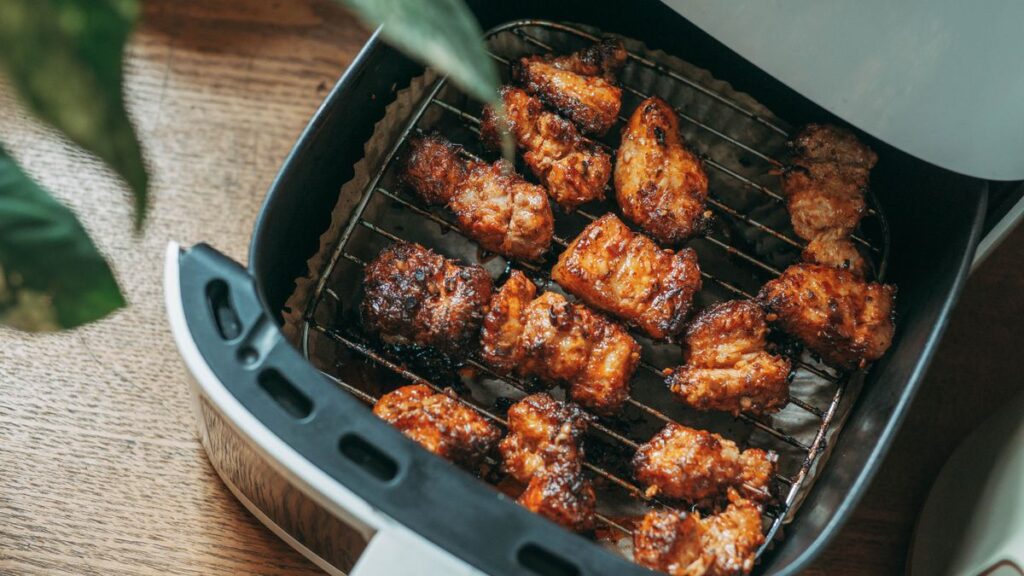
Nothing divides a kitchen like the smell of a deep fryer — one person\’s nostalgic heaven is another\’s lingering grease nightmare. The air fryer vs deep fryer debate has defined countertop cooking for the past decade: can blasting hot air really replace a bubbling vat of oil? Air fryer evangelists claim all the crunch with a fraction of the fat. Deep fryer loyalists insist nothing replicates true deep-fried texture and flavor.
In 2026, the air fryer has clearly won the popularity contest — it is among the best-selling small appliances worldwide, with brands like Philips, Ninja, Cosori, and Instant Pot iterating relentlessly. But popularity is not the same as superiority. Deep fryers still own specific textures, and understanding what each technology actually does to food is the key to choosing wisely.
This air fryer vs deep fryer comparison explains how each cooks, then compares them head-to-head on health and oil use, taste and texture, cooking speed, versatility, safety, smell and mess, energy use, and cost. You will get a comparison table, a verdict for different cooks, and answers to the most common questions.
Air Fryer vs Deep Fryer: The Short Answer
The air fryer is healthier — dramatically so. It uses 70–80% less oil than deep frying, which cuts calories significantly while still producing crispy, browned food. For everyday \”fried\” cravings like fries, wings, and breaded snacks, the air fryer delivers satisfying results with a fraction of the fat.
The deep fryer wins on authentic texture and flavor. Full oil immersion produces the shattering crunch, even browning, and rich taste that define true fried food — french fries, tempura, and doughnuts at their best are deep-fried. It is the choice for occasional indulgence and for foods that genuinely need immersion.
Bottom line: air fryer for healthier everyday crispiness; deep fryer for authentic fried flavor on special occasions. Most households in 2026 are better served by the air fryer as the daily driver.
How an Air Fryer Works
An air fryer is essentially a compact, high-powered convection oven. A heating element and a fan circulate superheated air — typically 350–400°F — at high speed around the food in a perforated basket. The rapid air movement strips moisture from the food\’s surface quickly, triggering the Maillard reaction and caramelization that create browning and crispness.
A light coating of oil (a teaspoon or a spritz of spray) dramatically improves results by conducting heat to the surface and promoting even browning — but that is optional, and even generous air-fryer oil use is a small fraction of deep-frying quantities. Modern 2026 air fryers add features like dual baskets, smart cooking probes, steam-assist for juicier results, and dehydrate, roast, and bake modes.
The key limitation is physics: hot air cannot match hot oil\’s heat-transfer rate. Oil surrounds food completely and transfers heat roughly ten times more efficiently than air, which is why deep-fried food cooks faster and develops a different crust structure.
How a Deep Fryer Works
A deep fryer heats 2–4 quarts of oil to 325–375°F in an insulated, temperature-controlled vessel. Food is fully submerged, and the hot oil transfers heat rapidly and evenly from all sides. Moisture escaping from the food\’s surface creates steam that pushes outward, preventing oil from soaking in — counterintuitively, proper deep frying at the right temperature produces food that is crisp outside and not as greasy as people assume.
Temperature recovery is the deep fryer\’s superpower: a large thermal mass of oil barely drops in temperature when cold food goes in, so batch after batch fries evenly. Built-in filtration systems in better home models extend oil life across multiple sessions.
The costs are obvious: quarts of oil to buy, heat, store, and eventually dispose of; lingering cooking smells; and the genuine safety considerations of a vat of 375°F oil on your counter.
Head-to-Head: Air Fryer vs Deep Fryer
Health, Oil Use, and Calories
This is the air fryer\’s defining victory. Air frying uses 70–80% less oil than deep frying — often just a teaspoon versus quarts. That translates directly to calories: studies comparing the methods find air-fried foods contain substantially less fat, with french fries showing some of the biggest differences. For anyone managing weight, cholesterol, or heart health, the gap is meaningful.
Deep frying is not the nutritional disaster of reputation when done right — proper temperature means less oil absorption than feared — but it is still fundamentally cooking in fat. There is no version of deep frying that competes with air frying on calories.
- Air fryer: 70–80% less oil; significantly fewer calories and less fat
- Deep fryer: full oil immersion; proper technique limits absorption but can\’t match air frying
- Winner: air fryer, decisively
Taste and Texture
Deep frying produces the gold standard: shattering-crisp crusts, perfectly even browning, and the rich flavor that only full oil immersion creates. French fries, fried chicken with wet batter, tempura, and doughnuts are simply better deep-fried — air-fried versions are good approximations, not equals.
Air frying excels with foods that have natural fat or dry coatings: chicken wings, breaded cutlets, roasted vegetables, and reheated pizza come out genuinely crispy and delicious. Wet batters are the air fryer\’s Achilles\’ heel — without oil to set the batter instantly, it drips through the basket and makes a mess.
- Air fryer: excellent for wings, breaded foods, vegetables; poor for wet batters
- Deep fryer: unmatched for fries, tempura, doughnuts, wet-batter foods
- Winner: deep fryer for authentic texture; air fryer for everyday crispness
Cooking Speed and Batch Size
Deep fryers cook individual batches faster due to oil\’s superior heat transfer, and their large oil capacity means minimal temperature drop between batches. But they need 10–15 minutes to heat quarts of oil, erasing the per-batch advantage for small jobs.
Air fryers preheat in 3–5 minutes and cook a basket of fries in 15–20 minutes. The constraint is basket size — overcrowding steams instead of crisps, so large quantities need multiple batches. Dual-basket 2026 models have eased this pain considerably.
- Air fryer: fast preheat; limited by basket size for big batches
- Deep fryer: slower heat-up; superior for continuous large batches
- Winner: tie — air fryer for small jobs, deep fryer for crowds
Versatility
The air fryer is really a multi-cooker in disguise: roast vegetables, bake small cakes, reheat pizza to crispy perfection, dehydrate fruit, cook frozen snacks, and even \”grill\” proteins. In 2026, many households use their air fryer daily for tasks far beyond frying.
A deep fryer does one thing — fry in oil — though it does it brilliantly. Some models include steaming or boiling functions, but versatility is not the point. If you want one appliance that earns daily counter space, the air fryer wins easily.
- Air fryer: roasts, bakes, reheats, dehydrates — a daily-use multi-cooker
- Deep fryer: superb at one job; limited beyond frying
- Winner: air fryer
Safety
Air fryers are far safer: enclosed heating, cool-touch exteriors, automatic shutoff, and no open oil. They are among the safest hot cooking appliances available. Deep fryers involve quarts of 375°F oil — splatter burns, the (rare but real) risk of oil fires, and dangerous cleanup if knocked over. Households with children should think carefully.
- Air fryer: enclosed, cool-touch, auto shutoff — very safe
- Deep fryer: burn and fire risks from hot oil; demands respect
- Winner: air fryer, decisively
Smell, Mess, and Cleanup
Deep frying smells up the house — the aroma lingers in fabrics and curtains for days, which is why many deep-fryer owners relegate the machine to the garage or patio. Oil disposal is a genuine chore: cool it, strain it, store it, and eventually dispose of it properly (never down the drain).
Air fryers produce minimal smell and the nonstick basket usually goes in the dishwasher. Cleanup takes minutes. For apartment dwellers and anyone sensitive to lingering odors, this alone can settle the debate.
- Air fryer: minimal odor; dishwasher-safe basket; minutes to clean
- Deep fryer: lingering smells; oil filtering, storage, and disposal
- Winner: air fryer
Energy Use
Air fryers draw 1,400–1,800 watts but cook quickly in a small chamber — typically 0.3–0.6 kWh per session. Deep fryers draw similar wattage but run longer heating large oil volumes, and maintaining oil temperature between batches adds up. The air fryer is the more efficient choice for typical home portions.
- Air fryer: ~0.3–0.6 kWh per session; small chamber, fast cooks
- Deep fryer: higher total use heating and holding quarts of oil
- Winner: air fryer
Cost
Air fryers range from $60 for compact models to $200–$300 for large dual-basket smart models — and the \”fuel\” is essentially free. Deep fryers cost $50–$150 for the machine, but each session consumes dollars of cooking oil, plus replacement oil every few uses. Over a year of regular frying, the deep fryer\’s oil costs dwarf the machine\’s price.
- Air fryer: $60–$300; negligible running costs
- Deep fryer: $50–$150 machine + ongoing oil costs
- Winner: air fryer on total cost of ownership
Air Fryer vs Deep Fryer: Comparison Table
| Feature | Air Fryer | Deep Fryer |
|---|---|---|
| Oil use | 1 tsp to 1 tbsp per batch | 2–4 quarts per session |
| Calories vs deep-fried | 70–80% less oil; much lower fat | Baseline indulgence |
| Texture quality | Very good; not identical to deep-fried | Gold standard crispness |
| Wet batters | Poor — batter drips through basket | Excellent |
| Versatility | Roast, bake, reheat, dehydrate | Frying only |
| Safety | Enclosed, cool-touch, auto shutoff | Hot oil burn and fire risks |
| Smell and mess | Minimal | Lingering odor; oil disposal |
| Energy per session | ~0.3–0.6 kWh | Higher; heats quarts of oil |
| Machine cost | $60–$300 | $50–$150 + ongoing oil |
Which Should You Buy? Our 2026 Verdict
Buy an air fryer if: you want crispy food regularly without the health cost, you cook for one to four people, you value versatility and easy cleanup, or you live in an apartment where deep-frying smells are a non-starter. For the vast majority of households, the air fryer is the right daily choice — it handles wings, fries, vegetables, and frozen snacks brilliantly.
Buy a deep fryer if: you are chasing authentic fried texture for specific foods — proper french fries, tempura, doughnuts, fried chicken with wet batter — and you fry often enough to justify the oil management. It remains the tool for special-occasion indulgence and for cooks who refuse to compromise on crunch.
The 2026 reality: most kitchens that own both use the air fryer weekly and the deep fryer a few times a year. If you must choose one, choose based on frequency: everyday crispiness points to the air fryer; occasional perfectionism points to the deep fryer.
Air Fryer vs Deep Fryer FAQ
Is air-fried food actually healthier than deep-fried?
Yes, significantly. Air frying uses 70–80% less oil, which directly reduces calories and fat content — studies show meaningful differences, especially for foods like french fries. Air-fried food is not calorie-free, but the health gap versus deep frying is large and well documented.
Does air fryer food taste as good as deep-fried?
It tastes very good but different. Air frying produces genuine crispness and browning that satisfies most cravings, especially for wings, breaded foods, and vegetables. For fries, tempura, and doughnuts, deep frying still tastes better — the full-immersion crust is inimitable.
Can you put battered food in an air fryer?
Wet batters perform poorly in air fryers — the batter drips through the basket before it can set, creating a mess. Dry coatings (flour-egg-breadcrumb) work excellently. For tempura-style wet batter, a deep fryer is the right tool.
Which is better for french fries?
Deep-fried fries remain the gold standard for texture — shattering crisp outside, fluffy inside. Air-fried fries are genuinely delicious with far fewer calories, and double-cooking (a low-temp first cook, then high-heat crisping) narrows the gap considerably. Health-conscious cooks will be happy with air-fried; purists will deep-fry.
Do air fryers use a lot of electricity?
No — a typical session uses 0.3–0.6 kWh, costing just a few cents. Air fryers are among the most energy-efficient ways to cook small portions, far cheaper than heating a full-size oven for the same job.
Is it safe to leave a deep fryer unattended?
No. Never leave hot oil unattended — most kitchen oil fires start this way. Stay in the kitchen while frying, keep a lid nearby to smother potential flare-ups, and never use water on an oil fire. Air fryers, by contrast, are designed to run safely on their own with auto shutoff.
What oil is best for deep frying?
Use neutral oils with high smoke points: peanut, canola, vegetable, or refined safflower oil, heated to 325–375°F depending on the food. Filter and strain oil after each use and store it cool and dark; most oil handles 3–4 frying sessions before flavors degrade.
Can an air fryer replace my oven?
For small portions, often yes — air fryers roast, bake, and reheat remarkably well, and many owners use them more than their ovens in 2026. They cannot match oven capacity for large roasts, big-batch baking, or tall items. Think of the air fryer as the oven\’s nimble partner, not its replacement.
