
Intro
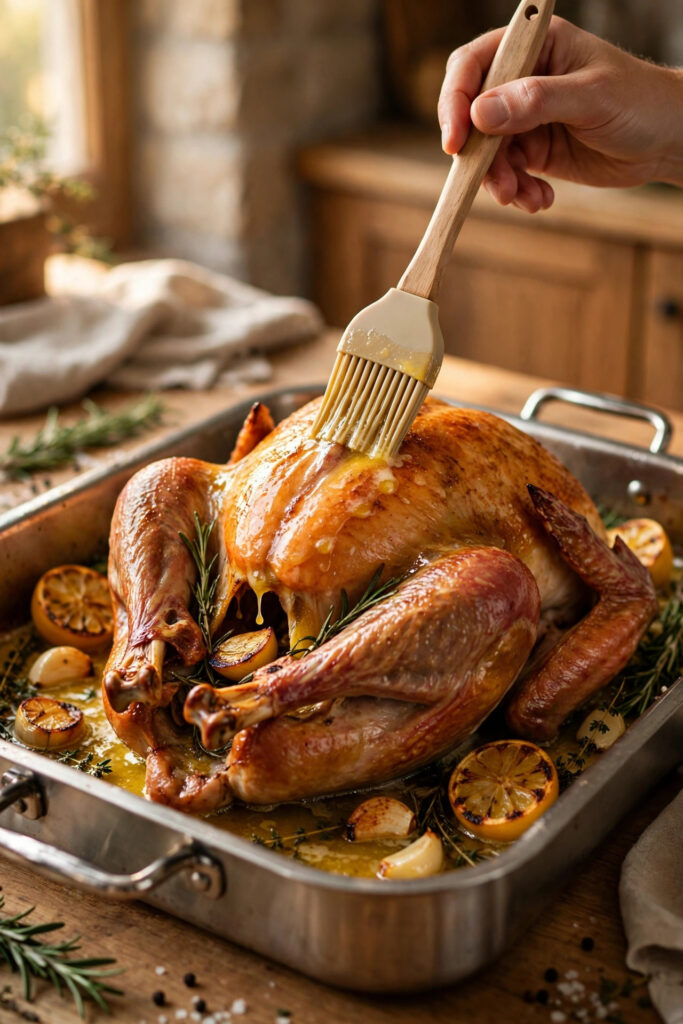
The best basting brush for turkey is the difference between dry, pale skin and a bird that comes out of the oven glossy, golden, and juicy. Basting — brushing pan juices or melted butter over the turkey as it roasts — keeps the skin moist and helps it brown evenly, but only if your brush actually picks up and spreads the liquid instead of shedding bristles into the pan or melting on contact with a hot roasting pan.
Below, we’ve researched the top-rated basting brushes available right now, comparing silicone and natural-bristle options for heat resistance, liquid pickup, coverage, and cleanup, so you can pick the right one before Thanksgiving dinner.
Our Top Picks
OXO Good Grips Silicone Pastry Brush
The OXO Good Grips Silicone Pastry Brush is our top pick for turkey basting. America’s Test Kitchen named it the best silicone brush of 2026, praising its bristles for picking up plenty of liquid and spreading it in a controlled, gentle way. The grippy handle stays comfortable even when slick with butter, and the 1.5-inch head is the right width for sweeping butter and pan juices across a whole turkey breast in a few passes.
Pros:
- America’s Test Kitchen’s top-rated silicone brush for 2026
- Bristles pick up and spread liquid evenly without shedding
- Grippy handle stays secure even with buttery hands
- Dishwasher-safe and easy to clean
Cons:
- Silicone bristles hold less liquid than natural boar bristles
- Handle can soften if left resting against a hot pan
- Bristles can stain and retain odors over time
OXO Good Grips Grilling Basting Brush
The OXO Good Grips Grilling Basting Brush is the pick for cooks who baste over high heat. Its heat-resistant silicone bristles and long, soft-grip handle keep your hands safely away from the roasting pan and the oven’s heat, and the bristles hold up to hot basting liquids without melting or losing their shape.
Pros:
- Long handle keeps hands away from heat
- Heat-resistant silicone bristles won’t melt on hot pans
- Soft, non-slip grip stays comfortable during long roasts
- Dishwasher-safe for easy cleanup
Cons:
- Larger head is less precise for small or delicate jobs
- Silicone bristles spread thin liquids less evenly than boar hair
- Bulky to store in a crowded utensil drawer
Winco 1.5-Inch Flat Pastry Brush
The Winco 1.5-Inch Flat Pastry Brush is the pick for natural bristles. America’s Test Kitchen named it the best pastry brush overall in 2026, with the thickest head of bristles in its testing — it picked up and deposited the greatest volume of egg wash, oil, butter, and glaze in a single pass. The boar’s-hair bristles and varnished wood handle are a classic, professional-kitchen combination.
Pros:
- America’s Test Kitchen’s top pastry brush pick for 2026
- Thick boar’s-hair bristles hold more liquid than silicone
- Applies butter and pan juices in a single smooth pass
- Inexpensive for a professional-quality brush
Cons:
- Natural bristles can shed occasionally, especially when new
- Hand washing required — not dishwasher-safe
- Bristles can retain odors if not dried thoroughly
Williams Sonoma Olivewood Pastry Brush
The Williams Sonoma Olivewood Pastry Brush is the pick for cooks who want a beautiful, classic brush. Genuine boar bristles give a soft, flexible touch for thorough, even brushing, while the sustainably sourced Mediterranean olivewood handle provides a firm, comfortable grip. It handles egg wash, butter, and basting liquids with equal ease.
Pros:
- Genuine boar bristles are soft, flexible, and hold liquid well
- Handsome olivewood handle with a comfortable grip
- Gentle enough for delicate pastry and thorough enough for basting
- Well balanced for precise, controlled brushing
Cons:
- Higher price than basic silicone or boar-bristle brushes
- Natural bristles need hand washing and careful drying
- Smaller head means more passes across a large turkey
Kitchen Mama Silicone Pastry and Basting Brush Set
The Kitchen Mama Silicone Pastry and Basting Brush Set is the pick for wide, fast coverage. Its high-density gradient bristles hold more sauce and spread it smoothly, and the extra-wide head glazes a turkey breast in far fewer passes than a standard 1.5-inch brush. The food-grade silicone is heat resistant to 446°F, and the seamless one-piece design is dishwasher-safe.
Pros:
- Extra-wide head covers a turkey quickly with fewer dips
- Gradient bristles hold and spread sauce evenly
- Heat resistant to 446°F for use near hot pans and grills
- One-piece seamless design is dishwasher-safe
Cons:
- Wide head is clumsy for small pans and tight corners
- Silicone bristles are rougher on delicate foods than boar hair
- Set includes two sizes, so the smaller brush may go unused
WALFOS Extra Large Silicone Basting Pastry Brush
The WALFOS Extra Large Silicone Basting Pastry Brush is the pick for big roasts on a budget. Its wide 2.5-inch brush head covers a whole turkey breast in a few strokes, the flexible silicone bristles hold a good amount of marinade or butter without dripping, and the brush is heat resistant to 446°F — impressive for a brush at this price.
Pros:
- Wide 2.5-inch head covers large roasts fast
- Holds plenty of butter and marinade with minimal dripping
- Heat resistant to 446°F
- Very affordable for the size and quality
Cons:
- Wide head is too large for small or delicate basting jobs
- Silicone bristles don’t hold thin liquids as well as boar hair
- Handle can feel bulky compared with slimmer brushes
Buying Guide
Silicone vs. natural bristles: Silicone bristles never shed, handle high heat, and go straight in the dishwasher — ideal for basting a hot turkey with butter or pan juices. Natural boar bristles hold more liquid (often more than double the volume of silicone) and spread it more gently and precisely, which is why professional kitchens still reach for them. Many cooks keep one of each.
Heat resistance: A basting brush for turkey will meet hot pan juices and a hot roasting pan. Look for silicone rated to at least 446°F (most good models are) and keep any brush — silicone or natural — from resting against the pan itself. Natural bristle handles are wood, which can scorch if left in a hot oven.
Head width: A 1.5-inch head is the standard all-rounder, precise enough for edges and wide enough for a turkey breast. A 2.5-inch extra-wide head (WALFOS, Kitchen Mama) covers a big bird faster but is clumsy in small pans. For a whole turkey, wider is usually better.
Liquid pickup: The best brush picks up enough butter or pan juice in one dip to cover a large area without constant re-dipping. Thick, dense bristle heads (Winco, Kitchen Mama) hold the most liquid; thin or sparse silicone bristles need more trips to the pan.
Cleanup: Silicone brushes rinse clean and are dishwasher-safe, a real advantage after basting a greasy turkey. Natural bristle brushes need hand washing with warm soapy water and thorough air drying — trapped moisture can make them smell. Whichever you choose, wash the brush right after basting so butter doesn’t dry in the bristles.
How to baste a turkey: Brush melted butter or pan juices over the skin every 30–45 minutes during roasting, working quickly so the oven door isn’t open long. Start basting after the first hour, once the skin has begun to set, and stop basting in the final 30 minutes so the skin can crisp.
FAQs
What is the best basting brush for turkey? For most cooks, a heat-resistant silicone brush like the OXO Good Grips Silicone Pastry Brush is the best all-rounder — it never sheds, handles hot pan juices, and cleans up in the dishwasher. If you want maximum liquid pickup, a natural boar-bristle brush like the Winco flat pastry brush holds more butter per dip.
Are silicone basting brushes safe for hot turkey? Yes. Good silicone brushes are heat resistant to 446°F or higher, well above the temperature of pan juices. Just don’t rest the brush on a hot roasting pan or leave it in the oven — the handle can soften.
Do natural bristle brushes shed into food? They can, especially when new. Rinse a new boar-bristle brush in hot water and flick it dry before first use, and inspect the bristles after each wash. Silicone brushes never shed, which is one reason many cooks prefer them for basting.
How often should I baste a turkey? Every 30–45 minutes after the first hour of roasting is plenty. Basting more often means opening the oven door more often, which drops the temperature and extends the cook time.
Can I use a regular pastry brush to baste a turkey? Yes — a pastry brush and a basting brush are the same tool. The only difference is size: longer, wider brushes (like the OXO grilling brush or the WALFOS) are easier to use on a large bird and keep your hands farther from the heat.
How do I clean a basting brush after turkey? Silicone brushes go in the dishwasher or rinse clean under hot water. Natural bristle brushes should be hand washed in warm soapy water, rinsed well, and air-dried bristle-down so moisture doesn’t collect in the ferrule.
