
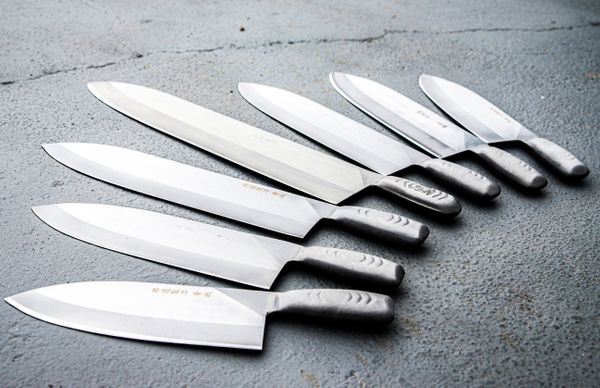
The best knife sharpener of 2026 is the Chef’sChoice Trizor XV Model 15 for its three-stage electric system that converts standard edges to a durable 15-degree Trizor edge — with the Sharp Pebble Whetstone Kit (1000/6000) as the best whetstone pick for learning real sharpening skills, and the KitchenIQ Edge Grip 2-Stage as the best budget pull-through. A sharp knife is safer than a dull one — it cuts where you aim instead of slipping — and the right sharpener keeps your knives performing like new for years.
Dull knives cause more kitchen injuries than sharp ones: they require force, and force plus slipping equals cuts. Meanwhile a sharp edge glides through tomatoes and onions with minimal pressure. This research-based guide compares the seven best knife sharpeners of 2026 across the three main methods — electric, pull-through, and whetstone — based on published specifications, abrasive systems, and aggregated long-term owner reviews, plus guidance on which method suits your knives and patience.
Best Knife Sharpeners 2026: Quick Comparison
| Model | Type | Stages/Grits | Edge Angle | Standout Feature | Best For |
|---|---|---|---|---|---|
| Chef’sChoice Trizor XV 15 | Electric | 3-stage | 15° (converts) | Converts to 15° edge | Best overall |
| Sharp Pebble 1000/6000 | Whetstone | 1000 + 6000 grit | User-controlled | Learn real skill, cheap | Best whetstone |
| KitchenIQ Edge Grip | Pull-through | 2-stage | Preset | Ultra-simple, cheap | Best budget |
| Work Sharp Precision Adjust | Guided system | Variable (stones) | 15–30° adjustable | Angle-guided precision | Best guided |
| Presto EverSharp Electric | Electric | 2-stage | Preset | Simple electric, value | Best value electric |
| Smith’s 3-in-1 | Manual combo | Coarse/fine + rod | Preset | Sharpener + honing rod | Best manual combo |
| Naniwa / Shapton Pro stones | Whetstone | Single stone | User-controlled | Pro-grade splash-and-go | Best pro stone |
Why Sharp Knives Are Safer (and Better)
The safety argument is physics: a sharp edge bites into food immediately, so the knife goes where you direct it with light pressure. A dull edge skates across tomato skins and onion layers, requiring force — and when it finally breaks through or slips off, that force goes somewhere unintended, often a finger. Professional kitchens treat sharpness as safety equipment, not luxury.
Performance follows: sharp knives cut cleanly instead of crushing, so herbs don’t bruise black, onions release fewer tear-inducing compounds, and meat slices rather than tears. The good news is that maintaining sharpness is easier than restoring it — regular honing plus occasional sharpening keeps any decent knife performing indefinitely.
A sharp edge bites immediately with light pressure; a dull edge skates, needs force, and slips. Sharpness is safety equipment — and maintenance beats restoration every time.
How We Researched These Picks
We did not conduct hands-on lab testing. Our rankings are based on published specifications (abrasive types and grits, stage designs, angle claims), method suitability for different knife types, and aggregated long-term owner reviews from major retailers, cross-checked against professional sharpener and chef recommendations published through 2026. We weighted edge quality reports, ease of achieving consistent angles, metal removal rates, and suitability for beginners.
1. Best Overall: Chef’sChoice Trizor XV Model 15
Why it stands out: The Trizor XV does something unique: its three-stage system (diamond abrasives for shaping, finer diamonds for honing, stropping disks for polishing) converts standard 20-degree edges to a sharper, longer-lasting 15-degree Trizor XV edge. The spring-guided slots make angle consistency automatic — the machine’s main advantage over manual methods. It handles straight-edge kitchen knives brilliantly and has decades of refinement behind it.
Check price: Chef’sChoice Trizor XV Model 15
Key specs: 3-stage electric; 100% diamond abrasives stages 1–2; flexible stropping stage 3; converts 20° to 15° edges; sharpens straight-edge knives.
Who should buy it: Anyone wanting excellent edges with zero skill required. Watch for: not for serrated knives or single-bevel Japanese blades; removes more metal than stones. New to sharpening entirely? Our beginner’s sharpening guide starts from zero — and a sharpener deserves a decent knife: see the best knife sets for beginners under $100.
Amazon CTA: Check the current price of the Chef’sChoice Trizor XV on Amazon
2. Best Whetstone: Sharp Pebble 1000/6000 Kit
Why it stands out: The Sharp Pebble kit is the standard learn-to-sharpen recommendation: a 1000-grit side for establishing the edge and a 6000-grit side for polishing, with a bamboo base, angle guide, and flattening stone included. Whetstones remove minimal metal, work on any straight-edge knife including Japanese blades, and teach a lifelong skill. The included angle guide helps beginners hold consistent geometry while learning.
Check price: Sharp Pebble Premium Whetstone Kit 1000/6000
Who should buy it: Anyone willing to learn the real skill. Watch for: learning curve — expect practice before great results; needs soaking (or splash-and-go for some).
Amazon CTA: Check the current price of the Sharp Pebble Kit on Amazon
3. Best Budget: KitchenIQ Edge Grip 2-Stage
Why it stands out: The Edge Grip is the simplest sharpener that actually works: pull through the coarse carbide slot a few times to reshape, then the fine ceramic slot to hone. It fits in a drawer, costs less than a pizza, and rescues truly dull drawer knives in under a minute. It’s aggressive (removes notable metal), but for inexpensive knives that’s an acceptable trade for convenience.
Check price: KitchenIQ Edge Grip 2-Stage
Who should buy it: Budget buyers with inexpensive knives. Watch for: aggressive metal removal — don’t use on expensive Japanese knives; preset angle only.
Amazon CTA: Check the current price of the KitchenIQ Edge Grip on Amazon
4. Best Guided: Work Sharp Precision Adjust
Why it stands out: The Precision Adjust bridges whetstones and gadgets: a clamp holds the knife while a guided rod maintains your chosen angle (15–30°) across interchangeable abrasive plates. You get whetstone-quality edges with training-wheels consistency — the best way to sharpen expensive knives without the freehand learning curve. It’s the system serious hobbyists graduate to.
Check price: Work Sharp Precision Adjust
Who should buy it: Owners of good knives who fear freehand. Watch for: setup takes minutes per knife; pricier than basic stones.
Amazon CTA: Check the current price of the Work Sharp Precision Adjust on Amazon
5. Best Value Electric: Presto EverSharp
Why it stands out: The EverSharp offers two-stage electric sharpening (coarse Sapphirite wheels, fine ceramic) at a fraction of the Chef’sChoice price. Blade guides hold the angle automatically, and it handles kitchen, hunting, and pocket knives. For households wanting push-button sharpening without the premium, it’s the value electric.
Check price: Presto EverSharp
Who should buy it: Value-focused electric buyers. Watch for: less refined than Trizor XV; still not for serrated or single-bevel blades.
Amazon CTA: Check the current price of the Presto EverSharp on Amazon
6. Best Manual Combo: Smith’s 3-in-1
Why it stands out: Smith’s combines coarse and fine pull-through slots with a fold-out tapered diamond honing rod — sharpening plus maintenance in one pocketable tool. The rod handles daily honing (realignment), the slots handle actual sharpening. It’s the complete manual edge-care kit for a drawer, tackle box, or camp kitchen.
Check price: Smith’s 3-in-1 Sharpening System
Who should buy it: Campers, anglers, and minimalists. Watch for: compact size means less leverage; learn the rod technique for best results.
Amazon CTA: Check the current price of the Smith’s 3-in-1 on Amazon
7. Best Pro Stone: Naniwa / Shapton Pro
Why they stand out: Japanese water stones like the Shapton Pro (Kuromaku) and Naniwa Professional series are what serious sharpeners actually use: splash-and-go convenience (no soaking), fast cutting, excellent feedback, and consistent grit. A single 1000-grit Shapton Pro maintains any knife; add higher grits for polish. They’re the buy-once stones that make sharpening enjoyable rather than choresome.
Check price: Shapton Pro
Who should buy them: Committed sharpeners and Japanese-knife owners. Watch for: premium price per stone; freehand skill still required.
Amazon CTA: Check the current price of the Shapton Pro 1000 on Amazon
Knife Sharpener Buying Guide
Electric vs Pull-Through vs Whetstone
Electric: fastest, most consistent angles, zero skill — but removes more metal and can’t handle serrated or single-bevel blades. Pull-through: cheapest and simplest, but aggressive and preset-angle only; fine for inexpensive knives. Whetstone: best edges, minimal metal removal, works on everything — but requires learning. Match the method to your knives’ value and your patience.
Our whetstone vs electric sharpener guide compares the two approaches in detail.
Honing vs Sharpening: Know the Difference
Honing (steel or ceramic rod) realigns a rolled edge — maintenance, done frequently, removes no metal. Sharpening grinds a new edge — restoration, done when honing no longer helps. Most “dull” knives just need honing; sharpen only a few times per year. A honing rod plus any sharpener here covers complete edge care.
Grit Guide for Whetstones
Coarse (200–600): repairs chips and reshapes very dull edges. Medium (800–2000): the workhorse — establishes sharp edges; 1000 grit alone maintains most knives. Fine (3000–8000): polishes and refines; noticeable on slicing tasks. Beginners: start with a 1000/6000 combination stone — it covers 95% of needs.
What About Serrated and Japanese Knives?
Serrated knives: most sharpeners can’t handle them — use a tapered diamond rod in each serration, or professional service. Japanese single-bevel: whetstones only, and learn the specific technique; electric and pull-through sharpeners will ruin the geometry. Western double-bevel Japanese (Shun, Global): whetstones or careful guided systems.
Pro Tips
- Hone regularly, sharpen rarely: A few rod strokes before each use keeps edges aligned; sharpen only when honing stops helping.
- The paper test: A sharp knife slices newsprint cleanly; a truly sharp one push-cuts. Test after sharpening.
- Feel for the burr: On stones, sharpen one side until you feel a slight burr along the entire edge, then switch sides — the burr signals you’ve apexed.
- Use light pressure: Let the abrasive do the work, especially on fine grits. Heavy pressure rounds edges.
- Keep stones flat: Dished stones sharpen unevenly — flatten regularly with a flattening stone or coarse sandpaper on glass.
- Protect your edges daily: Cut on wood or plastic (never glass or stone), hand-wash, and store in a block or on a magnetic strip.
Knife Sharpener FAQs
What is the best knife sharpener for beginners?
The Chef’sChoice Trizor XV electric sharpener gives excellent edges with zero skill — just pull through the slots. If you’d rather learn the craft, a Sharp Pebble 1000/6000 whetstone kit with its angle guide is the classic starting point, and a Work Sharp Precision Adjust offers guided precision between the two.
Are pull-through knife sharpeners bad?
They’re aggressive — carbide pull-throughs remove significant metal and can scratch blades — but they’re not “bad” for inexpensive knives where convenience matters. Don’t use them on expensive Japanese or hand-forged knives; do use them freely on $20 drawer knives you’d otherwise never sharpen.
How often should I sharpen my kitchen knives?
Hone with a rod before most uses; sharpen when honing no longer restores performance — typically 2–4 times per year for home cooks using knives daily. Professional-level use needs more frequent sharpening. The paper test tells you when: if it won’t slice newsprint, it’s time.
Can I sharpen serrated knives?
Yes, but not with standard sharpeners — use a tapered diamond rod, working each serration individually, or send them for professional sharpening. Electric and pull-through sharpeners will damage serrations. Bread knives need this only every few years.
What angle should I sharpen kitchen knives at?
Western knives: 20 degrees per side (40° inclusive) for durability. Japanese knives: 15 degrees per side for keener edges. The Chef’sChoice Trizor XV converts Western knives to 15° edges that many users find sharper and longer-lasting. Harder steels hold acute angles better.
Do I need to soak a whetstone?
Traditional water stones need 5–10 minutes of soaking until bubbles stop; “splash-and-go” stones (Shapton Pro, Naniwa Professional) just need surface water. Oil stones use honing oil instead. Check your stone’s type — soaking a splash-and-go stone wastes time but doesn’t harm it.
Why won’t my knife get sharp?
Common causes: not forming a burr (stopping too early on coarse grits), inconsistent angle (rounding the edge), too much pressure on fine grits, or a wire edge that needs stropping off. Slow down, use light pressure, feel for the burr along the whole edge, and finish with a few light stropping strokes.
Honing Rods: The Daily Companion to Any Sharpener
Every sharpener on this list works best paired with a honing rod — and confusing honing with sharpening is the most common edge-care mistake. A knife edge rolls microscopically with use; honing realigns it without removing metal, while sharpening grinds a new edge. Hone before most uses (a few light strokes per side at the same angle as your edge); sharpen only when honing stops helping.
Steel rods are traditional and inexpensive — fine for softer Western knives. Ceramic rods are the modern recommendation: slightly abrasive, they both realign and micro-polish, working well on harder Japanese steels that steel rods can damage. Diamond rods are aggressive — closer to sharpening than honing — best reserved for very hard steels or quick repairs. Technique matters more than material: light pressure, consistent angle, 3–5 strokes per side. Heavy pressure on a rod rounds edges — the opposite of the goal.
