
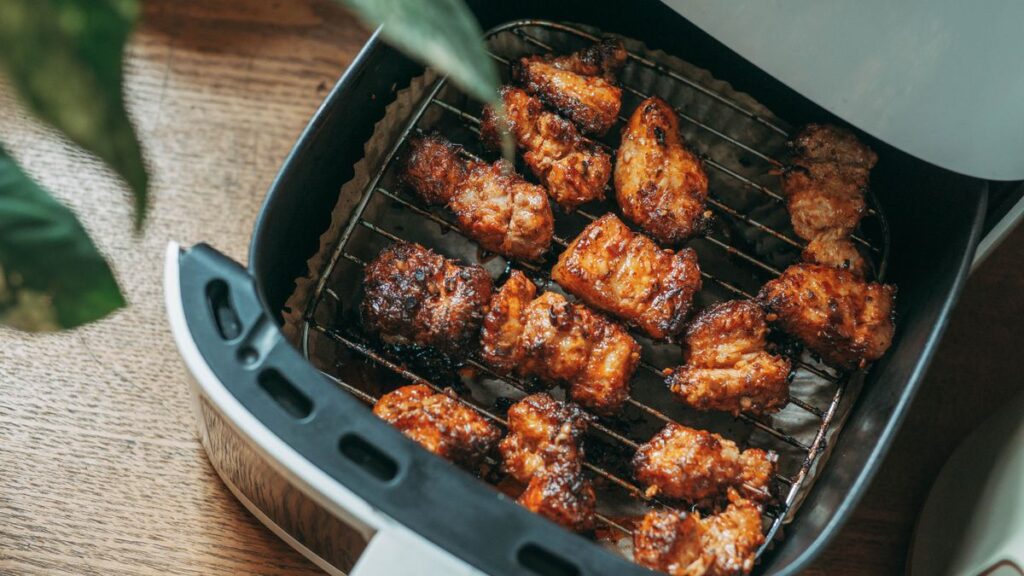
The countertop is where kitchen innovation actually lives. While major appliances evolve slowly, countertop appliance trends in 2026 are moving fast — multi-cookers keep absorbing new functions, designs keep shrinking for urban kitchens, and a new generation of specialized gadgets is finding devoted audiences. If you want to know where home cooking is headed, watch the counter, not the range.
Several forces are shaping this year\’s countertop: smaller living spaces demanding compact multi-taskers, energy costs pushing efficient small-batch cooking, social media accelerating gadget discovery, and maturing technology (better sensors, smarter controls) making each generation genuinely more capable. The result is the most dynamic small-appliance market in years.
This guide to countertop appliance trends in 2026 covers seven developments: the multi-cooker\’s continued expansion, the compact-everything movement, the air fryer\’s second act, specialty single-taskers with cult followings, design-forward appliances as decor, quieter operation as a selling point, and the repairability backlash. For each, you will learn what is driving it and whether to buy in.
Countertop Appliance Trends 2026 at a Glance
The big picture: consolidation and specialization are happening simultaneously. Multi-cookers (Instant Pot, Ninja Foodi, Breville) keep adding functions — air frying, sous vide, dehydrating — becoming genuine one-appliance kitchens. At the same time, hyper-specialized gadgets (nugget ice makers, single-serve precision brewers, dedicated egg cookers) thrive by doing one thing delightfully. Between them, a design renaissance is making appliances beautiful enough to display, while engineering advances make them quieter and more repairable.
Trend 1: The Multi-Cooker Absorbs Everything
The multi-cooker\’s conquest continues in 2026. What started as pressure-cooker-plus has become the Swiss Army knife of the kitchen: current flagship models pressure cook, slow cook, air fry, sous vide, dehydrate, steam, sauté, bake, and make yogurt — ten functions in one footprint. Ninja\’s Combi and similar 2026 all-in-ones even combine combi-steam cooking with air frying.
Driving this is simple economics of space: urban kitchens cannot host ten appliances, so one appliance doing ten jobs wins. The engineering has caught up too — early combo machines compromised on every function, but current generations air-fry and pressure-cook genuinely well rather than merely adequately.
The buying implication: if you are equipping a small kitchen in 2026, a quality multi-cooker is the highest-value purchase available. Choose based on the functions you will actually use weekly — a great pressure-cooker/air-fryer combo beats a mediocre ten-function flagship.
Trend 2: Compact Everything for Small Spaces
With urban living spaces shrinking globally, manufacturers are racing to shrink appliances without shrinking capability. Slim-profile air fryers, narrow-footprint coffee stations, stackable multi-cookers, and 2-slice-everything are designed for counters measured in inches. The \”apartment-size\” designation, once code for compromised, now signals thoughtful engineering.
Clever design details define this trend: cord storage that actually works, vertical orientations (tower air fryers with stacked baskets), nesting components, and multi-use lids. Brands like Dash, Our Place (Wonder Oven), and compact lines from Ninja and Instant Pot lead the aesthetic charge.
For small-kitchen dwellers, 2026 is the best year yet to equip fully. Measure your counter depth and cabinet clearance before buying — the trend\’s only trap is assuming \”compact\” fits your specific space without checking.
Trend 3: The Air Fryer\’s Second Act
The air fryer matured in 2026 from novelty to infrastructure — and the innovation shifted accordingly. Dual-basket models with independent controls (cook wings and fries simultaneously at different settings) are now the default recommendation. Smart probes monitor internal food temperature. Steam-assist air frying keeps proteins juicier. Visible cooking windows satisfy the universal urge to watch food crisp.
More interesting is the air fryer\’s role expansion: it is increasingly the primary cooking appliance in small households, handling roasting, baking, reheating, and dehydrating daily. Manufacturers have responded with larger capacities, better baking accessories, and modes tuned for specific foods rather than generic \”air fry.\”
If your air fryer is more than four years old, the generational leap is worth noting — but the original still cooks fine. Upgrade for capacity, dual zones, or smart features, not because the old one stopped working.
Trend 4: Cult Single-Taskers Thrive
Against the consolidation trend, hyper-specialized appliances are thriving by doing one thing exceptionally. The GE Profile Opal nugget ice maker maintains its cult following. Precision egg cookers, single-serve pour-over stations, dedicated milk frothers, and countertop pizza ovens each serve devotees who tried the multi-tasker version and wanted better.
The psychology is sound: a multi-cooker\’s 14th function will never match a specialist\’s only function. When the single task is something you do daily — morning coffee, daily eggs, constant ice — the specialist\’s superior experience justifies its footprint.
The rule for 2026: consolidate the occasional tasks into multi-cookers, but indulge specialists for daily rituals. Your morning coffee deserves its dedicated machine; your twice-yearly waffles do not.
Trend 5: Appliances as Decor — The Design Renaissance
Countertop appliances in 2026 are designed to be seen. Matte finishes in cream, sage, terracotta, and matte black replace the stainless-and-black monotony; retro curves from Smeg, KitchenAid\’s color program, and newcomers like Our Place make appliances deliberate style choices. The ugly appliance hidden in a cabinet is giving way to the beautiful one displayed proudly.
This is not mere vanity — it changes buying behavior. People keep beautiful appliances on the counter, and appliances on the counter get used. A gorgeous kettle or toaster earns its footprint through daily use that an ugly equivalent never achieved from inside a cabinet.
The practical note: finishes vary in durability. Matte coatings can show wear; retro enamels chip if abused. Read long-term reviews for finish durability, not just day-one beauty — the prettiest appliance is the one that still looks good in year three.
Trend 6: Silence Becomes a Selling Point
As open-plan living merges kitchens with living spaces, noise has become a genuine purchase criterion — and manufacturers are responding. Quieter blenders with sound shields, low-decibel range hoods, hush-mode dishwashers, and soft-close everything reflect a market that noticed how loud kitchens had become.
The 2026 differentiator is honest noise ratings: more brands publish decibel specs, and reviewers measure them. A 10-decibel reduction is perceived as roughly half the loudness — meaningful in real living. For apartments and open plans, checking noise specs before buying is now standard smart-shopper behavior.
Expect this trend to accelerate: as remote work keeps people home all day, the market punishes loud appliances and rewards quiet engineering. Silence is the new stainless steel.
Trend 7: The Repairability Backlash Gains Steam
After years of sealed, glued, disposable gadgets, 2026 sees a genuine repairability movement in small appliances. Right-to-repair legislation, repairability scoring (notably in the EU and spreading), and consumer frustration with $300 appliances dying in two years are pushing brands toward replaceable parts, published repair guides, and longer parts availability.
Leaders are emerging: brands offering replaceable seals, filters, and blades as standard parts; modular designs where the motor unit outlives accessories; and 5–10 year parts guarantees. Reviewers increasingly factor repairability into recommendations.
For buyers, the 2026 move is to favor brands with documented parts availability and repair guides — it is the best predictor of an appliance that lasts. A repairable $150 appliance beats a disposable $100 one on total cost of ownership every time.
What Countertop Trends Mean for Your Kitchen
The 2026 countertop rewards intentionality. Audit what you actually cook weekly, then match appliances to reality: a multi-cooker for the versatile middle, specialists for daily rituals, compact designs for tight spaces, and beautiful objects you will actually keep on the counter. Resist gadget FOMO — the trend cycle is fast, but a well-chosen core setup serves for years.
Prioritize in this order: versatility per square inch (multi-cookers), daily-ritual quality (coffee, eggs, ice), noise level for your living situation, design you will live with visibly, and repairability for longevity. The 2026 market offers excellent options at every priority — the only mistake is buying for an aspirational kitchen instead of your real one.
Trend 8: What to Skip — 2026\’s Overhyped Countertop Fads
Not every trend deserves your money. In 2026, several countertop fads are peaking on marketing while delivering little: single-use \”smart\” gadgets with mandatory app accounts (if it needs your email to toast, walk away), oversized novelty appliances that cook one viral recipe, and ultra-cheap no-name air fryers with uneven heating and questionable safety certifications.
The filter is simple: does it do something you will use weekly, does it do it better than what you own, and will the company exist in three years for parts and support? Fads fail at least one test. The enduring 2026 countertop — multi-cooker, air fryer, quality coffee setup, one beloved specialist — passes all three. Trend-chasing is expensive; intentional equipping is not.
Also fading: the \”more functions\” arms race past the point of usability. A 20-function machine with a confusing interface loses to a 10-function machine you actually understand. In 2026 reviews, usability scores increasingly outweigh feature counts — a healthy correction worth supporting with your wallet.
Countertop Appliance Trends 2026 FAQ
What is the most useful countertop appliance in 2026?
For most households, a quality multi-cooker (pressure cook + air fry + slow cook) delivers the most versatility per square inch and dollar. Beyond that, the \”most useful\” is personal — daily coffee drinkers should prioritize their brewer, frequent fryers their air fryer. Match the appliance to your actual habits.
Are expensive air fryers worth it over budget models?
Mid-range ($120–$200) hits the sweet spot: dual baskets, better temperature accuracy, and durability that budget models lack. Premium models ($250+) add smart features and capacity worth it for large families. Ultra-budget models cook fine but tend toward uneven heating and shorter lifespans.
How do I choose appliances for a tiny kitchen?
Prioritize multi-function machines, measure your actual counter depth and cabinet clearance, favor vertical designs, and be ruthless about single-taskers — keep only the ones serving daily rituals. A multi-cooker plus one beloved specialist (coffee, kettle) covers most tiny kitchens completely.
Do retro-style appliances perform as well as modern ones?
Generally yes for established brands — Smeg, KitchenAid, and Dualit retro lines perform to modern standards beneath the vintage styling. Be warier of no-name retro-styled brands where the aesthetics outpace the engineering. Check performance reviews, not just photos.
What does repairability scoring mean for appliances?
Repairability scores (mandated in France, spreading in the EU) rate how easily a product can be fixed — parts availability, disassembly difficulty, documentation. Higher scores predict longer usable life and lower total ownership cost. Favor high-scoring brands when choosing between similar appliances.
Are smart countertop appliances worth the premium?
Selectively. Guided cooking in multi-cookers and precision temperature control genuinely help; app-remote start on a toaster does not. The 2026 rule: pay for intelligence that improves cooking results or saves active time, skip intelligence that merely adds a phone notification.
How long should a countertop appliance last?
Quality countertop appliances last 5–10 years with normal use; premium brands often longer. Budget models average 2–5 years. Lifespan depends heavily on use intensity and maintenance — descaling kettles and coffee makers, for instance, doubles their service life.
What countertop appliance should I buy first for a new kitchen?
A multi-cooker with pressure cooking and air frying — it covers the widest range of daily cooking in one footprint, from weeknight dinners to batch prep. Add a coffee setup matching your habit second, then fill gaps (toaster oven, kettle) based on what you actually find yourself missing after a month of cooking.
Are dual-basket air fryers worth the extra cost?
For households of 3+, usually yes. Cooking two foods at different temperatures and times simultaneously — wings at 400°F while fries crisp at 380°F — solves the air fryer\’s biggest limitation (batch cooking). The sync-finish feature alone justifies the premium for busy families.
How do I know if a viral kitchen gadget is worth buying?
Apply the weekly-use test: will you use it at least weekly for six months? Check independent reviews (not sponsored unboxings) for durability and real performance, verify replacement parts exist, and beware gadgets that solve problems you do not have. Most viral gadgets fail this filter — the ones that pass are usually worth it.
Do I need to replace my old air fryer?
Not for performance alone — a working air fryer from 2021 still crisps food well. Upgrade when you want specific improvements: dual baskets for batch cooking, larger capacity for a growing family, smart probes for precision, or quieter operation. The generational leap is real but incremental, not revolutionary.
