
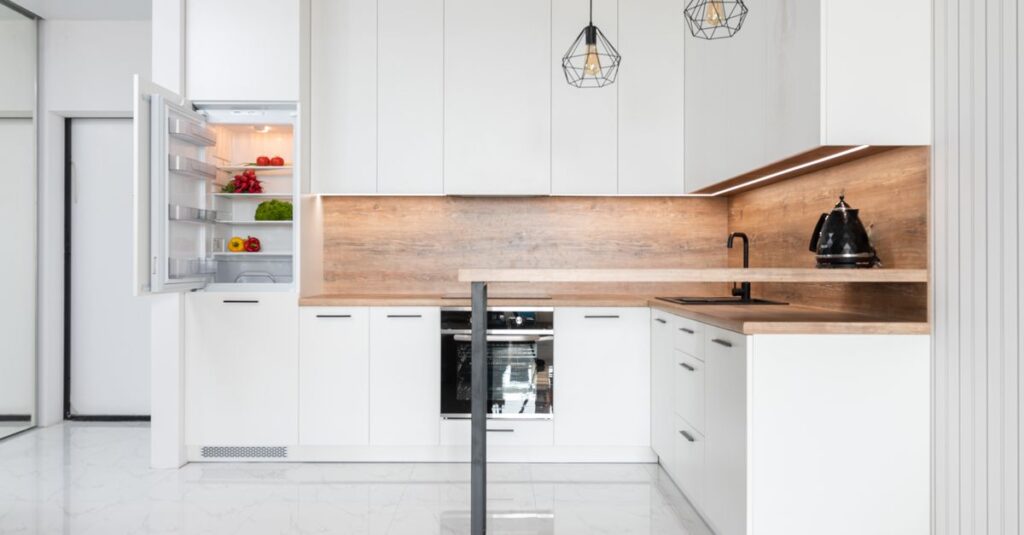
Energy efficient kitchen appliances are having a moment in 2026 — and it is about much more than the yellow Energy Star label. Rising electricity prices, climate consciousness, and genuinely better technology have converged to make efficiency one of the most exciting frontiers in kitchen design. The appliances saving the most energy today are not stripped-down eco-models; they are the best-performing machines on the market, period.
The numbers tell the story: induction cooktops deliver 85–90% of their energy to food versus ~35% for gas; heat-pump dryers (and emerging heat-pump cooking tech) slash consumption; and smart appliances shift heavy loads to off-peak hours automatically. The efficient choice is increasingly the better-cooking choice too — a rare alignment of virtue and performance.
This guide to energy efficient kitchen appliances in 2026 covers the key trends: induction\’s mainstream takeover, right-sizing and the countertop revolution, heat-pump technology spreading beyond laundry, smart load-shifting, Energy Star 2026 standards, and the phantom-load crackdown. You will learn which upgrades save real money and which are greenwashing.
Why Kitchen Efficiency Matters More in 2026
Kitchens are among the most energy-intensive rooms in the home — cooking, refrigeration, and dishwashing together account for a major share of household electricity. With global energy prices elevated and time-of-use rate plans spreading, the cost of an inefficient kitchen is no longer abstract. A household that cooks daily can spend hundreds per year powering its kitchen; efficient choices can cut that substantially.
The good news is that efficiency no longer demands sacrifice. Modern efficient appliances outperform their wasteful predecessors on every metric that matters: induction boils faster than gas, heat-pump dryers are gentler on clothes, and inverter microwaves cook more evenly. The 2026 efficiency story is that the green choice and the good choice are the same choice.
Trend 1: Induction Goes Mainstream
The single biggest efficiency trend in 2026 kitchens is induction cooking\’s move from enthusiast niche to default recommendation. The physics is compelling: induction transfers 85–90% of energy directly into cookware, versus roughly 74% for conventional electric and a mere 32–40% for gas. Every percentage point of waste is heat warming your kitchen instead of your food — heat your air conditioner then pays to remove.
What is driving mainstream adoption now: prices have fallen to parity with mid-range gas and electric cooktops, 2026 models offer bridging zones and precise low-temperature control that erase old usability complaints, and building codes increasingly favor electric cooking. Portable single-burner induction units ($60–$150) let renters and the curious test the technology with zero commitment.
The savings are real but modest per meal — pennies — compounding to tens of dollars yearly for daily cooks. The bigger wins are speed, safety, and kitchen comfort. Efficiency is the rational justification; the cooking experience is what converts skeptics.
Trend 2: The Countertop Revolution — Right-Sizing Your Cooking
The most underrated efficiency trend of 2026 is simply using smaller appliances: heating a 1-cubic-foot air fryer instead of a 5-cubic-foot oven to cook dinner. A full-size oven draws 2,000–5,000 watts heating a huge cavity; an air fryer, toaster oven, or multi-cooker draws 1,200–1,800 watts heating a fraction of the space. For portions serving 1–4 people, the energy savings run 50–80% per meal.
This is not about deprivation — countertop appliances often cook better for small portions, with faster preheats and more concentrated heat. The 2026 kitchen increasingly treats the big oven as the specialist for large roasts and batch baking, while daily cooking migrates to efficient countertop machines.
The math: replacing 200 oven sessions yearly with countertop cooking can save 300–600 kWh — meaningful money on high-rate plans and a genuine carbon reduction. Right-sizing is the highest-ROI efficiency move most households can make, requiring no renovation.
Trend 3: Heat-Pump Technology Enters the Kitchen
Heat pumps — which move heat rather than generating it — revolutionized water heating and clothes drying with 2–3x efficiency gains. In 2026, the technology is probing the kitchen\’s edges: heat-pump dryers are now standard recommendations, heat-pump water heaters pair with efficient dishwashers, and manufacturers are experimenting with heat-pump-assisted cooking appliances.
The dishwasher connection matters most today: pairing an efficient dishwasher with a heat-pump water heater compounds savings on every load, since water heating dominates dishwashing energy. Some 2026 dishwashers also use heat-pump drying cycles that consume a fraction of the energy of conventional heated drying.
Watch this space: as heat-pump components shrink and cheapen, expect the technology to appear in more kitchen appliances through the decade. Early adopters upgrading laundry and water heating now capture the biggest available savings.
Trend 4: Smart Load-Shifting and Time-of-Use Optimization
As time-of-use electricity plans spread — charging 2–3x more during evening peaks than overnight — smart appliances that schedule themselves around rates deliver automatic savings. 2026 dishwashers, EV-adjacent appliances, and even some ovens offer delay-until-off-peak modes that cut operating costs 30–60% for the same work.
The 2026 sophistication is automation: rather than programming delays manually, appliances pull rate schedules from utilities (or learn them) and optimize autonomously. Smart panels and home energy management systems coordinate the dishwasher, water heater, and other loads to avoid stacking demand.
This trend rewards engagement: households on time-of-use plans who enable these features see the savings; those on flat rates see little. Check your utility\’s rate structure — it determines whether load-shifting matters for you.
Trend 5: Tougher Efficiency Standards and Honest Labels
Energy Star and international efficiency standards tightened again for 2026, and the labels are getting more honest. Refrigerators face stricter consumption caps; standby power limits have dropped; and new labeling in several regions shows estimated annual operating cost rather than abstract kilowatt-hours — a change that makes efficiency visceral at the point of purchase.
What this means for buyers: the efficiency floor keeps rising, so even budget appliances waste less than their predecessors. But labels still do not capture everything — they rarely reflect real-world cooking patterns, and the most efficient cooking choice is often behavioral (lid on the pot, right-sized burner) rather than technological.
Read labels as a tiebreaker between otherwise equal models, not as the primary decision factor. A slightly less efficient appliance you will actually use efficiently beats a top-rated one used wastefully.
Trend 6: The Phantom-Load Crackdown
Standby power — the electricity appliances sip while \”off\” — has been quietly regulated downward, and 2026 appliances sip less than ever. Smart plugs and energy monitors have also made phantom loads visible: that old microwave clock, the coffee maker\’s glowing display, the TV-box-equivalent draw of smart displays.
The practical 2026 approach: modern appliances\’ standby draw is small enough (typically under 1–2 watts each) that unplugging everything is performative rather than meaningful — except for older devices and entertainment equipment. Focus efficiency effort on active cooking choices, which dwarf standby by orders of magnitude.
One genuine win: appliances with true off-switches and auto-sleep modes are worth preferring. And smart power strips that cut peripherals when the main device sleeps remain a cheap, effective upgrade for entertainment centers adjacent to open kitchens.
Trend 7: Refrigeration Gets Smarter About Cold
Refrigerators run 24/7, making them the kitchen\’s biggest baseline load — and 2026 models are attacking it cleverly. Inverter compressors (now standard on quality models) modulate output instead of cycling on/off, cutting consumption 20–30% versus old fixed-speed compressors. Vacuum-insulation panels allow thinner walls with better insulation. Smart defrost cycles run only when sensors detect frost buildup rather than on fixed timers.
Behavioral efficiency matters as much as technology: every refrigerator works harder in a hot kitchen, with dirty coils, or when the door hangs open. The 2026 advice is unglamorous but effective — clean coils yearly, keep the fridge full but not packed, and let hot food cool before refrigerating.
When replacing a 15-year-old refrigerator, the efficiency gain alone can justify the purchase: modern efficient models use roughly half the electricity of early-2000s units, saving $50–$150 yearly depending on rates.
Which Efficiency Upgrades Actually Pay Off?
Ranked by return on investment for a typical cooking household: first, shift daily cooking to countertop appliances (free if you own them; enormous savings). Second, adopt efficient habits — lids on pots, right-sized burners, full dishwasher loads (free; 10–20% savings). Third, choose induction when replacing a cooktop (moderate cost; best cooking experience plus efficiency). Fourth, replace ancient refrigerators with inverter-compressor models (large upfront; steady payback). Fifth, enable smart load-shifting on time-of-use plans (free; meaningful where rates vary).
Skip the guilt about standby power on modern devices, and be skeptical of premium \”eco\” models whose efficiency gains never repay their price premium. The 2026 efficiency playbook is refreshingly practical: smaller appliances, smarter habits, induction heat, and modern refrigeration.
The Biggest Energy Wasters Hiding in Your Kitchen
Knowing where waste concentrates focuses your effort. The full-size oven used for small jobs is the champion waster — heating 5 cubic feet for a single tray of vegetables squanders the majority of its energy as heated air. Second is the old refrigerator: a 20-year-old fridge can use twice the electricity of a modern inverter model, running up $100+ in avoidable costs yearly.
Third is the electric water kettle\’s neglected cousin — the constantly-heated drip coffee maker\’s warming plate, which sips power for hours keeping coffee lukewarm (a thermal carafe eliminates this entirely). Fourth: preheating longer than needed and peeking repeatedly, which together add 15–25% to every oven session. Fifth is the half-empty dishwasher run, wasting a full cycle\’s water heating on a partial load.
The pattern: waste comes from heating empty space, running old equipment, and impatience. Attack those three and you capture the majority of available savings — no smart home required.
Is cooking with an air fryer cheaper than using the oven?
Yes — typically 50–80% cheaper per meal for portions serving 1–4 people. The air fryer\’s small chamber and lower wattage mean far less energy per session, and 3-minute preheats versus 15-minute oven preheats compound the savings. For small households, the air fryer is the budget champion.
Energy Efficient Kitchen Appliances FAQ
What is the most energy-efficient way to cook?
For most meals: a microwave or induction cooktop for small tasks, and efficient countertop appliances (air fryer, multi-cooker) for small portions. The full-size oven is the least efficient choice for anything that fits in a smaller appliance — it heats five times the space for the same dinner.
Is induction really more efficient than gas?
Yes, dramatically: induction delivers 85–90% of its energy to food versus 32–40% for gas. The rest of gas\’s heat warms your kitchen instead. Induction is also faster and keeps the kitchen cooler — efficiency, speed, and comfort all point the same way.
How much electricity does a kitchen use per year?
A typical cooking household uses 1,000–2,500 kWh yearly for kitchen appliances — refrigeration is the largest share (300–800 kWh), followed by cooking. Heavy oven users and large families land higher; efficient countertop cooking and modern refrigeration land lower.
Do Energy Star appliances save real money?
Yes, particularly for 24/7 appliances like refrigerators, where efficient models save $50–$150 yearly over old units. For cooking appliances used intermittently, the savings are smaller — efficient habits (lids, right-sizing, full loads) often matter more than the label.
Should I replace my working old refrigerator to save energy?
If it is 15+ years old, probably yes — modern inverter-compressor models use roughly half the electricity, and the savings plus reliability gains typically justify replacement. If it is under 10 years old, keep it; the embodied energy of manufacturing a new fridge outweighs modest efficiency gains.
What are time-of-use electricity rates?
Rate plans that charge more during peak demand hours (typically late afternoon/evening) and less overnight. They reward shifting dishwasher, laundry, and other flexible loads to off-peak times — smart appliances increasingly do this automatically, cutting those loads\’ costs 30–60%.
Does boiling water in an electric kettle save energy?
Yes — electric kettles are 80–90% efficient versus 30–40% for a gas burner heating a kettle. For the few cents per boil involved, the savings are small, but the speed and convenience make it the obviously better choice for daily tea and coffee.
