
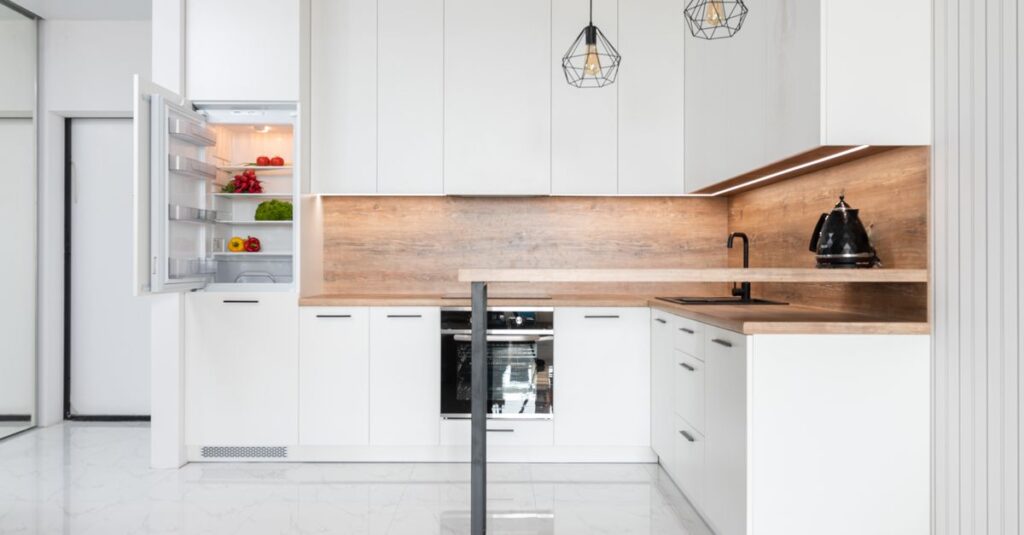
Something remarkable happened to induction cooking on its way to 2026: it stopped being the \”alternative\” and started becoming the default. Appliance showrooms that once led with gas now lead with induction. Remodeling forums that once debated flame versus electric now treat induction as the assumed choice. Sales data across North America, Europe, and Asia shows induction gaining share every year — the induction cooking trend of 2026 is not emerging anymore; it is arriving.
This was not inevitable. Induction spent decades as a premium curiosity — expensive, unfamiliar, demanding special cookware. What changed is everything at once: prices fell to mainstream levels, performance surpassed gas on speed and control, health research reframed the gas question, and regulations began nudging new construction toward electric. The result is a genuine technology transition, the kind kitchens see once in a generation.
This guide explains the induction cooking trend of 2026: the forces driving it, how the technology actually performs against gas and traditional electric, what buyers need to know about cookware and installation, where the trend is heading, and whether you should join it now or wait.
The State of Induction in 2026
Induction\’s 2026 position is strong across every market. In Europe, induction has been the standard choice for years, with the vast majority of new cooktops sold using the technology. In North America, adoption is accelerating rapidly from a smaller base — induction cooktop and range sales grow double-digits annually while gas holds flat or declines. In Asia, induction dominates new apartment construction.
The product landscape has matured alongside sales. Entry-level induction cooktops now start in the low hundreds — genuine competition for basic gas and electric coil. Mid-range models ($800–$1,500) offer bridging zones, power boost, and precise low-temperature control that satisfy serious cooks. Premium induction ranges ($2,000–$4,000) from Bosch, GE Profile, Samsung, and Miele compete directly with pro-style gas on features and beat it on performance.
Perhaps most tellingly, professional kitchens — gas\’s last cultural stronghold — are increasingly installing induction for specific stations: chocolate work, sauces, and simmering, where precise low control shines. The technology has earned credibility beyond the spec sheet.
Driver 1: Performance That Finally Speaks for Itself
The core driver is simple: induction cooks better than the alternatives on the metrics most people feel daily. It boils water faster than any residential gas burner — the 85–90% energy transfer efficiency means more heat reaches food, sooner. Temperature changes are effectively instant, matching gas\’s responsiveness. And low-end control — holding a bare simmer, melting chocolate directly in the pan — exceeds what most gas burners manage.
The 2026 generation closed the remaining gaps. Bridging zones combine two elements for griddles and large pans. Power management systems let all zones run at high output simultaneously on ranges that once throttled. Keep-warm settings hold serving temperature without scorching. Each refinement removed one more reason to hesitate.
Word of mouth compounds the effect: induction owners are notably evangelical, and their dinner-party demonstrations (boiling water in two minutes, lifting a pan to show the cool surface) convert skeptics more effectively than any advertisement.
Driver 2: The Indoor Air Quality Reckoning
No force has accelerated induction\’s rise like the growing body of research on gas cooking\’s indoor air pollution. Peer-reviewed studies have consistently linked gas stoves to elevated nitrogen dioxide, carbon monoxide, and fine particulate matter — with some research attributing a meaningful share of childhood asthma cases to gas stove exposure. In 2026, this is mainstream knowledge, not activist fringe.
The health framing changed the conversation\’s terms: it stopped being about cooking preference and started being about household health. Parents, in particular, respond to the pediatric research — and induction\’s zero-combustion operation is the complete answer. Ventilation helps gas significantly, but most home range hoods underperform, and many homes lack proper venting entirely.
Manufacturers read the room: induction marketing now leads with health and safety alongside performance, and the message resonates. This driver has years of momentum left — awareness is still spreading.
Driver 3: Regulation and the Electrification Push
Policy is pushing kitchens electric across much of the world. Jurisdictions from California to the EU have restricted or discouraged gas hookups in new construction; building codes increasingly assume electric cooking; and electrification incentives sometimes subsidize induction appliance purchases. The regulatory direction is unambiguous even where implementation is gradual.
For homeowners, this creates a future-proofing logic: a kitchen remodeled with gas in 2026 may face resale or regulatory friction in 2036, while induction faces none. Builders have noticed — new developments increasingly ship all-electric kitchens as standard, normalizing induction for the next generation of homeowners.
The practical takeaway: if you are renovating a kitchen you will keep for 15+ years, the regulatory trend is a genuine input to the decision, not just politics. Induction is the bet that aligns with where codes are heading.
Driver 4: Falling Prices and Better Products
Induction\’s early decades were defined by premium pricing — the technology cost 2–3x comparable gas. That premium has collapsed. Efficient manufacturing, mature power electronics, and competition (particularly from Asian manufacturers) have brought quality 30-inch induction cooktops into the mid-hundreds and full induction ranges to parity with mid-range gas.
Portable single-burner induction hobs ($60–$150) deserve special mention: they let anyone trial induction for the price of a dinner out, and they serve as extra burners, dorm cooking, and outdoor entertaining tools. They are induction\’s gateway drug, and they sell in enormous volumes.
At current prices, the \”induction costs too much\” objection survives only at the ultra-premium tier — and even there, the gap with pro-style gas has narrowed substantially.
Driver 5: Climate Consciousness and Home Electrification
The broader home-electrification movement — heat pumps for heating, EVs in garages, solar on roofs — naturally extends to the kitchen. Households electrifying everything find the gas cooktop an odd remnant, and induction completes the set. As grids get cleaner, every electrified appliance\’s carbon footprint shrinks automatically — including the cooktop\’s.
Induction\’s efficiency amplifies the climate case: using roughly half the energy of gas per meal (and wasting far less as ambient heat) means smaller absolute consumption to begin with. For the climate-motivated buyer, induction is the rare choice where the green option is also the better-performing option.
This driver skews younger and more affluent — the demographic also driving EV and solar adoption — which positions induction as the aspirational choice for the next generation of kitchen buyers. Cultural momentum matters in technology transitions.
What Buyers Must Know: Cookware, Power, and Installation
Three practical realities govern induction adoption. First, cookware: induction requires ferromagnetic pans — if a magnet sticks firmly to the base, it works. All cast iron, carbon steel, and most stainless steel qualifies; aluminum, copper, and glass do not (unless bonded with magnetic layers). Most kitchens discover 70–90% of their cookware already works; replacing the rest is a one-time cost.
Second, electrical supply: full-size induction cooktops and ranges need a dedicated 240-volt circuit (typically 40–50 amps). Homes with existing electric ranges already have this; gas-to-induction converts need an electrician — typically $300–$1,000 depending on panel capacity and wiring runs. Factor this into renovation budgets.
Third, the learning curve is real but short: induction\’s speed surprises gas converts (water boils before you are ready), and the digital power levels feel abstract until muscle memory forms. Most users report full comfort within two weeks — and then find gas sluggish when they encounter it elsewhere.
Where Induction Goes Next
The technology\’s roadmap points toward more intelligence and more flexibility. Expect wider adoption of full-surface induction (place pans anywhere, no defined zones), battery-assisted portable induction for outdoor cooking, deeper smart-home integration (Matter-standard cooktops coordinating with ventilation automatically), and continued price compression at the entry level.
The cultural shift may prove most durable: a generation growing up with induction will find gas cooktops strange — the wasted heat, the cleaning hassle, the air quality concerns. Technology transitions complete when the old way starts feeling obsolete, and induction is approaching that threshold in the kitchen.
Should You Switch to Induction in 2026?
Switch now if: you are renovating or building (the incremental cost is minimal during construction), you have young children or respiratory concerns (safety and air quality), your gas cooking frustrates you (cleaning, heat, control), or you want the fastest, most efficient cooking available. The technology is mature, prices are fair, and the experience converts skeptics.
Wait if: your current cooktop works fine and the budget is tight (no appliance emergency justifies debt), you are a dedicated wok cook needing round-bottom high-heat performance (gas still rules here), or you rent without 240V access (a portable induction hob gives you 80% of the experience for $100).
The middle path — a portable induction burner alongside your existing stove — is the 2026 sleeper recommendation. It costs little, teaches you the technology, handles daily tasks brilliantly, and informs a confident full-kitchen decision later.
Induction Cookware: What Works and What Doesn\’t
The magnet test settles every question: if a magnet sticks firmly to the pan\’s base, it works on induction. That covers all cast iron (skillets, Dutch ovens), all carbon steel (woks with flat bottoms, crepe pans), and most stainless steel — including nearly all stainless cookware sold in the last 15 years. Enameled cast iron from Le Creuset and Staub works beautifully.
What does not work: pure aluminum, pure copper, and glass — none are magnetic. Some manufacturers bond a magnetic stainless layer to aluminum and copper pans, making them induction-compatible; check for the induction symbol (a coil-like icon) on the base. Adapter discs exist that let any pan work on induction, but they blunt the technology\’s speed and efficiency advantages — better to replace the two or three incompatible pans you actually use.
One more consideration: flat bases matter. Induction needs full contact between pan and cooktop — warped pans heat unevenly and can buzz. When buying new cookware for induction, choose heavy, flat-bottomed pieces; they perform better on every cooktop type, induction included.
Induction Cooking Trend 2026 FAQ
Is induction better than gas?
For most home cooks, yes: induction is faster, more energy-efficient (85–90% vs ~35%), safer, easier to clean, and keeps the kitchen cooler, with precise digital control. Gas retains advantages for wok cooking, outage resilience, and universal cookware compatibility. The performance gap favors induction more each year.
Do I need new pots and pans for induction?
Only the non-magnetic ones. Test with a magnet — if it sticks firmly to the base, the pan works. Most stainless steel, all cast iron, and all carbon steel qualify. You will likely replace only aluminum, copper, and glass pieces, which is a one-time, manageable cost.
Is induction cooking safe?
Yes — it is the safest cooktop technology available. There is no open flame, the surface stays relatively cool, and units shut off automatically when pans are removed. The electromagnetic fields are non-ionizing, low-frequency, and well within international safety standards at normal cooking distances.
Does induction work during a power outage?
No — induction requires electricity. This is gas\’s genuine resilience advantage. Outage-prone households sometimes keep a portable butane burner as backup, or choose dual-fuel ranges pairing induction with gas burners.
Why is induction more expensive to install?
The appliance prices have reached parity, but gas-to-induction conversions may need a new 240V circuit ($300–$1,000 for an electrician). Homes already wired for electric ranges face no such cost. During new construction or renovation, the incremental cost is minimal.
Can you get wok hei on induction?
Not authentically — wok hei (breath of wok) requires fierce flame licking up the wok\’s sides, which flat induction cannot replicate. Flat-bottom woks work acceptably on induction for everyday stir-frying, but dedicated wok cooks still prefer high-BTU gas. Specialized induction wok burners exist but remain rare.
Will gas stoves be phased out?
Existing stoves are not being confiscated anywhere, but new gas hookups face growing restrictions in many jurisdictions, and the regulatory trend favors electric cooking. Induction is the future-proof choice for long-term kitchen investments — the direction of policy is clear even where timelines are gradual.
