
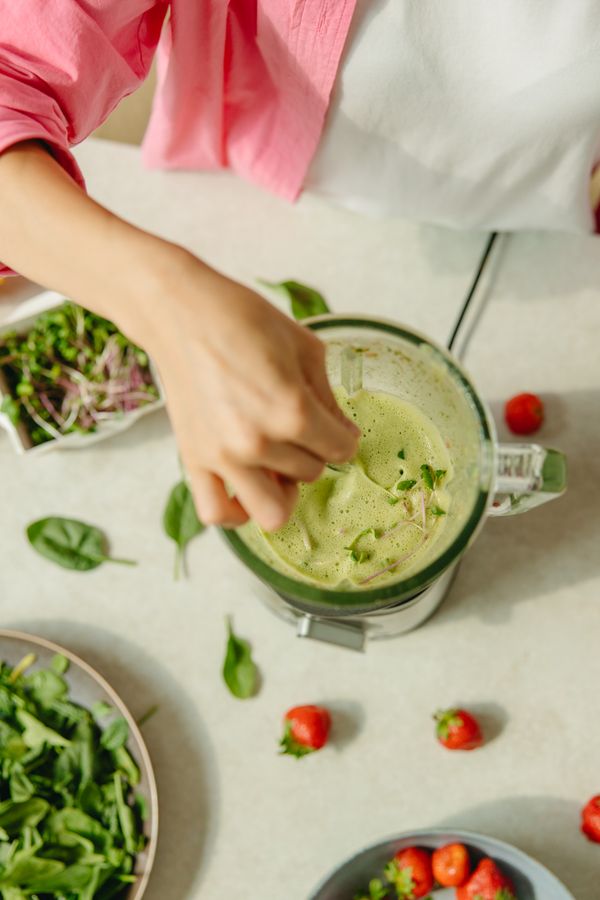
The juicer vs blender debate is really a debate about what you want from your produce. Juicing extracts the liquid and discards the fiber, delivering concentrated nutrients in a light, easily absorbed drink. Blending pulverizes the whole fruit or vegetable — fiber and all — into a thicker, more filling smoothie. Both are healthy habits; they just serve different nutritional philosophies and different mornings.
Marketing has muddied the waters with dramatic claims on both sides — juice cleanses, fiber miracles, enzyme preservation. The reality is more nuanced and more useful: the right choice depends on your health goals, your produce budget, your tolerance for cleanup, and whether you want a light nutrient shot or a meal in a glass.
In this juicer vs blender comparison for 2026, we explain how each machine works, then compare them head-to-head on nutrition, fiber, taste and texture, produce cost and yield, blood sugar impact, versatility, cleanup, noise, and price. A comparison table, a verdict for different health goals, and a full FAQ complete the guide.
Juicer vs Blender: The Short Answer
Buy a juicer if you want concentrated, easy-to-digest nutrition — fresh vegetable juice delivers vitamins and minerals quickly with minimal digestive effort, and many people find it easier to consume large quantities of vegetables as juice. It is ideal for nutrient density without fullness.
Buy a blender if you want filling, fiber-rich smoothies that work as meals or snacks. Blending keeps all the fiber, costs less in produce per serving, handles a wider range of ingredients (greens, frozen fruit, protein powder, nut butters), and cleans up in seconds.
Bottom line: juicer for concentrated nutrition and light drinks; blender for fiber, fullness, versatility, and value. Your health goal determines the winner.
How a Juicer Works
Juicers separate juice from pulp. Centrifugal juicers (Breville, Hamilton Beach) spin produce at high speed against a mesh filter, flinging juice out while pulp collects in a bin — fast but louder, with slightly more oxidation. Masticating (slow) juicers (Omega, Hurom, Nama) crush and press produce at low RPM, extracting more juice with less heat and oxidation, handling leafy greens far better.
What comes out is pure liquid nutrition: no fiber, intense flavor, and rapid absorption. What stays behind is a surprising mountain of pulp — juicing is inherently produce-intensive, requiring several pounds of vegetables for a single large glass.
2026\’s premium slow juicers have improved meaningfully: larger feed chutes accept whole apples, quieter motors run under 60 decibels, and yields on leafy greens have risen. But the fundamental equation — lots of produce in, one glass out, pulp left over — has not changed.
How a Blender Works
A blender pulverizes whole ingredients with high-speed blades, keeping everything — juice, fiber, pulp — in the glass. Nothing is discarded, which means maximum produce efficiency: one apple makes one apple\’s worth of smoothie, not a quarter-glass of juice plus a bin of pulp.
Blenders also accept ingredients juicers cannot: frozen fruit, bananas, avocados, nut butters, protein powder, yogurt, oats, and ice. This makes smoothies far more versatile — they can be complete meals with protein, fat, and fiber, while juice is always just juice.
High-performance blenders (Vitamix, Blendtec, Ninja) liquefy even tough greens and fibrous vegetables into drinkable smoothness. Standard blenders handle soft fruits well but may leave green smoothies slightly textured.
Head-to-Head: Juicer vs Blender
Nutrition and Nutrient Absorption
Juice delivers concentrated micronutrients with minimal digestive effort — the body absorbs vitamins and minerals from juice quickly, which is why juicing appeals to people with digestive sensitivities or those seeking maximum vegetable intake. Removing fiber means you can comfortably consume the nutrients of a pound of kale in one glass.
Smoothies deliver the same micronutrients plus fiber, which slows absorption — arguably healthier for most people, as it moderates blood sugar and feeds gut bacteria. You absorb slightly less, slightly slower, but you gain fiber\’s substantial benefits. Neither is \”more nutritious\” in absolute terms; they optimize for different things.
- Juicer: concentrated, rapidly absorbed micronutrients; easy on digestion
- Blender: same nutrients plus fiber; slower absorption, gut-health benefits
- Winner: tie — concentrated absorption vs fiber-inclusive nutrition
Fiber Content
The blender wins outright: smoothies retain 100% of the produce\’s fiber, supporting digestion, satiety, and gut microbiome health. Juicing removes virtually all insoluble fiber and most soluble fiber. Given that the vast majority of adults under-consume fiber, this is a significant nutritional point in blending\’s favor.
- Juicer: fiber removed; minimal satiety
- Blender: full fiber retained; genuinely filling
- Winner: blender, decisively
Blood Sugar Impact
Fruit juice — even fresh-pressed — can spike blood sugar almost like soda because the sugars arrive without fiber to slow them. Vegetable-heavy juices mitigate this, but sweet juices deserve caution, especially for anyone managing blood sugar or diabetes.
Smoothies\’ fiber blunts the glycemic response significantly, and adding protein, fat, or greens lowers it further. For metabolic health, blending is the safer default — juice\’s sugar concentration is its genuine nutritional weakness.
- Juicer: rapid sugar absorption; vegetable juices much better than fruit
- Blender: fiber moderates blood sugar; easily balanced with protein/fat
- Winner: blender for blood sugar control
Taste and Texture
Fresh juice tastes clean, bright, and intensely flavored — a well-made green juice or fresh orange juice is genuinely delicious and refreshing in a way smoothies cannot replicate. The light texture suits hot weather and post-workout refreshment.
Smoothies are thicker, creamier, and more varied — frozen banana creates ice-cream texture, nut butters add richness, and the combinations are endless. They satisfy hunger in a way juice never will. Preference here is purely personal: refreshing lightness versus creamy satisfaction.
- Juicer: clean, bright, refreshing; intensely flavored
- Blender: thick, creamy, satisfying; endless combinations
- Winner: tie — personal preference
Produce Cost and Yield
Juicing is expensive. It takes 2–3 pounds of produce to make a large glass of juice, and the pulp — containing much of the produce\’s bulk — gets discarded (or composted, or baked into muffins by the diligent). Daily juicing can easily cost $5–$10 in produce alone.
Blending uses a fraction of the produce per serving since nothing is discarded — a daily smoothie might cost $1–$3. Over a year, the cost difference runs into thousands of dollars. For budget-conscious healthy habits, blending wins enormously.
- Juicer: 2–3 lbs produce per glass; $5–$10/day possible
- Blender: nothing wasted; $1–$3 per smoothie typical
- Winner: blender on cost, overwhelmingly
Versatility
Blenders do far more: smoothies, soups, sauces, nut butters, frozen desserts, crushed ice, batters. A blender is a genuine multi-tasker. Juicers make juice — excellent juice, but only juice (plus sorbets in some masticating models, and wheatgrass if you are so inclined).
- Juicer: juice (superbly); little else
- Blender: smoothies plus soups, sauces, desserts, and more
- Winner: blender, overwhelmingly
Cleanup
Blenders clean in 30 seconds: water, soap, blend, rinse. Juicers are famously tedious — disassemble the auger, scrub the mesh filter (dried pulp cements itself), wash the pulp bin and juice container. Even \”easy-clean\” models take 5–10 minutes. This daily friction is the number-one reason juicers end up abandoned in cabinets.
- Blender: 30-second self-clean
- Juicer: 5–10 minutes of disassembly and scrubbing
- Winner: blender, decisively
Noise
Centrifugal juicers are loud — high-RPM spinning rivals a blender at full speed. Masticating juicers are pleasantly quiet, often under 60 decibels, and can run without waking the household. Blenders range from loud (high-performance) to moderate, but sessions last only a minute.
- Juicer: centrifugal loud; masticating quiet
- Blender: loud but brief
- Winner: masticating juicer for quiet; blender over centrifugal
Machine Cost
Centrifugal juicers start around $60–$150; quality masticating juicers run $200–$500. Blenders span $30 personal models to $300–$600 high-performance machines. Entry blending is cheaper, premium tiers overlap — but remember the produce cost gap dwarfs the machine cost within months.
- Juicer: $60–$500; high ongoing produce costs
- Blender: $30–$600; low ongoing produce costs
- Winner: blender on total cost of ownership
Juicer vs Blender: Comparison Table
| Feature | Juicer | Blender |
|---|---|---|
| Output | Concentrated juice, no fiber | Whole-food smoothie with fiber |
| Satiety | Low — not filling | High — works as a meal |
| Blood sugar impact | Higher (especially fruit juice) | Lower (fiber moderates) |
| Produce per serving | 2–3 lbs per large glass | Fraction of that; nothing wasted |
| Daily produce cost | $5–$10 | $1–$3 |
| Versatility | Juice only | Smoothies, soups, sauces, desserts |
| Cleanup time | 5–10 minutes | 30 seconds |
| Machine cost | $60–$500 | $30–$600 |
Which Should You Buy? Our 2026 Verdict
Buy a juicer if: you want maximum vegetable intake with minimum digestive effort, you love fresh juice\’s clean taste, or you have specific wellness goals around concentrated micronutrients. Choose a masticating (slow) juicer for better yield, quieter operation, and superior leafy-green performance — it is worth the premium.
Buy a blender if: you want filling, fiber-rich drinks, you care about produce budget, you value versatility and easy cleanup, or you are building a sustainable daily habit. For most people, most of the time, the blender is the better health investment.
The honest take: blenders win for the average person because fiber, fullness, cost, cleanup, and versatility all point the same way. Juicers serve a real but narrower purpose — concentrated nutrition for those who will actually maintain the habit through the cleanup and the grocery bills.
Making the Most of Your Choice: Practical Tips
If you choose juicing, a few habits maximize the investment. Juice vegetables more than fruit — a 3:1 vegetable-to-fruit ratio keeps sugar in check while tasting great (cucumber, celery, and green apple is the classic base). Drink juice within 24 hours; oxidation degrades flavor and nutrients quickly, so juice fresh rather than batching for the week. And put pulp to work: add vegetable pulp to soups, burgers, and baked goods, or compost it — it softens the sting of the produce cost.
If you choose blending, build better smoothies with a formula: leafy greens + frozen fruit + protein (Greek yogurt, protein powder, or nut butter) + healthy fat + liquid. Frozen fruit instead of ice gives thicker texture without dilution. Prep smoothie packs — portioned bags of fruit and greens in the freezer — and mornings take 60 seconds. Either way, consistency beats perfection: the machine you use daily outperforms the theoretically superior one gathering dust.
Juicer vs Blender FAQ
Is juicing healthier than blending?
Not inherently. Juicing concentrates micronutrients and removes fiber; blending keeps everything including fiber. For most people, blending is the healthier default because fiber supports digestion, satiety, blood sugar control, and gut health. Juicing excels for concentrated nutrient intake and easy digestion.
Does juicing remove all the fiber?
Essentially yes — juicers separate liquid from pulp, removing virtually all insoluble fiber and most soluble fiber. Some masticating juicers leave trace fiber in the juice, but nutritionally, juice is a fiber-free drink. Smoothies retain 100% of the produce\’s fiber.
Can diabetics drink fresh juice?
With caution. Fruit juice can spike blood sugar rapidly due to concentrated sugars without fiber. Vegetable-based juices (cucumber, celery, leafy greens with lemon) have much lower glycemic impact. Smoothies with fiber, protein, and fat are generally the safer choice for blood sugar management.
What can I do with leftover juice pulp?
Common uses include adding it to muffins, crackers, and veggie burgers; composting it; making vegetable broth from vegetable pulp; or feeding it to pets (carrot and apple pulp suit dogs). Still, most pulp goes to waste — a hidden cost of juicing worth acknowledging.
Masticating vs centrifugal juicer: which is better?
Masticating (slow) juicers extract more juice, handle leafy greens better, run quieter, and produce less oxidation — at higher prices ($200–$500) and slower speeds. Centrifugal juicers are faster and cheaper ($60–$150) but louder, less efficient on greens, and produce juice that oxidizes faster.
Can a blender make juice?
You can blend produce with water and strain it through a nut-milk bag or fine sieve — \”blender juice.\” It works but is labor-intensive and yields cloudy juice with some fiber. It is a fine occasional workaround, not a replacement for a real juicer.
Which is better for weight loss?
The blender, clearly. Smoothies\’ fiber creates lasting fullness that supports calorie control, while juice\’s lack of fiber means hunger returns quickly — and juice\’s concentrated sugars add calories without satiety. A protein-rich smoothie is a legitimate meal; juice is a snack at best.
