
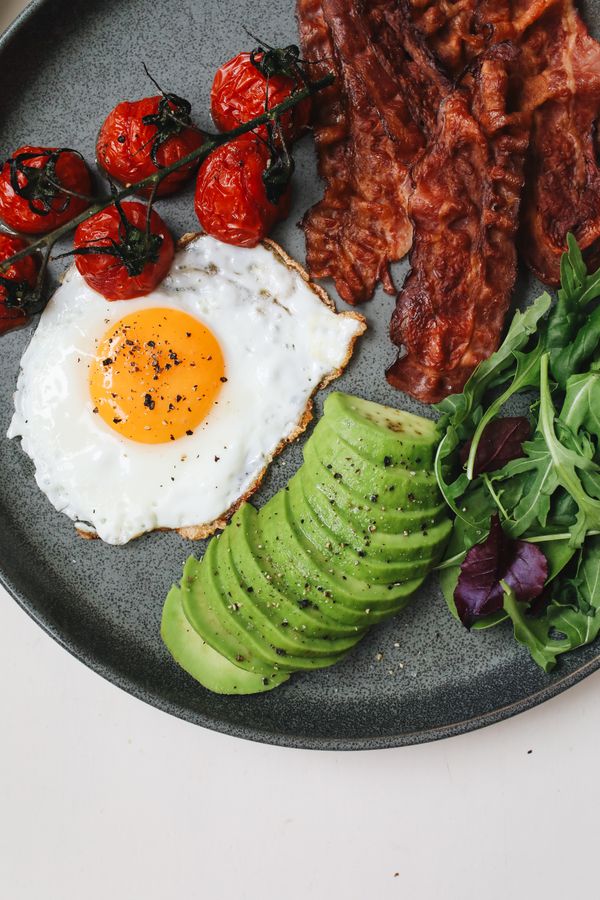
This keto grocery list for beginners tells you exactly what to buy — aisle by aisle — so your first keto shop takes 30 minutes instead of two confused hours. The golden rule: shop the perimeter (meat, dairy, produce) and be skeptical of everything in the center aisles, where the carbs hide in boxes and bags.
Below you\’ll find the complete beginner list organized by store section, what to skip, how to read labels in 10 seconds, budget strategies, and a condensed printable checklist. Pair this with a stocked pantry and you\’ll never stare blankly into the fridge wondering what\’s keto again.
Meat, Poultry, and Seafood
Buy a variety — protein boredom kills more diets than cravings do. Mix budget cuts with a few nicer ones:
- Chicken: thighs and drumsticks (cheapest, most flavorful), breasts (leanest), whole chickens (best value per kilo)
- Beef: ground beef 80/20 (the keto staple), chuck roast, sirloin, ribeye when on sale
- Pork: pork chops, pork shoulder/butt (slow-cooker magic), bacon (check for no added sugar), sausages (read labels — many contain fillers and sugar)
- Other meats: lamb, turkey (thighs over breast for fat), duck, deli turkey/chicken (no honey-glazed, no added sugars)
- Fish: salmon (farmed is fine and affordable), sardines, mackerel, tuna, trout — fatty fish first for omega-3s
- Shellfish: shrimp, mussels, clams in moderation (slightly higher carb than finfish but still keto-friendly)
- Organ meats (optional power-ups): liver once a week is a micronutrient bomb — vitamins A, B12, iron, and copper in one cheap package
Label check on processed meats: bacon, sausage, and deli meats often contain sugar, dextrose, or starch fillers. Under 1–2 g carbs per serving is fine; honey-cured or maple-flavored versions are not.
Eggs and Dairy
- Eggs — buy the big pack; you\’ll use 2–4 daily. Pasture-raised if budget allows, conventional if not — the macro difference is negligible.
- Hard cheeses: cheddar, parmesan, gouda, Swiss — virtually zero carbs, endlessly versatile
- Soft cheeses: cream cheese, brie, goat cheese, mozzarella (fresh mozzarella has ~1 g carb per serving — fine)
- Heavy whipping cream — for coffee, sauces, and whipped toppings. Check it\’s just cream, no carrageenan-heavy \”whipping\” blends with additives (though those are still low-carb).
- Full-fat Greek yogurt and cottage cheese — ~5–7 g carbs per serving; budget them deliberately. Plain only — flavored versions are sugar traps.
- Butter (salted and unsalted) — grass-fed is a nice-to-have, not a need-to-have.
- Sour cream and crème fraîche — taco nights and baking essentials.
Skip: skim/low-fat anything (fat replaced with sugar or starch), flavored yogurts, \”light\” cream cheese, and processed cheese slices with 3+ g carbs each.
Vegetables: The Keto-Approved List
Prioritize above-ground, leafy, and cruciferous vegetables. Buy a mix of fresh and frozen — frozen is nutritionally equivalent, cheaper, and never wilts in your crisper:
- Leafy greens: spinach, kale, arugula, romaine, butter lettuce, collard greens
- Cruciferous: broccoli, cauliflower (fresh + frozen rice), Brussels sprouts, cabbage, bok choy
- Everyday veg: zucchini, asparagus, green beans, bell peppers, cucumbers, celery, mushrooms, eggplant
- Flavor veg (small amounts): onions, garlic, tomatoes, leeks — count their carbs; they\’re worth it
- Avocados — technically a fruit, practically a keto food group. Buy at mixed ripeness so they don\’t all ripen Tuesday.
- Fresh herbs: cilantro, parsley, basil, dill, mint — near-zero carbs, massive flavor payoff
Limit or skip: potatoes, sweet potatoes, corn, peas, parsnips, carrots (small amounts for flavor are fine — a whole roasted tray is not), and winter squashes except small portions of butternut.
Fruits (the Short List)
Most fruit is off the table, but these fit in small portions:
- Raspberries, blackberries, strawberries — the lowest-carb berries; ~5–7 g net carbs per 100 g
- Lemons and limes — for cooking, dressings, and water; negligible carbs per serving
- Olives — fruit botanically, keto staple practically
- Coconut (fresh meat, unsweetened) — moderate; watch portions
Skip bananas, apples, grapes, mangoes, pineapples, and oranges entirely — one piece can exceed your whole day\’s carb budget.
Fats, Nuts, and Seeds
- Oils: extra-virgin olive oil, avocado oil, coconut oil
- Nuts: macadamias (lowest carb), pecans, walnuts, almonds, Brazil nuts — raw or dry-roasted, no sugary coatings
- Seeds: chia, flax, pumpkin, sunflower, hemp hearts
- Nut butters: natural peanut or almond butter — ingredients should read \”peanuts, salt\” and nothing else
Frozen and Packaged Aisles: What Survives Scrutiny
- Frozen: cauliflower rice, broccoli, spinach, green beans, berries, shrimp, burger patties (100% beef)
- Canned: tuna, salmon, sardines, coconut milk, diced tomatoes, olives, pickles
- Broths: chicken, beef, or bone broth for sipping and soups
- Condiments: mustard, hot sauce, sugar-free ketchup, avocado-oil mayo, soy sauce/tamari
- Baking: almond flour, coconut flour, erythritol/monk fruit blend, baking powder, xanthan gum, cocoa powder (unsweetened)
The 10-Second Label Test
For anything in a package, check three things:
- Net carbs per serving — total carbs minus fiber (minus erythritol/allulose if listed). Under 3–5 g per serving is the comfort zone.
- Serving size realism — \”2 g carbs per serving\” means nothing if the serving is one tablespoon and you\’ll eat six.
- Ingredient red flags — sugar, maltitol, dextrose, maltodextrin, corn syrup, honey, and starch in the first five ingredients = put it back.
Bonus rule: the fewer ingredients, the safer. A 25-ingredient \”keto\” bar deserves more suspicion than a steak.
Budget Keto Shopping: The $60–80 Week
- Protein: eggs (18-pack), chicken thighs (family pack), ground beef, canned tuna/sardines — the cheapest complete proteins in the store
- Vegetables: frozen broccoli/cauliflower/spinach, cabbage, zucchini — frozen and sturdy fresh veg beat fancy greens on price
- Fats: butter, store-brand olive oil — skip avocado oil and MCT oil until budget allows
- Flavor: salt, pepper, garlic powder, hot sauce — cheap and transformative
- Skip at first: specialty keto products, macadamia nuts, allulose, grass-fed everything — add them later as upgrades, not requirements
- Shop sales and buy meat in bulk — a chest freezer pays for itself within months if you buy family packs on markdown
Your Printable Beginner Checklist
Proteins: □ eggs □ chicken thighs □ ground beef □ bacon (no sugar) □ salmon □ canned tuna/sardines □ pork chops
Dairy: □ cheddar □ cream cheese □ heavy cream □ butter □ sour cream □ Greek yogurt (plain)
Vegetables: □ spinach □ broccoli □ cauliflower □ zucchini □ asparagus □ avocados □ lettuce □ mushrooms
Fruits: □ raspberries/blackberries □ lemons/limes
Fats & pantry: □ olive oil □ coconut oil □ almonds/walnuts □ chia/flax □ almond flour □ erythritol blend □ broth □ soy sauce □ mustard □ hot sauce
Spices: □ sea salt □ black pepper □ garlic powder □ smoked paprika □ Italian seasoning
The 30-Minute Weekly Shopping Routine
Efficient keto shopping is a route, not a wander. Run the store in this order and you\’ll be out in half an hour:
- Produce first (10 min): work your list — greens, cruciferous veg, avocados at mixed ripeness, herbs, lemons. Bag sturdy items; keep delicate greens on top.
- Meat and seafood counter (8 min): grab your proteins for the week. Ask the butcher about markdowns — \”manager\’s special\” meat is perfectly good and often 30–50% off; cook or freeze it the same day.
- Dairy and eggs (5 min): cheese, cream, butter, yogurt, sour cream, the big egg pack. Check dates and grab from the back of the shelf.
- Frozen aisle (4 min): cauliflower rice, frozen broccoli/spinach, berries. This is your insurance against midweek \”nothing to eat\” emergencies.
- Pantry top-ups (3 min): only what\’s actually empty — nuts, broth, condiments. Never browse this aisle hungry; it\’s where non-keto items sneak into carts.
Rules that save money: shop with a list and eat before you go (the two oldest tricks because they work), buy store brands for staples (the quality gap is minimal on butter, eggs, and frozen veg), and check the weekly circular for meat sales to build your week around — planning protein around discounts cuts grocery bills 15–25%.
Keto Shopping When the Family Isn\’t Keto
One cart, two diets — it\’s entirely manageable with a \”base + add-on\” strategy:
- Shared proteins and vegetables: the whole family eats the same chicken, salmon, ground beef, broccoli, and salads. These are universally healthy, not \”diet food.\”
- Carb add-ons for them: rice, pasta, bread, and potatoes cooked as sides for non-keto family members. You\’re not cooking twice — you\’re adding one pot of rice.
- Keep their snacks separate: a designated shelf or bin for kids\’ crackers and cereals reduces your daily temptation exposure. Out of sight genuinely works.
- Don\’t preach, just cook well: when keto food tastes great, family members voluntarily eat it. Taco bars, burger nights, and loaded salads need no sales pitch.
- Budget honestly: feeding two patterns costs slightly more than one, but far less than cooking entirely separate meals. The shared-protein strategy keeps it reasonable.
Frequently Asked Questions
How long does a keto grocery trip take once I\’m used to it?
About 20–30 minutes. Veterans buy the same 30–40 items on rotation and barely glance at labels anymore. The first trip is slow because you\’re learning; by week three it\’s autopilot.
Can I buy pre-cut vegetables and rotisserie chicken?
Yes — convenience foods that are still whole foods are completely fine. Rotisserie chicken is a keto hero; just check the seasoning doesn\’t include sugar-heavy glazes. You\’re paying a small premium for time, which is often worth it.
Are frozen vegetables as healthy as fresh?
Yes — they\’re typically frozen within hours of harvest, preserving nutrients, while \”fresh\” produce may have traveled for a week. For keto staples like broccoli, cauliflower, and spinach, frozen is nutritionally equivalent and far more economical.
What should I never buy on keto?
Bread, pasta, rice, cereal, pastries, candy, soda, juice, beer, and anything where sugar appears in the first three ingredients. Also beware \”low-fat\” versions of dairy — the removed fat is usually replaced with sugar or starch.
Is deli meat okay on keto?
Usually yes — plain turkey, chicken, and roast beef are ~0–1 g carbs per serving. Avoid honey-baked, maple-glazed, or \”sweet\” varieties, and check for dextrose and starch fillers. Freshly sliced from the deli counter typically has cleaner ingredients than pre-packaged.
How do I handle family members who aren\’t keto?
Cook keto proteins and vegetables as the base, then add a carb side (rice, pasta, bread) for everyone else. Taco bars, burger nights, and \”protein + veg + optional starch\” setups keep one kitchen feeding two diets without cooking twice.
Should I shop at specialty health food stores?
Not necessary. Regular supermarkets carry everything on this list; discount grocers (Aldi, Lidl, and equivalents) are excellent for eggs, nuts, cheese, and produce. Specialty stores mostly sell the expensive \”keto\” branded products you don\’t need.
How often should I grocery shop on keto?
One big weekly shop for proteins, frozen veg, and pantry top-ups, plus a quick midweek run for fresh greens, herbs, and avocados if needed. Fewer trips mean fewer impulse buys — which is where non-keto items sneak into the cart.
Are discount grocers good for keto shopping?
Excellent — discount chains are among the best keto sources for eggs, butter, cheese, nuts, frozen vegetables, and avocados at 20–40% below regular supermarkets. Their limited selection is actually an advantage: fewer tempting center aisles to navigate.
Should I buy organic meat and produce on keto?
It\’s optional, not required. Nutritional differences between conventional and organic are small for keto purposes. If budget is tight, spend on more vegetables and protein rather than organic versions of less food — volume of good food beats labels.
How do I shop keto at warehouse clubs?
Warehouse clubs are keto treasure troves: bulk eggs, butter, cheese blocks, nuts, olive oil, rotisserie chickens, and meat family packs at the lowest unit prices. The danger is impulse buying — go with a list, and split bulk perishables with a friend if you shop solo.
What if my local store has poor keto options?
Focus on what every store carries: eggs, meat, butter, frozen vegetables, canned fish, and salt. You don\’t need specialty products — the entire diet works on universal basics. Online ordering covers almond flour and sweeteners if local shelves don\’t.
Do I need to grocery shop more often on keto?
Not necessarily — one solid weekly shop covers keto well since the diet leans on eggs, frozen vegetables, canned fish, and long-lasting dairy. A quick midweek top-up for fresh greens, herbs, and ripe avocados is the only common extra trip, and even that\’s optional with good planning.
