
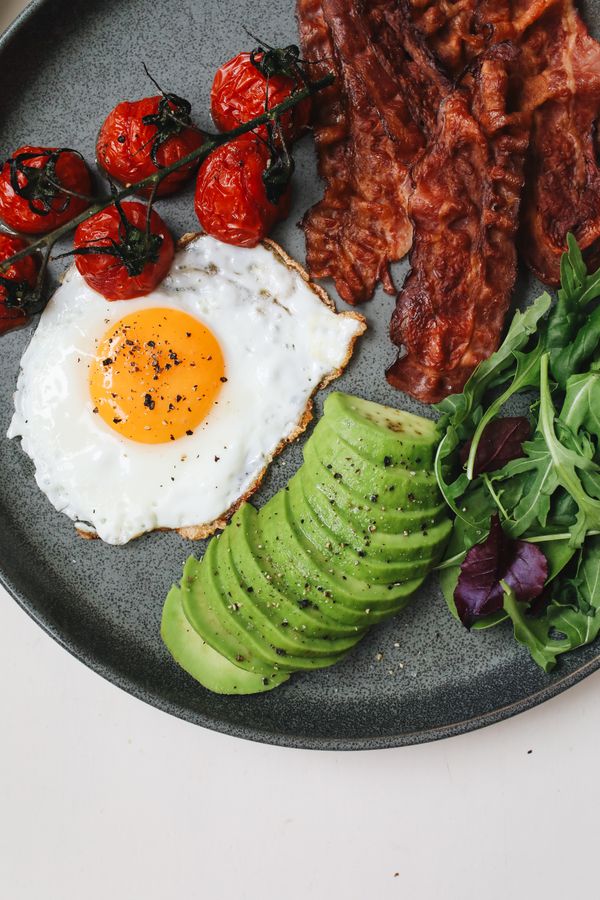
This keto vegetables list ranks 25+ vegetables by net carbs per 100 g, so you can fill your plate confidently: leafy greens, cruciferous vegetables, and above-ground veg are essentially unlimited, while starchy roots and legumes will blow your carb budget fast. Vegetables are non-negotiable on keto — they supply the fiber, potassium, and magnesium that prevent constipation, cramps, and nutrient gaps.
Below you\’ll find the ranked master list with exact net-carb counts, the best keto vegetable all-stars and how to cook them, vegetables to limit or avoid, and how to budget your 20–30 g of daily carbs across vegetables intelligently.
The Master List: Ranked by Net Carbs (per 100 g)
| Rank | Vegetable | Net carbs / 100 g | Notes |
|---|---|---|---|
| 1 | Spinach (raw) | 1.4 g | The keto green — eat freely |
| 2 | Arugula | 2.0 g | Peppery, great raw |
| 3 | Lettuce (romaine/butter) | 2.0 g | Salad and wrap base |
| 4 | Celery | 2.0 g | Crunch vehicle for dips |
| 5 | Avocado | 2.0 g | Technically fruit; keto royalty |
| 6 | Cucumber | 3.0 g | Hydrating, near-free |
| 7 | Zucchini / courgette | 3.1 g | Zoodles, grilling, baking |
| 8 | Cauliflower | 3.0 g | Rice, mash, pizza crust — the keto workhorse |
| 9 | Cabbage | 3.3 g | Cheap, versatile, filling |
| 10 | Mushrooms | 3.3 g | Umami bombs; great roasted |
| 11 | Asparagus | 3.9 g | Roast with parmesan |
| 12 | Eggplant | 3.9 g | Lasagna layers, baba ganoush |
| 13 | Broccoli | 4.0 g | Roast it — transforms the flavor |
| 14 | Kale | 4.4 g | Massage raw or crisp into chips |
| 15 | Green beans | 4.3 g | Almondine is classic for a reason |
| 16 | Brussels sprouts | 5.2 g | Halve, roast hot, thank us later |
| 17 | Bell peppers | 5.5 g | Red/yellow sweeter than green |
| 18 | Tomatoes | 3.9 g | Count them; worth every gram |
| 19 | Onions | 7.5 g | Use as seasoning, not a side dish |
| 20 | Garlic | ~1 g per clove | Negligible per clove; flavor essential |
| 21 | Leeks | 12.6 g | Delicious but budget carefully |
| 22 | Butternut squash | 10 g | Small portions only (~½ cup) |
| 23 | Carrots | 7.0 g | Fine for flavor; not as a side |
| 24 | Beets | 7.0 g | Earthy; small amounts |
| 25 | Artichoke hearts | 6.0 g | Great in dips and salads |
The pattern: leafy and green above-ground vegetables cluster at 1–5 g; roots and bulbs climb toward 7–13 g. When in doubt, greener and leafier = safer.
The Keto Vegetable All-Stars (and How to Cook Them)
Cauliflower — the shape-shifter
Riced (grate or food-process, sauté 5 minutes), mashed (boil, drain very well, blend with butter and cream), roasted whole, or as pizza crust. The #1 keto vegetable for replacing starches because it\’s neutral enough to disappear into any flavor profile.
Zucchini — the pasta replacement
Spiralized into zoodles (sauté 2–3 minutes max — they go mushy fast), sliced into lasagna layers, or hollowed into boats. Salt sliced zucchini and rest 15 minutes before cooking to draw out water and prevent sogginess.
Spinach and leafy greens — the mineral delivery system
Two cups of cooked spinach deliver massive potassium, magnesium, and iron for ~3 g net carbs. Wilt into eggs, blend into smoothies (you won\’t taste it), or sauté with garlic as a 5-minute side.
Broccoli and Brussels sprouts — roast, don\’t steam
High-heat roasting (425°F/220°C with olive oil and salt) caramelizes their edges and converts skeptics. Steaming is what gave them a bad reputation; roasting is the redemption.
Cabbage — the budget champion
Among the cheapest vegetables on earth, endlessly versatile: sautéed with bacon, fermented into sauerkraut (probiotic bonus), sliced into \”noodles\” for soups, or roasted in wedges.
Mushrooms — the umami engine
Roast at high heat until deeply browned for meaty, savory depth that makes simple proteins taste like restaurant food. A mix of varieties (cremini, shiitake, oyster) adds complexity for pennies.
Vegetables to Limit or Avoid
| Vegetable | Net carbs / 100 g | Verdict |
|---|---|---|
| Potatoes | 17 g | Avoid — a single potato exceeds most daily budgets |
| Sweet potatoes | 20 g | Avoid despite the health halo |
| Corn | 19 g | Avoid — it\’s a grain, botanically |
| Parsnips | 17 g | Avoid |
| Peas | 9 g | Small amounts only; easy to overdo |
| Chickpeas / lentils / beans | 15–20 g | Avoid as sides; tablespoons as garnish at most |
| Winter squash (acorn, kabocha) | 8–12 g | Small portions, budgeted |
How to Budget Your Daily Carbs Across Vegetables
With 25 g net carbs to spend, here\’s a sample allocation that keeps you nutrient-rich:
- Breakfast: big handful of spinach in eggs (~1 g)
- Lunch: large salad — romaine, cucumber, peppers, tomatoes (~6 g)
- Dinner: 1.5 cups roasted broccoli + cauliflower (~6 g)
- Snacks/flavor: avocado half, onion/garlic in cooking (~4 g)
- Total: ~17 g — leaving headroom for nuts, dairy, and berries
The key insight: you can eat a large volume of low-carb vegetables and still stay well under budget. Keto isn\’t a no-vegetable diet — it\’s a no-starchy-vegetable diet. The people who eat the most greens have the fewest keto side effects.
Frozen vs Fresh: The Honest Answer
Frozen vegetables are nutritionally equivalent to fresh — often superior, since they\’re frozen within hours of harvest while \”fresh\” produce ships for days. For keto staples (broccoli, cauliflower, spinach, green beans), frozen wins on price, convenience, and zero waste. Buy fresh for salads, herbs, and vegetables where texture matters (asparagus, peppers); buy frozen for everything cooked.
Cooking Methods That Keep Carbs Low (and Flavor High)
How you cook vegetables matters as much as which ones you choose:
- High-heat roasting (425°F/220°C): the keto vegetable superpower. Caramelizes natural sugars, crisps edges, and concentrates flavor. Broccoli, cauliflower, Brussels sprouts, asparagus, and zucchini all transform in the oven with just olive oil and salt. Spread in a single layer — crowding steams instead of roasting.
- Sautéing and stir-frying: fast, hot, and ideal for weeknights. Keep the pan genuinely hot, work in batches, and finish with acid (lemon juice or vinegar) to brighten.
- Grilling: zucchini planks, pepper halves, asparagus, and eggplant slices pick up smoky char that makes simple meals taste deliberate.
- Steaming (use sparingly): preserves nutrients but produces the bland, waterlogged vegetables that give healthy eating a bad name. If you steam, finish with butter, salt, and lemon — fat carries flavor and aids absorption of fat-soluble vitamins A, D, E, and K.
- Raw preparations: salads, crudités, slaws, and wraps. Massaging kale with salt and olive oil for two minutes breaks down its toughness; salting sliced cucumbers and zucchini draws out water for better crunch.
- Fermenting: sauerkraut, kimchi, and pickled vegetables add probiotics, keep for months, and their tangy saltiness satisfies in a uniquely keto way.
The fat rule: always pair vegetables with fat — olive oil, butter, cheese, or avocado. Beyond flavor, dietary fat is required to absorb the fat-soluble vitamins vegetables contain. A dry steamed broccoli floret is a wasted nutritional opportunity; the same floret roasted in olive oil is a delivery system.
Seasonal Keto Vegetable Calendar
Eating seasonally means better flavor, lower prices, and natural variety across the year:
- Spring: asparagus, artichokes, spinach, arugula, peas (small amounts), radishes, spring onions. The tender green season — eat salads daily.
- Summer: zucchini, peppers, eggplant, tomatoes, cucumbers, green beans, fresh herbs. Peak abundance — this is when keto eating feels effortless.
- Fall: Brussels sprouts, cauliflower, broccoli, cabbage, kale, mushrooms, butternut squash (budgeted). Roasting season begins.
- Winter: cabbage, kale, Brussels sprouts, frozen vegetables, stored onions and garlic, fermented vegetables. Lean on frozen and ferments without apology — they\’re nutritionally excellent.
Frozen vegetables erase seasonality constraints for cooked dishes, so treat the calendar as inspiration for fresh eating rather than a restriction. The cheapest, best-tasting vegetable is almost always the one in season near you.
The Vegetable Noodle Guide
Replacing pasta is the highest-leverage vegetable skill in keto cooking:
| Noodle type | How to make | Best sauces | Notes |
|---|---|---|---|
| Zucchini noodles | Spiralizer or julienne peeler | Pesto, alfredo, marinara | Sauté 2–3 min max; salt and drain first to avoid soup |
| Spaghetti squash | Halve, roast cut-side down 40 min, scrape with fork | Bolognese, carbonara, garlic butter | ~7 g net carbs/cup — portion it |
| Palmini (hearts of palm) | Buy canned/pouched, rinse well | Any pasta sauce | Rinse thoroughly to remove briny taste; ~2 g net carbs |
| Shirataki / konjac noodles | Rinse, dry-fry 2–3 min | Asian sauces, ramen broth | Near-zero carbs; texture divides opinion — try once |
| Cabbage \”noodles\” | Slice thin, sauté until tender | Buttery, creamy, or sesame sauces | Sturdiest option; great in soups |
The Weekly Vegetable Prep System (20 Minutes)
Vegetables rot in crisper drawers because they require decisions at mealtime. A 20-minute Sunday prep removes every decision:
- Wash and dry everything immediately. Moisture is the enemy — spin greens dry or roll in towels. Dry vegetables last twice as long and roast properly instead of steaming.
- Pre-cut the workhorses: broccoli and cauliflower into florets, peppers into strips, zucchini into half-moons, celery into sticks. Store in containers with a folded paper towel to absorb condensation.
- Batch-roast two sheet pans of sturdy veg (broccoli, cauliflower, Brussels sprouts) at 425°F with olive oil and salt — 25 minutes gives you 4–5 days of ready sides.
- Keep salad greens undressed in a container with a paper towel; dress only what you eat. Pre-dressed salad is wilted salad by Tuesday.
- Freeze the overflow: blanched green beans, cauliflower rice, and chopped peppers freeze beautifully. When fresh veg starts fading Thursday, the freezer covers you without a second shopping trip.
Total active time: about 20 minutes. The payoff: vegetables become the easy choice all week instead of the chore you skip — and on keto, skipped vegetables mean missed electrolytes, fiber, and the micronutrients that keep the diet working.
Frequently Asked Questions
Can I eat unlimited vegetables on keto?
Nearly unlimited leafy greens and cruciferous veg — you\’d struggle to overeat carbs via spinach. But \”vegetables\” includes potatoes and corn, so the unlimited license applies to the low-carb list above, not the category broadly. Count the medium-carb ones (peppers, onions, tomatoes).
Do I need to count carbs in vegetables?
Yes, but loosely. Track them for the first 2–3 weeks to learn portions, then relax — few people stall from broccoli. Keep counting the sneaky ones (onions, tomatoes, peppers) and anything starchy-adjacent.
What about vegetable juices and smoothies?
Juicing removes fiber and concentrates sugars — a \”green juice\” can pack 20+ g carbs. Whole vegetables or fiber-retained smoothies (with the pulp) are fine; pressed juices are not keto-friendly.
Are nightshades (tomatoes, peppers, eggplant) okay?
Yes for keto — their carb counts fit easily. The nightshade-avoidance trend relates to autoimmune protocols, not ketosis. Unless you personally react to them, eat them freely within your carb budget.
Can I eat salad every day?
Absolutely — a big daily salad is one of the healthiest keto habits. Vary the greens and toppings for micronutrient diversity, use olive-oil-based dressings, and add a solid protein so it actually satisfies.
What\’s the best vegetable for keto beginners?
Cauliflower — it directly replaces the starches beginners miss (rice, mash, pizza crust), making the diet feel less like deprivation. Master cauliflower rice and mash in week one and the transition gets dramatically easier.
Do fermented vegetables count differently?
Sauerkraut, kimchi, and pickles are excellent keto foods — fermentation consumes some sugars, lowering carbs slightly, while adding probiotics and salt (electrolytes!). Just verify no added sugar in commercial versions.
How do I get enough fiber from keto vegetables?
Between leafy greens, cruciferous veg, avocados, chia/flax seeds, and nuts, most keto dieters land at 15–25 g of fiber daily — adequate for most people. If you\’re still low, add psyllium husk or an extra avocado before reaching for fiber supplements.
Should I peel vegetables on keto?
Usually no — peels contain fiber and nutrients, and most keto vegetables are eaten skin-on (zucchini, eggplant, cucumbers). Peel only when the skin is tough or bitter (woody asparagus ends, waxed produce) or for texture in purees. The fiber in peels also feeds beneficial gut bacteria.
Can I eat too many vegetables on keto?
With low-carb vegetables, it\’s genuinely difficult — you\’d need enormous volumes of spinach or broccoli to threaten ketosis. The realistic risk is with medium-carb veg (onions, tomatoes, peppers, carrots) eaten freely across a day. Count those loosely; eat leafy greens with abandon.
