
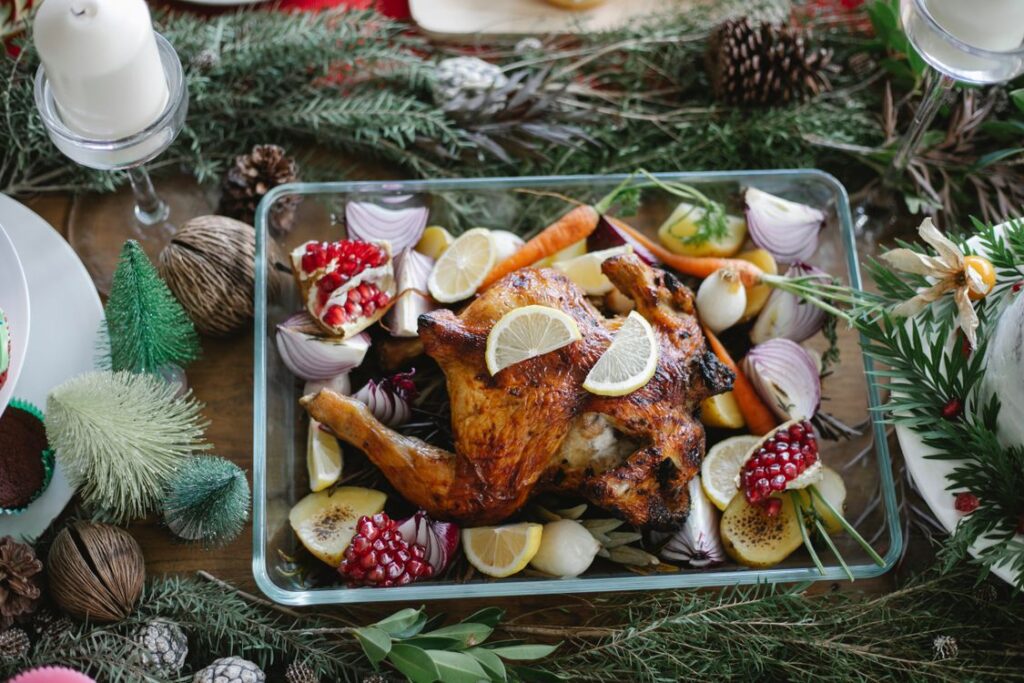
This lemon garlic roasted chicken recipe (easy) is the weeknight roast chicken perfected: shatteringly crisp, golden skin, juicy lemon-and-garlic-infused meat, and a pan sauce made from the drippings — all with about 15 minutes of hands-on work. The method uses high heat, a thoroughly dried bird, and butter under the skin, the three variables that separate mediocre roast chicken from magnificent.
Below: the full ingredient list, numbered roasting steps, the science of crispy skin, pro tips, variations, what to serve alongside, and complete storage and leftover guidance. This is the roast chicken recipe that will make you stop buying rotisserie.
Why This Roast Chicken Recipe Works
Roast chicken has only three ways to fail — soggy skin, dry breast, bland meat — and this recipe engineers against all three. Crisp skin comes from moisture removal: patting the bird thoroughly dry, salting it ahead (even 40 minutes helps; overnight is transformative), and roasting hot so surface moisture evaporates instead of steaming. Juicy breast comes from temperature control: pulling the bird at 150–155°F in the breast (carryover heat takes it to a safe 165°F) instead of roasting to 180°F oblivion. Deep flavor comes from lemon and garlic in three places — under the skin, inside the cavity, and in the pan — plus butter that bastes the meat as it melts.
The whole operation takes about 15 minutes of active work and an hour in the oven, most of it unattended. It is the highest ratio of impressive-to-effort in all of cooking.
The Science of Crispy Skin
Crispiness is dehydration plus rendering. Chicken skin is a layer of fat over protein; for it to crisp, the fat must render out and the surface moisture must evaporate, leaving the proteins to brown via the Maillard reaction. Anything that keeps the skin wet — a damp bird, a crowded pan, a low oven — produces rubber instead of crackle.
Three levers control this. Dry the bird aggressively: paper towels inside and out, then air-dry uncovered in the fridge if you have time (even 1 hour helps; overnight with salt is the gold standard — a dry brine). Roast hot: 425°F drives off moisture fast while rendering fat. Elevate the bird on a rack or a bed of vegetables so hot air circulates underneath instead of the bottom stewing in drippings. Get these right and the skin crackles audibly when you cut into it.
Ingredients
Serves 4. One 3½–4 lb (1.6–1.8 kg) whole chicken.
- 1 whole chicken, 3½–4 lbs, giblets removed
- 1 tablespoon kosher salt (use Diamond Crystal; reduce if using Morton\’s)
- 1 teaspoon freshly ground black pepper
- 1 teaspoon dried oregano or thyme
- 4 tablespoons (½ stick) unsalted butter, softened
- 6 garlic cloves, minced (divided)
- 1 tablespoon lemon zest plus 2 tablespoons lemon juice
- 2 whole lemons: 1 halved, 1 quartered
- 1 whole head of garlic, top sliced off
- A few sprigs fresh thyme or rosemary
- 2 tablespoons olive oil
- 1 lb baby potatoes or thick-cut carrots (optional, for roasting alongside)
Key Ingredient Notes
Chicken size matters: 3½–4 lbs is the sweet spot — large enough to feed four, small enough to cook evenly. Bigger birds risk dry breast by the time the legs finish. Butter under the skin is the juiciness insurance policy: it bastes the breast from the inside as it melts. Fresh lemons only — bottled juice lacks the aromatic oils in zest that define this dish\’s brightness.
Equipment
- Roasting pan with rack (or a large oven-safe skillet)
- Instant-read thermometer (essential — the difference between juicy and dry)
- Kitchen twine (optional, for trussing)
- Paper towels (many)
How to Make Lemon Garlic Roast Chicken: Step by Step
- Dry-brine ahead (recommended). Up to 24 hours before (or at minimum 40 minutes), pat the chicken completely dry inside and out. Rub the salt, pepper, and oregano all over, including inside the cavity. Refrigerate uncovered — the dry air dehydrates the skin while the salt penetrates and seasons the meat deeply. If short on time, even a 40-minute salted rest at room temperature helps.
- Prep the oven and pan. Heat the oven to 425°F (220°C) with a rack in the middle position. If roasting vegetables alongside, toss the potatoes or carrots with olive oil, salt, and pepper, and spread them in the roasting pan — they will cook in the chicken drippings and become the best part of the meal.
- Make the lemon-garlic butter. Mash the softened butter with half the minced garlic, the lemon zest, and a pinch of salt until it forms a fragrant paste.
- Butter under the skin. Gently slide your fingers between the skin and breast meat to loosen it (do not tear). Push about two-thirds of the lemon-garlic butter under the skin, spreading it evenly over both breasts and the tops of the legs. This puts flavor and moisture exactly where dryness strikes.
- Season the outside and stuff the cavity. Rub the remaining butter over the skin, then the remaining minced garlic. Stuff the cavity with the halved lemon, the garlic head, and the herb sprigs — they steam aromatics into the meat from within. Truss the legs with twine if you like (it promotes even cooking), or leave untrussed for crisper thigh skin.
- Roast hot. Place the chicken breast-side up on the rack (or directly on the vegetables). Roast at 425°F for 50–65 minutes, until the skin is deep golden and crisp. Start checking temperature at 50 minutes.
- Temp, do not time. Insert the thermometer into the thickest part of the thigh without touching bone: you want 165°F (74°C). Check the breast too — pull the bird when the breast reads 150–155°F; carryover heat will bring it to a safe 160–165°F as it rests. Time is an estimate; temperature is truth.
- Rest — non-negotiable. Transfer to a cutting board and rest 15–20 minutes. Resting lets juices redistribute; cutting early floods the board with juice that should be in the meat. Tent loosely with foil to keep warm.
- Make the pan sauce. While the chicken rests, pour the pan drippings into a small saucepan (leave the vegetables in the pan). Add the lemon juice and a splash of water or stock, bring to a simmer, and reduce 2–3 minutes, scraping up the browned bits. Taste and adjust salt. This 5-minute sauce tastes like it took all day.
- Carve and serve. Carve the chicken, arrange over the roasted vegetables, and spoon the pan sauce over everything. Serve the roasted garlic head alongside — the cloves squeeze out sweet and spreadable.
Pro Tips for Perfect Roast Chicken
- The thermometer is mandatory. It is the only reliable doneness test and the single biggest upgrade to your roast chicken. A $15 instant-read pays for itself in one juicy bird.
- Dry brine when you can. Salting 12–24 hours ahead seasons the meat to the bone and dries the skin for maximum crispness. It is the highest-impact prep step.
- Do not baste. Opening the oven to baste drops the temperature and wets the skin you worked to dry. The butter under the skin self-bastes; leave the oven closed.
- Zest before juicing. Always zest the lemon before cutting it — trying to zest a juiced half is an exercise in frustration.
- Save the carcass. The roasted bones, skin, and leftover bits make extraordinary stock. Freeze the carcass until you are ready.
Common Mistakes to Avoid
- Roasting a wet bird. Moisture is the enemy of crisp skin. Pat dry obsessively, salt ahead, and consider the uncovered fridge rest.
- Cooking to time instead of temperature. Ovens and birds vary; 165°F in the thigh is the only target that matters.
- Skipping the rest. Cutting immediately spills the juices across the board. Fifteen minutes of patience keeps them in the meat.
- Overcrowding the pan. Vegetables piled against the bird steam instead of roast. Give everything space, or roast vegetables in a separate pan.
Easy Variations
- Herb butter: Swap lemon for orange zest and use rosemary-thyme butter for a winter variation.
- Spicy: Add 1 teaspoon chili flakes and a tablespoon of harissa to the butter for North African heat.
- Garlic-lover\’s: Double the garlic and add 2 tablespoons of white wine to the pan for a deeper sauce.
- Smaller households: Apply the same method to bone-in, skin-on chicken breasts or leg quarters; reduce roasting time to 35–45 minutes.
- Rotisserie-style: Add 1 tablespoon each of paprika, garlic powder, and onion powder to the salt rub for that rotisserie-shop flavor.
What to Serve with Lemon Garlic Roast Chicken
The roasted potatoes or carrots from the pan are the natural partner — they have been basting in lemon-garlic drippings for an hour. Add a simple green salad with vinaigrette to cut the richness, and crusty bread for the pan sauce. For a fuller spread: creamy mashed potatoes, roasted asparagus, or a wild rice pilaf. A crisp white wine — Sauvignon Blanc or unoaked Chardonnay — completes the picture.
Storage, Leftovers, and Reheating
Refrigerate leftover chicken in an airtight container for up to 4 days; keep the pan sauce separately for up to 4 days. Freeze shredded meat for up to 3 months (freeze the carcass too, for stock). Reheat gently: warm pieces in a 325°F oven covered with foil plus a splash of stock or sauce until heated through — the microwave turns leftover chicken rubbery. Leftover magic: shred the meat for chicken salad, quesadillas, fried rice, or soup; simmer the carcass into stock within 2 days for the best flavor.
Frequently Asked Questions
What temperature should roast chicken be?
Pull the chicken when the thickest part of the thigh reads 165°F (74°C) and the breast reads 150–155°F — carryover heat during the 15-minute rest brings the breast to a safe 165°F. Cooking breast past 165°F is the primary cause of dry roast chicken, so temperature, not time, is your guide.
How do you get crispy skin on roast chicken?
Three things: dry the skin thoroughly (pat dry, salt ahead, air-dry uncovered in the fridge if possible), roast hot at 425°F, and do not baste or cover the bird. Moisture is the enemy — every step that removes surface water before and during roasting moves you closer to crackling skin.
Should I brine chicken before roasting?
A dry brine (salting 12–24 hours ahead, uncovered in the fridge) is strongly recommended: it seasons the meat deeply and dries the skin for crispness. A wet brine adds moisture but can dilute flavor and makes crisp skin harder. If you are short on time, even a 40-minute salted rest helps.
How long does it take to roast a whole chicken?
A 3½–4 lb chicken roasts in about 50–65 minutes at 425°F, but always cook to temperature rather than time — ovens and birds vary. Start checking the thigh temperature at 50 minutes. Larger birds (5+ lbs) can take 75–90 minutes and risk drying the breast; consider spatchcocking for more even cooking.
What is spatchcocking, and should I do it?
Spatchcocking means removing the backbone and flattening the bird, which exposes more skin to heat and cooks the legs and breast more evenly — it is faster (about 45 minutes) and produces uniformly crisp skin. It is excellent but optional; this recipe\’s traditional method works beautifully with a thermometer and a rest.
Can I roast vegetables with the chicken?
Yes — sturdy vegetables like potatoes, carrots, parsnips, and onions roast beautifully in the drippings underneath. Cut them into large chunks, toss with oil and salt, and give them space in the pan. Avoid delicate vegetables (they will overcook) and do not crowd, or everything steams.
Why is my roast chicken dry?
Almost always overcooking — roasting past 165°F in the breast squeezes out moisture irreversibly. Use a thermometer and pull at 150–155°F breast temperature. Other contributors: a very large bird, no rest before carving, or skipping the butter under the skin that bastes the breast from within.
How long do leftovers last?
Refrigerate carved or shredded chicken up to 4 days in an airtight container. Freeze for up to 3 months. Reheat gently in a covered 325°F oven with a splash of stock — never blast leftovers in the microwave unless you enjoy rubber. Use the carcass for stock within 2 days.
This lemon garlic roasted chicken recipe is the weeknight luxury every cook deserves: 15 minutes of work, an hour of fragrant anticipation, and a bird with crackling skin, juicy meat, and a pan sauce worth fighting over.
