
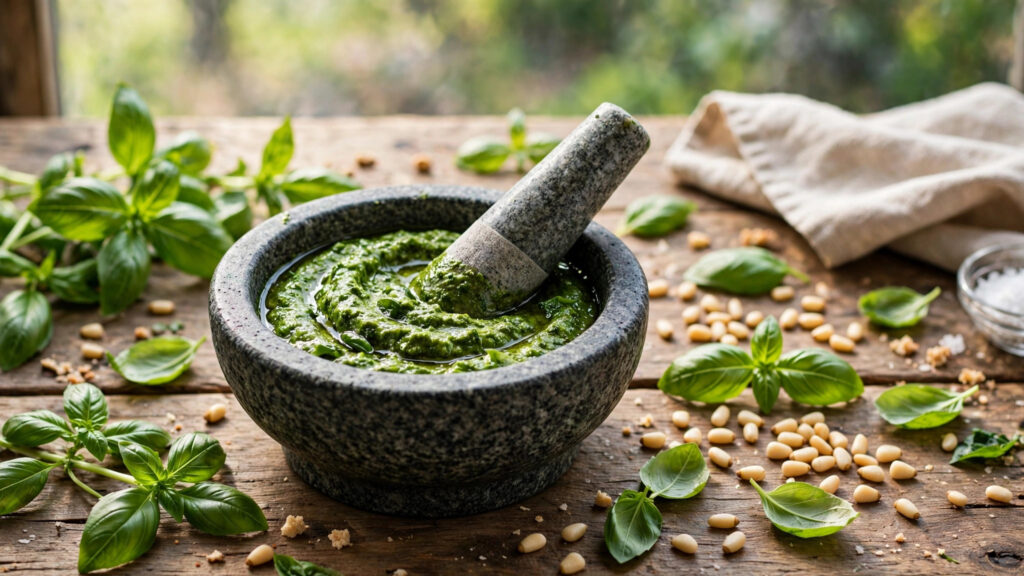
Long before food processors, pesto was made the Genoese way — basil, garlic, nuts, and cheese ground by hand in a marble mortar. This mortar and pestle pesto recipe follows that traditional method, and there’s a real reason to bother: the slow grinding bruises the basil leaves and coaxes out their oils gently, giving you a pesto that’s brighter, fresher-tasting, and more aromatic than anything a blade can make. It takes about 15 minutes of satisfying, rhythmic work — and no, you don’t need a recipe book degree to do it.
| Prep Time | Cook Time | Total Time | Servings | Course |
|---|---|---|---|---|
| 15 min | 0 min | 15 min | 8 servings (about 1 cup) | Sauce / Condiment |
Ingredients
- 2 cups fresh basil leaves, packed (about 2 large bunches), washed and thoroughly dried
- 1/4 cup pine nuts (or walnuts as an alternative)
- 2 garlic cloves, peeled
- 1/2 teaspoon coarse sea salt, plus more to taste
- 1/4 cup freshly grated Parmigiano-Reggiano
- 2 tablespoons freshly grated Pecorino Romano
- 1/3 cup extra-virgin olive oil, plus more as needed
Instructions
- Chill the mortar. If you can, pop your mortar (and pestle) in the fridge for 30 minutes before you start. A cold mortar keeps the basil from bruising dark and bitter as you work.
- Grind the garlic and salt to a paste. Add the garlic cloves and sea salt to the mortar. Pound and grind with the pestle until you have a completely smooth paste — the coarse salt acts as an abrasive and helps the garlic break down.
- Grind the nuts. Add the pine nuts (or walnuts) and work them into the garlic paste until they form a thick, creamy mixture. This takes a few minutes — keep at it until no large chunks remain.
- Add the basil in batches. Add a handful of basil leaves at a time. Press and twist the pestle against the leaves — bruise them against the mortar’s surface rather than smashing them flat. Grind each batch into the paste before adding the next, drizzling in a little olive oil as you go.
- Stir in the cheeses. Once all the basil is incorporated, add the Parmigiano-Reggiano and Pecorino. Use the pestle to stir and fold them through — don’t pound at this stage, just blend.
- Finish with oil. Drizzle in the remaining olive oil a little at a time, stirring until the pesto is glossy and spoonable. Taste and add more salt if needed. Use immediately, or press a thin layer of olive oil over the top and refrigerate for up to 5 days.
Tips
- Bruise, don’t pulverize: the whole point of the mortar is gentle crushing, not aggressive mashing. Short, circular pressing motions release the basil’s essential oils; hammering it flat tears the cell walls and can turn the pesto bitter.
- Toast the nuts first: 3–4 minutes in a dry skillet over medium heat, shaking often, until fragrant and lightly golden. Let them cool before grinding. Toasted pine nuts or walnuts give the pesto a much deeper, rounder flavour than raw ones.
- Keep everything cold and dry: wet basil leaves darken and dilute the pesto, and warmth speeds up oxidation. Dry the leaves thoroughly after washing, and the chilled mortar trick really does make a difference to the colour.
What You’ll Need
- A heavy marble or granite mortar and pestle with a rough interior — see our guide: Best Mortar and Pestle of 2026
- A dry skillet for toasting the pine nuts or walnuts
