
The stand mixer vs hand mixer decision trips up every home baker at some point. Quick answer: a stand mixer is worth it if you bake weekly, make bread dough, or want hands-free mixing; a hand mixer is the smarter buy for occasional cakes, whipped cream, and small batches. The price gap is large, so matching the machine to your real baking habits saves real money.
Both mixers beat a spoon and a strong arm, but they serve different bakers. This guide compares power, capacity, versatility, and cost, with honest buying tips so you invest once and bake happily for years.
What Each Mixer Is Built to Do
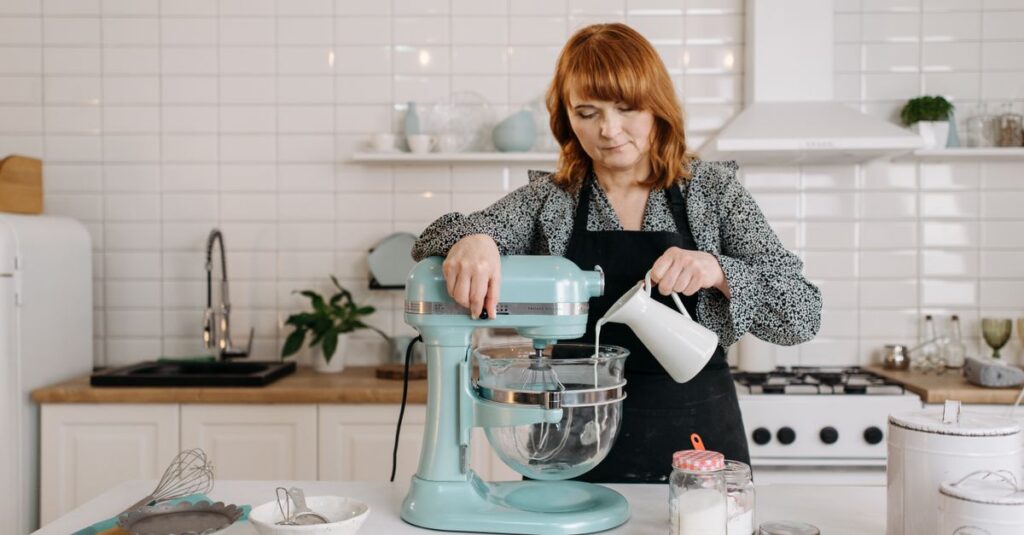
A stand mixer is a countertop workhorse: a heavy base, a powerful motor in the head, and a large stainless bowl that locks in place. You add ingredients, lower the head or lift the bowl, and walk away while planetary mixing action works the batter. Classic models like the KitchenAid Artisan offer 4.5- to 5-quart bowls and 300-plus watts, with dozens of attachments from pasta rollers to meat grinders.
A hand mixer is a lightweight motor housing with two removable beaters you hold and guide around your own bowl. It weighs two to four pounds, stores in a drawer, and costs a fraction of the price. Modern hand mixers from Cuisinart and KitchenAid offer five to nine speeds and enough power for cake batters, mashed potatoes, and whipped cream.
Head-to-Head Comparison
| Category | Stand Mixer | Hand Mixer |
|---|---|---|
| Power | 250–500 watts, high torque | 150–300 watts |
| Bowl capacity | 4.5–7 quarts | Any bowl you own |
| Bread dough | Excellent — kneads hands-free | Poor — strains motor, dough climbs beaters |
| Cakes & cookies | Excellent, effortless | Very good for small batches |
| Whipped cream & meringue | Excellent, walk away | Excellent with attention |
| Hands-free operation | Yes | No — you hold it |
| Attachments | Dozens (pasta, grinder, juicer) | Beaters, whisks, sometimes dough hooks |
| Storage footprint | Permanent counter space | Drawer or cabinet |
| Average price 2026 | $250–$600 | $30–$100 |
| Noise | Moderate, steady hum | Higher-pitched, handheld |
Power and dough: stand mixer dominates
Bread dough is the dividing line. Kneading two pounds of stiff dough for eight minutes demands torque that hand mixer motors simply do not have; dough climbs the beaters, the motor strains, and manufacturers warn against it in the manual. A stand mixer with a dough hook handles it effortlessly while you prep fillings. If homemade bread, pizza, or bagels are in your future, the stand mixer is not a luxury, it is the correct tool.
Batters and everyday baking: closer than you think
For cake batter, cookie dough (in reasonable batches), pancake mix, and mashed potatoes, a good hand mixer performs admirably. The difference is convenience, not quality: with a hand mixer you stand there guiding it for three to five minutes, while the stand mixer works unattended. For a baker who makes one cake a month, that convenience rarely justifies a $300-plus price gap.
Whipping and aeration: both excel
Whipped cream, egg whites, and meringue come out beautifully from either machine. The stand mixer\’s whisk attachment and hands-free operation make it slightly easier to hit perfect stiff peaks without overbeating, since you can watch closely. A hand mixer gives you more tactile control and reaches into any bowl, which some bakers prefer for small quantities.
Versatility and attachments
This is where stand mixers pull far ahead. The attachment hub on a KitchenAid-style mixer powers pasta extruders, grain mills, meat grinders, spiralizers, and ice cream makers, effectively turning one motor into a whole prep station. Hand mixers offer beater and whisk swaps, occasionally dough hooks, and nothing more. If you love multifunctional tools, the stand mixer\’s ecosystem is unmatched.
Space, weight, and daily reality
A stand mixer weighs 20 to 30 pounds and realistically lives on your counter permanently; hauling it from a cabinet gets old fast. That is fine in a spacious kitchen and a real burden in a small one. A hand mixer weighs under four pounds, lives in a drawer, and sets up in seconds. Be honest about your kitchen: an unused stand mixer gathering dust is the most expensive option of all.
Which Should You Buy? Honest Buying Tips
- Buy the stand mixer if you bake at least weekly, make bread or pizza dough, cook in large batches, or want the attachment ecosystem. Look for all-metal gears, at least 300 watts, and a 5-quart-or-larger bowl. Tilt-head models are easier to access; bowl-lift models handle heavy dough better.
- Buy the hand mixer if you bake occasionally, have limited counter space, or want to test your baking habit before investing. Choose one with at least 250 watts, a slow start speed to avoid flour clouds, and a storage case for attachments.
- Watch for sales: stand mixers drop $100 or more during holiday sales events. Never pay full price in November if you can wait.
- Consider refurbished: manufacturer-refurbished stand mixers carry full warranties and save 20 to 30 percent.
- Test the weight: if you cannot comfortably lift the display model, you will resent storing it. Hand mixers avoid this entirely.
2026 Trends: What Is New in Mixers
Stand mixers in 2026 are getting smarter without gimmicks: built-in scales that weigh ingredients directly into the bowl, quieter DC motors, and dishwasher-safe everything. Compact 3.5-quart stand mixers target apartment bakers who want hands-free mixing without the countertop monument.
Hand mixers are gaining cordless models with genuinely useful battery life, plus snap-on storage cases that finally solve the lost-beater problem. The gap between a $60 hand mixer and a $400 stand mixer remains wide, but the hand mixer category keeps getting more capable for casual bakers.
Common Mixer Buying Mistakes
Mixer purchases go wrong in predictable ways. Dodge these traps and your machine will delight you for a decade.
Mistake 1: Buying a stand mixer for a baking habit you do not have yet. The classic regret: a $400 mixer used three times, then stored. Stand mixers reward established habits; they do not create them. Bake monthly with a hand mixer for six months first. If you are still enthusiastic and craving free hands, then upgrade with confidence.
Mistake 2: Choosing a hand mixer for bread ambitions. The reverse regret is equally common: buying a hand mixer while dreaming of sourdough. Hand mixers cannot knead real dough, and you will either burn out the motor trying or abandon bread entirely. If homemade bread is the goal, save for the stand mixer from the start.
Mistake 3: Ignoring bowl size versus batch size. A 6-quart stand mixer bowl struggles with a single small cake batter; the beaters cannot reach it properly. Conversely, a 4.5-quart bowl overflows on triple-batch cookie dough. Match bowl capacity to your typical batch, not your occasional extremes.
Mistake 4: Overlooking attachment costs. The pasta roller, meat grinder, and grain mill that make a stand mixer magical cost $50–$150 each. Budget for the attachments you actually want, or that \”versatile\” mixer stays a single-purpose machine. Third-party attachments exist but vary wildly in quality.
Mistake 5: Storing a stand mixer where you will not use it. A 25-pound mixer in a low cabinet gets used rarely; the same mixer on the counter gets used weekly. If you lack permanent counter space, honestly assess whether you will haul it out. A hand mixer in a drawer beats a stand mixer in storage every time.
Getting the Most From Whichever Mixer You Own
For stand mixer owners: learn the speeds properly. Stir (speed 1–2) for combining, medium (4–6) for creaming and whipping, and high only for brief whipping tasks. Never knead dough above speed 2; higher speeds overheat the motor and can damage gears. Scrape the bowl once mid-mix since even planetary action misses spots, and always start slow when adding flour to avoid the infamous flour cloud.
For hand mixer owners: use a deep, narrow bowl to keep beaters submerged and reduce splatter, and tilt the bowl while moving the mixer in slow circles for even mixing. Rest the motor if it smells hot during thick doughs; hand mixers have thermal cutoffs, but repeated overheating shortens their life. Invest in a set with a storage case, because lost beaters are the number-one hand mixer complaint.
For both: room-temperature butter and eggs incorporate dramatically better than cold ones, cutting mixing time and improving texture. This single habit improves results more than any mixer upgrade. And clean beaters promptly; dried batter is miserable to scrub from wire whisks.
Stand Mixer Attachments: The Hidden Value (and Cost)
The attachment hub is the stand mixer\’s superpower and its hidden price tag. Understanding the ecosystem before you buy prevents both overspending and underusing.
The essential three: Every stand mixer ships with a flat beater (batters, frostings), a wire whisk (cream, meringue), and a dough hook (yeast doughs). These cover 90 percent of baking tasks. Learn each one\’s purpose: the flat beater creams butter without incorporating excess air, the whisk aerates, and the dough hook kneads without overheating. Using the wrong attachment is a common beginner error that produces dense cakes and tough doughs.
The worthwhile upgrades: The pasta roller set transforms fresh pasta from a project into a weeknight possibility, paying for itself against store-bought fresh pasta within months for pasta lovers. The meat grinder attachment produces better burgers and sausage than any pre-ground meat, with full control over fat ratios and freshness. The grain mill serves serious bread bakers who want truly fresh flour. Each costs $50–$150, so prioritize by your actual cooking.
The situational ones: Spiralizers, juicers, and ice cream makers are delightful for the households that use them and clutter for everyone else. Apply the weekly-use test ruthlessly: an ice cream attachment used twice a summer is an expensive paperweight. Borrow or buy a standalone version first to test the habit before investing in the attachment.
Compatibility caution: Attachments are generally brand-specific and sometimes model-specific within brands. Buying into an ecosystem is a long-term commitment; choose the brand whose attachment range matches your interests, and verify fit for your exact model before ordering. Third-party attachments cost less but vary enormously in quality and can damage the hub if poorly machined.
Hand Mixer Techniques That Rival Stand Mixers
A skilled hand-mixer user closes most of the gap with stand mixers for everyday baking. These techniques maximize what the humble hand mixer can do.
Creaming properly: Beat room-temperature butter and sugar for a full 3–5 minutes until pale and fluffy, scraping the bowl twice. Most under-creaming, not the mixer, causes dense cakes. The mixture should visibly lighten in color and increase in volume; impatience here is the number-one hand-mixer baking flaw.
Managing heavy doughs: For thick cookie doughs, add flour in three additions, mixing just until combined each time. If the motor strains, stop and finish by hand with a wooden spoon; forcing it risks burnout. Dividing large batches in half keeps the mixer in its comfort zone and actually mixes more evenly.
Whipping to perfection: Chill the bowl and beaters for 10 minutes before whipping cream; cold equipment whips faster with more stability. Add sugar only after soft peaks form, then whip to your desired stage, watching closely at the end since cream goes from perfect to buttery in seconds. For meringue, ensure the bowl is grease-free by wiping with vinegar first.
Frequently Asked Questions
Can a hand mixer knead bread dough?
Not really. Most hand mixer manuals warn against stiff dough because the motor overheats and dough climbs the beaters into the housing. Dough hooks on hand mixers handle only very soft, small doughs. For real bread baking, a stand mixer or hand kneading is the answer.
Is a stand mixer worth it for a beginner baker?
Only if you are confident baking will become a habit. Beginners do better starting with a quality hand mixer and upgrading later; many bakers happily use hand mixers for years. Buy the stand mixer when you find yourself baking weekly and wishing for free hands.
How long does a stand mixer last?
A well-built stand mixer with metal gears typically lasts 10 to 15 years of home use, and many KitchenAid units run for decades. Hand mixers average five to eight years. The stand mixer\’s longevity helps justify its price when amortized over a decade of baking.
Can I make meringue with a hand mixer?
Absolutely. A hand mixer whips egg whites to stiff peaks in about five to eight minutes. Use a deep, narrow bowl to keep the beaters submerged, ensure no yolk or grease touches the whites, and add sugar gradually for the glossiest meringue.
What size stand mixer bowl do I need?
A 4.5- to 5-quart bowl handles most home baking: double cake batches, two loaves of bread dough, and big cookie recipes. Choose 6 quarts or more only if you regularly bake for crowds or make triple batches. Larger bowls struggle with very small quantities.
Are expensive hand mixers worth it over cheap ones?
Up to about $70, yes. Pricier hand mixers offer more power, slower starting speeds, sturdier beaters, and better ergonomics. Beyond that, returns diminish quickly; a $150 hand mixer does not mix twice as well as a $70 one. Put the savings toward ingredients instead.
The Bottom Line
In the stand mixer vs hand mixer contest, frequency decides. Weekly bakers, bread makers, and batch cookers will earn back a stand mixer\’s price in convenience and results. Occasional bakers get 90 percent of the function for 15 percent of the price with a good hand mixer. Either way, buy for the baker you are today, not the one you hope to become, and upgrade when your habits prove you outgrew your machine.
