
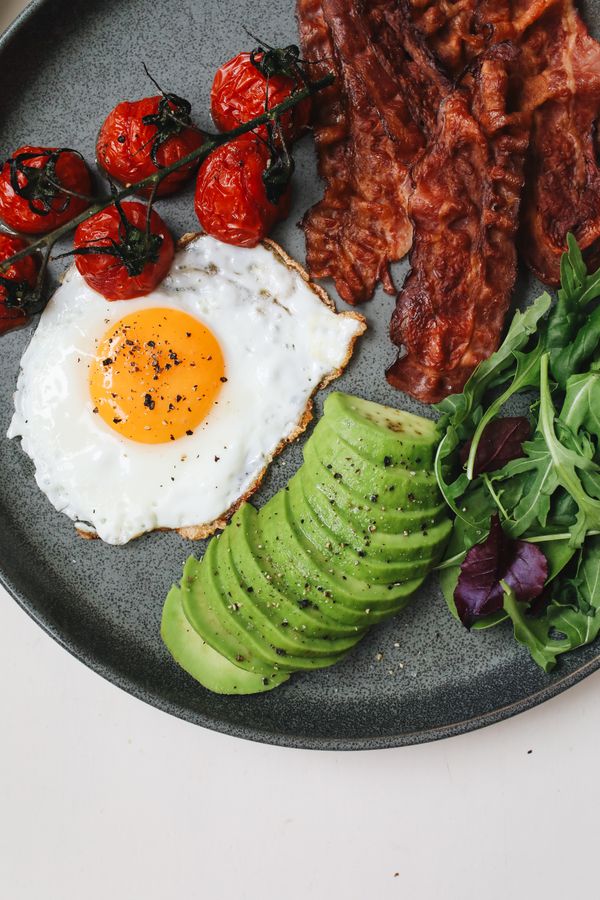
Clean keto vs dirty keto is the diet\’s oldest debate: both keep carbs under ~20–30 g net and both produce ketosis, but clean keto builds meals from whole foods (meat, fish, eggs, vegetables, nuts, healthy oils) while dirty keto hits the same macros with processed convenience foods (fast-food bunless burgers, pork rinds, diet soda, keto bars, processed cheese). For pure ketosis and short-term weight loss, both work. For long-term health, satiety, and nutrient density, clean keto wins — but the smartest approach borrows from both.
This guide defines each style honestly, compares them on results, health markers, cost, and sustainability, busts the myths on both sides, and shows you the practical middle path most successful long-term keto dieters actually follow.
Definitions: What Each Style Actually Means
Clean keto
Whole, minimally processed foods: grass-fed or conventional meats, wild or farmed fish, eggs, above-ground vegetables, avocados, nuts, seeds, olive oil, butter, and full-fat dairy. Processed items are rare; sweeteners are minimal; the diet resembles a whole-foods template that happens to be very low-carb. Think: salmon with roasted broccoli in olive oil.
Dirty keto
Macros-first eating where food quality is secondary: bunless fast-food burgers, bacon by the pound, pork rinds, processed cheese slices, diet soda, sugar-free candy, keto bars, and deli meats. If it fits the macros, it\’s in. Think: triple bunless bacon cheeseburger with a diet soda.
Lazy keto (the third style)
Worth mentioning: lazy keto means tracking only carbs (not protein, fat, or calories), eating whatever fits. It can be clean-lazy (whole foods, carbs-only tracking) or dirty-lazy — the terms describe different axes (food quality vs tracking rigor), which is why the debate gets confusing.
| Dimension | Clean keto | Dirty keto |
|---|---|---|
| Carb limit | 20–30 g net | 20–30 g net |
| Typical foods | Whole foods, home-cooked | Processed, convenience, fast food |
| Micronutrients | High (vegetables, varied proteins) | Often low (few vegetables) |
| Fiber | Adequate | Frequently deficient |
| Omega-3:6 balance | Better (fish, olive oil) | Worse (seed oils, processed meats) |
| Satiety per calorie | High | Lower (hyper-palatable processed foods) |
| Cost | Moderate (whole foods) | Low to moderate (fast food adds up) |
| Convenience | Lower (cooking required) | Higher (grab and go) |
| Social ease | Harder at restaurants | Effortless anywhere |
Round 1: Weight Loss — Surprisingly Close
Here\’s the uncomfortable truth for clean-keto purists: for pure fat loss, dirty keto works. Ketosis doesn\’t check ingredient lists, and a calorie deficit from bunless burgers produces the same scale movement as one from salmon and kale. Multiple dieters have documented dramatic losses on unapologetically dirty keto.
The caveat is adherence quality: processed foods are engineered for overconsumption, so dirty keto dieters often struggle more with hidden calories and cravings. Clean keto\’s whole foods deliver more satiety per calorie, making deficits easier to sustain. Same physics, different difficulty settings.
Winner: tie on mechanism, clean keto on sustainability.
Round 2: Health Markers — Clean Keto Pulls Ahead
Weight isn\’t health, and this is where food quality shows:
- Micronutrients: clean keto\’s vegetables, varied proteins, and nuts supply potassium, magnesium, vitamin C, and phytonutrients that dirty keto\’s meat-and-cheese monotony lacks. Chronic gaps show up as fatigue, poor immunity, and cramps.
- Gut health: fiber from vegetables feeds beneficial gut bacteria; the near-zero-fiber dirty keto diet is associated with constipation and less diverse microbiomes.
- Inflammation: processed meats, industrial seed oils, and artificial additives are pro-inflammatory in excess; fatty fish, olive oil, and colorful vegetables are anti-inflammatory. For a diet many adopt for inflammation, this matters.
- Lipid profiles: both styles can raise LDL in some people, but clean keto\’s monounsaturated fats and omega-3s tend to produce better overall lipid patterns than a diet heavy in processed meats.
- Sodium quality: dirty keto\’s sodium comes with preservatives and additives; clean keto\’s comes from salt you add yourself — same mineral, cleaner package.
Winner: clean keto, decisively. Ketosis is a metabolic state; health is built from what you eat while in it.
Round 3: Cost, Convenience, and Real Life — Dirty Keto Fights Back
Clean keto\’s weaknesses are practical: it requires cooking skills, grocery planning, and time — resources not everyone has. Dirty keto\’s superpower is frictionless compliance: a bunless burger exists within five minutes of almost everyone on earth, and for a shift worker or single parent, that accessibility is the difference between keto and not-keto.
Cost is nuanced: home-cooked clean keto (eggs, chicken thighs, frozen veg, butter) is genuinely cheap, but clean keto as marketed (grass-fed everything, wild salmon, organic produce, MCT oil) is expensive. Honest dirty keto (grocery-store rotisserie chicken, eggs, cheese) can undercut it.
Winner: depends on your life. The best diet is the one you can actually execute for years.
Myths From Both Camps, Busted
Clean-keto myths
- \”You must buy grass-fed/organic.\” Conventional meat, eggs, and produce produce identical ketosis and nearly identical nutrition. Grass-fed is a nice upgrade, not a requirement — don\’t let perfectionism price you out of keto.
- \”Seed oils will ruin everything.\” Minimizing industrial seed oils is reasonable; panic about the soybean oil in a restaurant meal is not. Dose and context matter.
- \”Dirty keto isn\’t real keto.\” Gatekeeping nonsense. Ketosis is biochemistry, not a purity test.
Dirty-keto myths
- \”Macros are all that matter.\” For ketosis, mostly true. For health, energy, digestion, skin, and longevity — demonstrably incomplete.
- \”Vegetables are optional.\” The most damaging dirty-keto belief. Vegetables supply the electrolytes and fiber that prevent keto\’s worst side effects.
- \”Keto treats don\’t count.\” Maltitol-laden \”keto\” candy bars stall plenty of dirty-keto dieters who\’d never touch a potato.
The Smart Middle Path: \”Clean-ish\” Keto
Almost no successful long-term keto dieter is 100% clean or 100% dirty. The sustainable pattern:
- 80/20 rule: ~80% whole foods (the clean base), ~20% convenience (dirty tools for busy days, travel, and sanity)
- Non-negotiables: daily vegetables, adequate protein from real sources, electrolytes from food + salt — these stay clean always
- Flexible zones: the occasional bunless fast-food meal, diet soda, pork-rind snacks, and keto bars are tools, not failures
- Upgrade over time: start wherever you\’ll comply (even if that\’s dirty), then gradually clean up as habits solidify — direction matters more than starting position
- Match the style to the day: clean at home where you control the kitchen, pragmatic-dirty when traveling or slammed — no guilt either way
Blood Work: What to Monitor on Either Style
Debates about food quality get settled with data. Get a baseline panel when starting keto and recheck every 6–12 months:
- Lipid panel (with particle size if possible): total cholesterol, LDL, HDL, triglycerides. Keto typically lowers triglycerides and raises HDL — favorable changes. LDL responses vary individually; a large LDL spike warrants discussion with your doctor regardless of style.
- HbA1c and fasting glucose: both styles usually improve these markedly — it\’s one of keto\’s most consistent benefits.
- Inflammatory markers (hs-CRP): clean keto tends to lower these; dirty keto\’s processed-food load may not. If yours stays elevated, food quality is the first lever.
- Micronutrients: vitamin D, B12, iron/ferritin, and magnesium. Dirty keto dieters are more likely to show gaps here — the bloodwork makes the invisible visible.
- Liver and kidney function (ALT, AST, creatinine, eGFR): routine safety monitoring for any major dietary change, especially with higher protein intakes.
Two people can eat \”keto\” with identical macros and have very different panels — that\’s the clean-vs-dirty difference made measurable. Let your bloodwork, not internet arguments, judge your approach.
Dirty Keto Damage Control: 7 Rules
If dirty keto is what keeps you compliant right now, these rules capture most of clean keto\’s benefits with minimal effort:
- Vegetables are non-negotiable. Even the dirtiest keto needs 2–3 cups of low-carb veg daily. This single rule fixes most dirty-keto problems.
- Drink water like it\’s your job. Diet soda doesn\’t hydrate like water; processed food is sodium-heavy. 2–3 liters daily.
- One real meal a day minimum. Even if two meals are convenience food, make one a home-cooked plate of protein + vegetables.
- Rotate your proteins. Bacon-and-burger monotony creates nutrient gaps; add eggs, canned fish, and chicken regularly.
- Read the \”keto\” product labels. Maltitol, hidden starches, and serving-size games live here. The dirtiest keto trap is trusting packaging.
- Supplement magnesium. Processed-food keto is almost always magnesium-poor. 200–400 mg in the evening covers it.
- Set a cleaning-up trajectory. Dirty keto as a starting point is smart; dirty keto as a permanent identity sells yourself short. Improve one thing monthly.
The Cost Comparison: Real Numbers
The \”clean keto is expensive\” claim needs numbers. Approximate weekly cost for one person:
| Style | Typical weekly cost | Notes |
|---|---|---|
| Budget clean keto | $50–75 | Eggs, chicken thighs, frozen veg, butter, store-brand olive oil |
| Premium clean keto | $120–180 | Grass-fed beef, wild salmon, organic produce, avocado oil, MCT oil |
| Dirty keto (grocery) | $60–90 | Deli meats, cheese, pork rinds, eggs, keto bars |
| Dirty keto (fast food heavy) | $100–150 | Daily restaurant meals add up fast |
The surprise: budget clean keto is the cheapest option of all. The expensive reputation comes from conflating \”clean\” with \”premium\” — but clean describes processing level, not price tier. Chicken thighs and frozen broccoli are both clean and cheap.
Frequently Asked Questions
Can you lose weight on dirty keto?
Yes — ketosis and calorie deficits work regardless of food sourcing. Many people lose significant weight on dirty keto. The concerns are nutritional gaps, sustainability, and health markers over years, not the scale over weeks.
Is dirty keto dangerous?
Not acutely dangerous for most healthy adults, but a long-term diet of processed meats, minimal vegetables, and artificial additives misses the nutrients that protect cardiovascular and gut health. Think of it as a workable short-term strategy, not an ideal permanent diet.
What does a clean keto day of eating look like?
Breakfast: eggs scrambled in butter with spinach. Lunch: large salad with grilled chicken, avocado, olive oil. Dinner: salmon with roasted broccoli and cauliflower mash. Snacks: macadamias, cheese, berries. Whole foods, cooked simply, seasoned well.
Do I need grass-fed meat for clean keto?
No. It\’s a marginal nutritional upgrade at a significant price premium. Conventional meat, eggs, and dairy produce the same ketosis. Spend the grass-fed budget on more vegetables and fish first — far better ROI.
Can vegetarians do clean keto?
Yes, with planning: eggs, dairy, tofu, tempeh, nuts, seeds, avocados, coconut products, and abundant low-carb vegetables. Protein variety needs attention, and vegans face a steeper climb — but \”clean\” and \”vegetarian\” combine naturally.
How do I transition from dirty to clean keto?
One swap per week: replace fast-food lunch with meal-prepped protein + veg; swap pork-rind snacks for nuts; add one vegetable to dinner. Gradual upgrades stick; overnight overhauls don\’t. Keep the dirty tools for emergencies without shame.
Is lazy keto the same as dirty keto?
No — they\’re different axes. Lazy = only tracking carbs (vs tracking all macros). Dirty = processed food choices (vs whole foods). You can be clean-lazy (whole foods, carbs-only tracking) or dirty-strict (junk food, perfect macro spreadsheets).
Which style is better for beginners?
Start with whichever you\’ll actually follow. A beginner who eats dirty keto for three months beats one who attempts pristine clean keto and quits in a week. Build the carb-restriction habit first; upgrade food quality as the lifestyle solidifies.
Can dirty keto evolve into clean keto over time?
Yes — and it\’s the most common success trajectory. People start dirty because it\’s accessible, then naturally upgrade as habits solidify: learning to cook, discovering they feel better with vegetables, getting bored of processed food. Treat dirty keto as a valid on-ramp, not a permanent identity.
Is dirty keto okay for athletes?
For short periods, performance-wise, yes — macros and calories drive training more than food sourcing. But athletes have higher micronutrient and recovery demands, so the vegetable and omega-3 gaps of dirty keto show up faster as poor recovery, cramps, and illness. Competitive athletes should bias clean.
What do doctors generally think of dirty keto?
Most physicians prefer whole-food keto for the same reasons they prefer whole-food anything: better micronutrients, fiber, and lipid profiles. But many also acknowledge that a sustainable dirty keto beats an abandoned clean keto — adherence to some workable plan is the clinical priority.
Can I mix clean and dirty keto within the same week?
Absolutely — and most successful long-term keto dieters do exactly that. Clean home-cooked meals through the week plus pragmatic dirty options when traveling, slammed at work, or socializing is the realistic 80/20 pattern. Consistency of carb restriction matters far more than purity of every single meal.
