
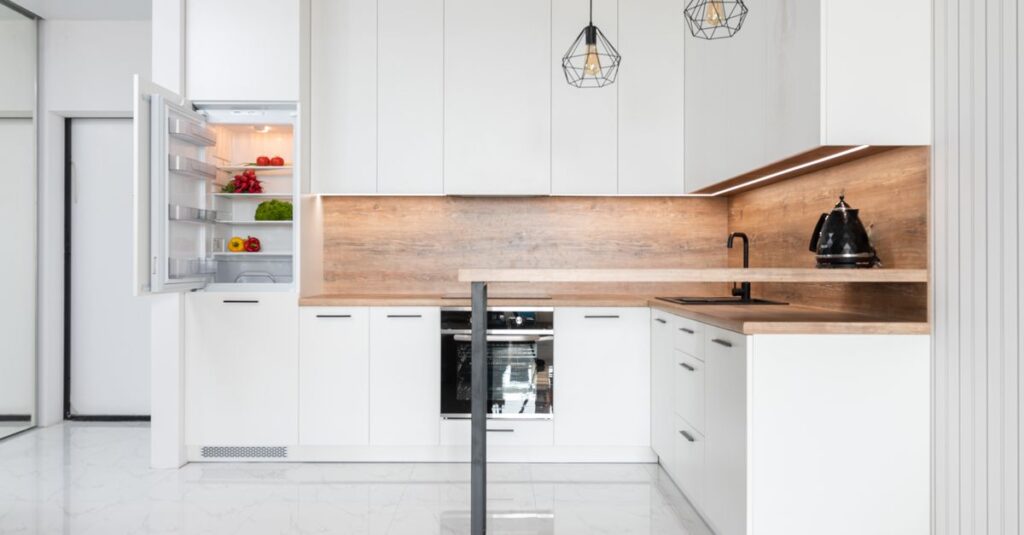
The smart kitchen appliance trends of 2026 look very different from the gimmicky \”smart\” gadgets of a decade ago. Gone are the Bluetooth-enabled novelties that added an app nobody opened. In their place: appliances with genuine intelligence — ovens with internal cameras that recognize food, cooktops that hold exact temperatures, refrigerators that track inventory, and AI assistants that adjust cooking in real time. The smart kitchen has finally grown up.
What changed? Three forces converged: computer vision got cheap enough for countertop appliances, AI models got good enough to make real cooking decisions, and the Matter smart-home standard finally let devices from different brands work together. The result is a 2026 kitchen where appliances genuinely cooperate — and where \”smart\” increasingly means \”does the thinking for you\” rather than \”has Wi-Fi.\”
This guide to smart kitchen appliance trends in 2026 covers the seven developments reshaping home cooking: AI-powered cooking automation, camera-based food recognition, predictive maintenance, Matter-standard interoperability, voice-first control, smart inventory management, and energy-aware appliances. For each trend, you will learn what it means practically, which products exemplify it, and whether it is worth your money.
Smart Kitchen Appliance Trends 2026 at a Glance
Before diving deep, here is the landscape: AI cooking assistance has moved from premium ovens into mid-range appliances; internal cameras now identify foods and track doneness automatically; the Matter standard is unifying fragmented smart-home ecosystems; voice control has matured beyond novelty into genuinely useful hands-free cooking; refrigerators and pantries are getting serious about inventory tracking; appliances increasingly optimize their own energy use; and predictive maintenance alerts owners before breakdowns happen. The through-line: less fiddling with apps, more autonomous cooking.
Trend 1: AI That Actually Cooks
The defining smart kitchen appliance trend of 2026 is AI moving from marketing buzzword to genuine cooking partner. Premium wall ovens and ranges from brands like GE Profile, Samsung, and Bosch now use internal cameras paired with food-recognition AI to identify what you put inside — a chicken, a pizza, a tray of cookies — and automatically set the optimal cooking mode, temperature, and time.
The technology goes further than recognition. Systems like GE\’s SmartHQ with computer vision monitor browning in real time and adjust heat to hit your desired doneness, while June Oven pioneered the concept years ago and its successors have refined it. Countertop appliances are joining in: smart air fryers and multi-cookers with guided cooking walk you through recipes step by step, adjusting automatically when sensors detect the food\’s actual state rather than blindly following a timer.
Practically, this means the skill floor for good cooking keeps dropping. A novice can produce a well-roasted chicken because the oven watches and adapts. The trade-off is price — AI-equipped appliances still command premiums of 30–100% over their \”dumb\” equivalents — and some cooks find the automation removes the craft they enjoy. For busy households, though, an oven that will not burn dinner is worth real money.
Trend 2: Cameras Inside Everything
Internal oven cameras, once a luxury novelty, are becoming standard on mid-range smart ovens in 2026 — and they are escaping the oven entirely. Smart refrigerators use door and interior cameras so you can check contents from the grocery store. Countertop grills and smokers add cameras for remote monitoring of long cooks.
The killer application is doneness monitoring: watching a roast\’s browning from your phone, or getting an alert when cookies reach golden-brown, changes how people cook. No more opening the oven door (and losing heat) to check. Some systems even record time-lapses of your cooks — a small joy that turns out to be genuinely delightful.
Privacy concerns are the shadow side: cameras in appliances make some buyers uneasy, and manufacturers have responded with physical shutter options and local-only processing modes. If a camera-equipped appliance appeals to you, check whether video stays on-device or uploads to the cloud.
Trend 3: The Matter Standard Finally Unifies the Kitchen
For years, smart kitchen devices were balkanized — your Samsung fridge would not talk to your Google speaker, your GE oven ignored your Apple Home setup. The Matter smart-home standard, now mature in 2026, is ending that fragmentation. Major appliance brands have committed to Matter compatibility, meaning devices pair with any major ecosystem and interoperate reliably.
What this enables in practice: your voice assistant can preheat the oven, start the dishwasher, and check the fridge\’s temperature regardless of brand. Routines span ecosystems — \”dinner mode\” dims lights, starts the range hood, and sets a cooking timer across devices from three manufacturers. Setup, historically the most painful part of smart homes, has gotten dramatically simpler with Matter\’s standardized pairing.
The practical advice for 2026 buyers: prioritize Matter-certified appliances when choosing between otherwise equal options. It is the best insurance that your smart kitchen will still work coherently five years from now, regardless of which tech giant\’s ecosystem you favor.
Trend 4: Voice Control Grows Up
Voice control in the kitchen has crossed from gimmick to genuinely useful — largely because cooking is the perfect hands-free scenario. With raw chicken on your hands, saying \”set a timer for 12 minutes\” or \”preheat the oven to 425\” beats touching anything. In 2026, appliance voice integration handles multi-step commands (\”start the air fryer at 400 degrees for 20 minutes\”) and understands cooking context better than ever.
The improvement comes from on-device processing and better natural-language understanding: fewer misheard commands, faster responses, and the ability to chain instructions. Smart displays in the kitchen have become the command centers, showing camera feeds, timers, and recipe steps while you cook.
Limitations remain: complex or ambiguous requests still confuse assistants, and privacy-conscious cooks may prefer to keep microphones out of the kitchen. But for the core use cases — timers, temperatures, conversions — voice is now reliable enough to build habits around.
Trend 5: Refrigerators That Manage Your Food
The smart refrigerator is finally delivering on its decade-old promise — not through gimmicky touchscreens, but through practical inventory intelligence. 2026 models from Samsung (Family Hub successors), LG (ThinQ), and GE Profile use interior cameras plus AI to track what is inside, flag expiring items, and suggest recipes based on actual contents.
The most useful implementations are subtle: automatic grocery lists generated from what is running low, expiration alerts that genuinely reduce waste, and door-ajar or temperature excursion notifications that save hundreds in spoiled food. Integration with grocery delivery services means running low on milk can trigger a reorder suggestion — convenient for some, surveillance-adjacent for others.
The honest assessment: smart fridges remain expensive ($2,500–$5,000+), and the core refrigeration is identical to dumb models. Buy the intelligence only if food-waste reduction and inventory automation appeal to you specifically — the compressor does not care about Wi-Fi.
Trend 6: Energy-Aware Appliances
With electricity prices volatile globally, 2026\’s smart appliances increasingly optimize their own energy use. Smart dishwashers and laundry machines delay cycles to off-peak hours automatically based on utility rate data. Smart ovens preheat efficiently and suggest batch cooking. Some ranges now display real-time energy cost per cooking session — a small nudge that changes behavior.
Integration with home solar and battery systems is the frontier: appliances that preferentially run when your panels are producing, or that pause during peak grid demand. For eco-conscious households and those on time-of-use electricity plans, these features deliver measurable savings — early adopters report 10–20% reductions in appliance energy costs.
This trend favors buyers on time-of-use rates most strongly. If your utility charges the same around the clock, the savings are modest — but the environmental benefit of shifting load to cleaner grid hours remains real.
Trend 7: Predictive Maintenance and Self-Diagnosis
The least glamorous but most practical smart trend: appliances that tell you they need attention before they break. Smart dishwashers detect filter clogs, smart refrigerators flag compressor anomalies, and smart ovens report heating-element degradation — all via app notifications with plain-language explanations.
Manufacturers benefit from fewer warranty surprises; owners benefit from avoiding catastrophic failures (a fridge that warns you before it dies saves a freezer full of food). Diagnostic data also streamlines service calls — the technician arrives knowing the fault code rather than discovering it.
The caveat is data sharing: predictive maintenance requires the manufacturer to monitor your appliance continuously. Most brands allow opting out, at the cost of losing the feature. For most buyers, the trade-off favors keeping it on — the practical value of a warning before a fridge failure is hard to argue with.
What Smart Kitchen Trends Mean for Buyers in 2026
The smart kitchen\’s maturation brings a clear buying principle: pay for intelligence that does work, not intelligence that adds apps. Camera-based doneness monitoring, AI cooking modes, Matter compatibility, and predictive maintenance deliver tangible value. Remote preheating from the couch and recipe apps you will open twice do not.
Budget strategically: a smart oven with food recognition earns its premium daily; a smart toaster does not exist for good reason. Prioritize the appliances you use most — range, refrigerator, dishwasher — for smart upgrades, and keep countertop gadgets simple unless a specific smart feature (like a guided-cooking multi-cooker) matches how you actually cook.
Finally, consider longevity: smart features depend on cloud services and app support that manufacturers may discontinue. Favor appliances whose core function works perfectly without connectivity — the smart layer should be a bonus, not a dependency. The best smart appliance of 2026 is one that still cooks brilliantly if the Wi-Fi dies.
Smart Kitchen Buying Checklist for 2026
Before paying a smart premium, run through this checklist. First, does the smart feature work when Wi-Fi dies? Favor appliances whose core cooking functions are fully manual-capable — the intelligence should be a bonus layer, not a dependency. Second, is it Matter-certified? In 2026, Matter support is the strongest signal your device will interoperate with your ecosystem of choice for years.
Third, who gets your data, and can you opt out? Check whether cameras process locally or upload to the cloud, and whether predictive maintenance requires continuous monitoring you are comfortable with. Fourth, will you actually use it? Be brutally honest: guided cooking modes get used; remote preheating from the office gets used twice. Finally, check the manufacturer\’s software track record — a smart appliance is only as durable as its app support, so favor brands with a history of long-term updates over startups that might vanish.
Smart Kitchen Appliance Trends 2026 FAQ
Are smart kitchen appliances worth it in 2026?
Selectively, yes. AI cooking assistance, internal cameras for doneness monitoring, Matter-standard interoperability, and predictive maintenance deliver genuine value. Gimmicky app-remote features rarely justify premiums. Spend on intelligence for the appliances you use daily — range, fridge, dishwasher — and keep the rest simple.
What is the Matter smart home standard?
Matter is an industry-wide connectivity standard backed by Apple, Google, Amazon, Samsung, and major appliance brands. It ensures smart devices work across ecosystems and pair easily. In 2026, Matter certification is the best indicator that a smart appliance will integrate smoothly with your existing setup and remain compatible long-term.
Do smart ovens really recognize food?
Yes — premium 2026 ovens from GE Profile, Samsung, Bosch, and others use internal cameras with AI trained on thousands of dishes to identify common foods and set appropriate cooking parameters automatically. Accuracy is high for standard dishes (chicken, pizza, cookies) and improving for less common ones.
Can smart appliances work without Wi-Fi?
The best ones can — core cooking functions (heating, timers, manual modes) work offline on well-designed appliances, with smart features as an enhancement layer. Always verify this before buying: an oven that will not heat without cloud connectivity is a liability, not a feature.
Are cameras in appliances a privacy risk?
They can be, which is why 2026 models increasingly offer physical shutters, local-only processing, and clear data policies. If privacy matters to you, choose models with on-device processing and shutter controls, and review what data the manufacturer\’s app collects before connecting.
Will AI replace cooking skills?
No — it lowers the floor, not the ceiling. AI assistance helps novices avoid disasters and helps busy cooks multitask, but understanding flavor, seasoning, and technique still separates good cooking from great. Think of it as power steering: helpful, but you still drive.
How much more do smart appliances cost?
Smart premiums typically run 20–50% over comparable non-smart models — less than the 2x premiums of early generations. As features like Matter support become standard rather than premium, the gap continues to shrink. Evaluate each feature\’s practical value against its price delta.
