
This keto fruit list proves fruit isn\’t entirely off-limits: raspberries, blackberries, strawberries, and several other low-carb options fit comfortably into keto when portioned — while bananas, grapes, and mangoes can blow a full day\’s carb budget in a single piece. The rule is simple: berries and small portions of tart fruits are in; large sweet fruits are out.
Below you\’ll find 12 keto-friendly fruits ranked by net carbs with exact serving counts, the high-sugar fruits to avoid (with their carb damage spelled out), smart ways to use fruit on keto, and how fruit fits into your daily carb budget without breaking ketosis.
Why Most Fruit Doesn\’t Work on Keto (the Fructose Problem)
Fruit\’s sugar is roughly half fructose, which is metabolized almost entirely by the liver — the same organ you\’re asking to produce ketones. Large fructose loads refill liver glycogen directly, which is precisely what pauses ketosis. A medium banana (~27 g carbs) or a cup of grapes (~26 g) delivers nearly a full keto day\’s carbs in a \”healthy snack.\”
But fructose content varies enormously. Berries are low in total sugar and high in fiber, giving them the best net-carb profile in the fruit kingdom. Tartness is a useful heuristic: the tarter the fruit, generally the lower the sugar.
The 12 Keto-Friendly Fruits, Ranked
| Rank | Fruit | Net carbs per 100 g | Practical serving |
|---|---|---|---|
| 1 | Raspberries | 5.4 g | ½ cup (~60 g) = ~3 g — the keto berry champion |
| 2 | Blackberries | 4.9 g | ½ cup (~70 g) = ~3.5 g |
| 3 | Strawberries | 5.7 g | 4–5 medium berries (~70 g) = ~4 g |
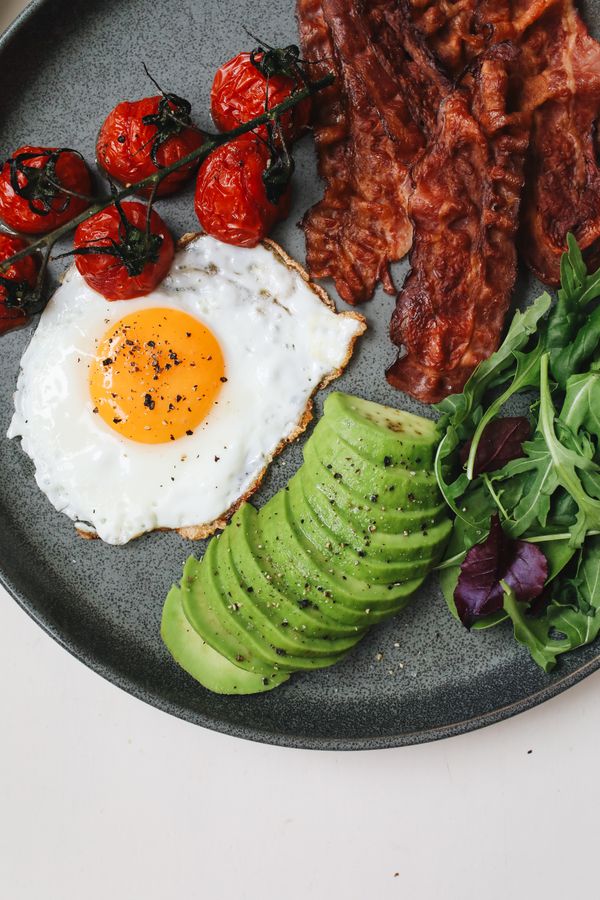
| 4 | Avocado | 2.0 g | 1 whole = ~3 g — fruit botanically, staple practically |
| 5 | Coconut (fresh meat) | 6.2 g | ¼ cup shredded = ~2.5 g |
| 6 | Lemon / lime | 6–8 g | Juice of 1 = ~3 g — for flavor, not snacking |
| 7 | Blueberries | 12 g | ¼ cup (~40 g) = ~5 g — the highest-carb berry; portion strictly |
| 8 | Plums | 10 g | 1 small plum = ~6 g — occasional only |
| 9 | Cherries | 12 g | ~8 cherries = ~7 g — easy to overeat; count them |
| 10 | Peaches | 8 g | ½ small peach = ~5 g — a planned treat |
| 11 | Cantaloupe | 7 g | ½ cup cubed = ~6 g |
| 12 | Olives | 3 g | A handful = ~1 g — fruit, and a keto staple |
The berry breakdown: your daily fruit strategy
For most keto dieters, ½–1 cup of raspberries, blackberries, or strawberries per day (roughly 3–7 g net carbs) is the sweet spot — enough for antioxidants, fiber, and genuine enjoyment, small enough to never threaten ketosis. Pair them with fat (whipped cream, Greek yogurt, or a cheese plate) to blunt any blood-sugar response and increase satiety.
Fruits to Avoid on Keto
| Fruit | Net carbs (typical serving) | Why it\’s out |
|---|---|---|
| Banana (1 medium) | 27 g | A full day\’s keto carbs in one fruit |
| Grapes (1 cup) | 26 g | Nature\’s candy — sugar-dense and effortless to overeat |
| Mango (1 cup sliced) | 25 g | Delicious and devastating to ketosis |
| Apple (1 medium) | 21 g | The \”healthy\” halo doesn\’t survive the carb math |
| Pineapple (1 cup) | 22 g | High sugar + high glycemic index |
| Orange (1 medium) | 12 g | Borderline — juice is far worse (26 g/cup) |
| Pear (1 medium) | 22 g | Out |
| Dried fruit (any, ¼ cup) | 25–35 g | Dehydration concentrates sugar brutally — raisins are the worst offender |
| Fruit juice (1 cup) | 24–30 g | Fiber removed, sugar retained — metabolically similar to soda |
Smart Ways to Use Fruit on Keto
- As a garnish, not a bowl: a tablespoon of crushed raspberries over cheesecake or yogurt delivers the flavor for ~1 g carbs
- Frozen berries: cheaper, available year-round, and blending frozen berries into smoothies creates thickness without bananas
- Lemon and lime as seasoning: their acidity brightens savory dishes and dressings for negligible carbs — use freely
- Berries + dark chocolate: dip strawberries in 85%+ dark chocolate for a dessert that stays under 5 g net carbs per serving
- Infused water: cucumber-mint-strawberry or lemon-blueberry water makes hydration appealing with effectively zero carbs
- Chia jam: mash raspberries with chia seeds and a little sweetener — sets into spreadable jam at a fraction of regular jam\’s carbs
Fitting Fruit Into Your Daily Carb Budget
On a 25 g net-carb day, fruit should occupy roughly 3–8 g — a supporting role, not the lead. Vegetables deserve the bigger share for their mineral density. A practical template:
- Vegetables: 12–15 g net carbs (the priority)
- Nuts, dairy, misc: 5–8 g
- Fruit (berries): 3–7 g
Eat your fruit with or after meals containing fat and protein, never alone on an empty stomach — the accompanying fat slows sugar absorption and the protein blunts the insulin response. And if you\’re deep in a fat-loss phase or stalled, fruit is the first thing to trim before vegetables.
Fresh vs. Frozen Berries: The Honest Comparison
| Factor | Fresh berries | Frozen berries |
|---|---|---|
| Nutrition | Excellent at peak ripeness | Equal or better — frozen within hours of harvest |
| Price | Expensive, especially off-season | 30–50% cheaper year-round |
| Shelf life | 2–4 days before molding | Months in the freezer |
| Taste (raw) | Superior when in season | Softer when thawed — best cooked or blended |
| Best uses | Toppings, snacking, garnishes | Smoothies, chia jam, sauces, baking |
The smart strategy: buy fresh berries in season for eating raw, and keep a large bag of frozen mixed berries permanently in the freezer for smoothies, desserts, and cooking. Frozen berries blended straight from frozen create thick, ice-cream-like textures without any banana — a genuine keto dessert hack. And because freezing halts ripening at peak, off-season frozen berries often taste better than off-season \”fresh\” ones shipped halfway around the world.
The Keto Fruit Dessert Formula (No Recipe Needed)
Forget memorizing desserts — learn the formula and improvise forever: berries + fat + crunch + optional flavor.
- Berries (the base): ½ cup raspberries, blackberries, or strawberries — fresh or thawed.
- Fat (the indulgence): whipped heavy cream, mascarpone, full-fat Greek yogurt, or coconut cream. This is what makes it dessert instead of a fruit cup.
- Crunch (the texture): crushed macadamias, toasted pecans, cacao nibs, or a crumble of keto cookie. Contrast is what separates satisfying desserts from forgettable ones.
- Flavor (the lift): lemon zest, vanilla extract, fresh mint, a pinch of cinnamon, or a drizzle of melted 85%+ dark chocolate.
Assemble in a glass in layers and you have a parfait that looks restaurant-made, stays under 8 g net carbs, and took four minutes. Variations are endless: blackberries + mascarpone + crushed pecans + lemon zest; strawberries + whipped cream + cacao nibs + mint; raspberries + Greek yogurt + toasted almonds + vanilla.
Fructose and Ketosis: The Science in Plain English
Understanding why fruit limits exist helps you make smarter choices without memorizing tables. When you eat fructose, it travels to the liver, which converts it to glucose, glycogen, or fat depending on current needs. On keto, your liver glycogen is depleted — so incoming fructose refills liver glycogen first, directly opposing the depleted-liver state that ketosis requires.
This is why 15 g of fructose from berries behaves differently than 15 g of glucose from bread: the berry\’s fiber slows absorption, its total load is small, and the accompanying fat (if you eat them wisely) blunts the response further. But 30 g of fructose from mango overwhelms these buffers — liver glycogen refills, ketone production pauses, and you\’re metabolically back to square one for 12–24 hours.
Practical takeaway: small amounts of low-fructose fruit (berries) in the context of fatty meals are metabolically trivial; large amounts of high-fructose fruit on an empty stomach are ketosis-killers. It\’s dose and context, not fruit as a moral category.
Growing Your Own Keto Fruit (Even in Small Spaces)
The freshest low-carb fruit is the kind you pick yourself — and berries are among the easiest food plants to grow:
- Strawberries: thrive in pots, hanging baskets, and balcony planters. Everbearing varieties fruit from spring through fall. A dozen plants supply a household\’s keto berry needs in season.
- Raspberries and blackberries: need a large pot or small ground bed and something to climb, but they\’re perennial — plant once, harvest for years. Remarkably low-maintenance after establishment.
- Blueberries: require acidic soil (pH 4.5–5.5), which means pots with ericaceous compost in most regions. Worth the fuss if you love them — homegrown blueberries vastly out-taste shipped ones.
- Lemons and limes: dwarf citrus trees grow happily in pots indoors in cold climates (move outside in summer) and fruit year-round with enough light.
- Rhubarb: technically a vegetable, used as a fruit — extremely low-carb (~2.7 g net per 100 g), perennial, and nearly indestructible once planted. Stew with sweetener for a tart keto compote.
Homegrown berries picked at full ripeness have a flavor intensity store-bought fruit can\’t match — and the zero food-miles, zero-cost supply makes the keto fruit habit genuinely sustainable.
Frequently Asked Questions
Can I eat blueberries on keto?
Yes, in strict portions — they\’re the highest-carb common berry (~12 g net carbs/100 g). A quarter cup (~5 g) as a topping works; a full bowl doesn\’t. Raspberries and blackberries give you double the volume for the same carbs.
Is avocado really a fruit?
Botanically, yes — it\’s a single-seeded berry. Nutritionally, it\’s a fat source with 2 g net carbs per 100 g, making it arguably the most keto-perfect \”fruit\” in existence. Eat it daily without a second thought.
What about fruit on targeted keto (TKD)?
A small piece of fast-digesting fruit (half a banana) 30 minutes before intense training is a legitimate TKD strategy — the glucose fuels the workout instead of disrupting ketosis long-term. This is an athletic protocol, not a snacking loophole.
Are smoothies keto-friendly?
They can be: unsweetened almond milk + ½ cup berries + spinach + protein + nut butter + ice stays under 10 g net carbs. The danger is \”healthy\” smoothie-shop versions with banana, mango, juice, and honey — 60+ g sugar in a cup.
Can I have fruit juice if it\’s fresh-squeezed?
No — fresh-squeezed orange juice has essentially the same sugar as store-bought (~26 g/cup) minus a little fiber. The \”fresh\” halo doesn\’t change the fructose load. Eat the whole fruit (in portion) instead.
Why are dried fruits so much worse?
Removing water concentrates everything — a quarter cup of raisins packs the sugar of nearly two cups of grapes. They\’re also effortless to overeat by the handful. Treat all dried fruit as candy on keto.
Do I need fruit for vitamin C on keto?
No — bell peppers, broccoli, Brussels sprouts, kale, and strawberries all supply ample vitamin C with far fewer carbs than oranges. A keto diet rich in vegetables easily meets vitamin C needs without any fruit at all.
Can kids on keto eat more fruit?
Children generally shouldn\’t be on strict keto unless medically supervised (e.g., epilepsy protocols). For kids in low-carb households, whole fruit in normal portions is perfectly healthy — the strict fruit limits here apply to adults pursuing nutritional ketosis.
What\’s the best keto fruit for smoothies?
Raspberries and blackberries — lowest carbs, highest fiber, and intense flavor that survives blending. Half a cup plus spinach, protein, nut butter, and unsweetened almond milk makes a complete keto meal under 10 g net carbs. Frozen berries blend thicker than fresh.
Can I eat fruit before a workout on keto?
A small portion of berries 30–60 minutes before training is fine and may help performance slightly. Save the targeted-keto fast carbs (like half a banana) for genuinely intense sessions — easy workouts don\’t need pre-fueling, and the carbs just slow ketosis for no benefit.
Are fruit-flavored keto products okay?
Check labels: many use real fruit concentrates (sugar) or maltitol. Products flavored with natural berry essences and sweetened with erythritol, stevia, or allulose are fine. But whole berries beat berry-flavored bars nutritionally every time — flavor isn\’t nutrition.
Wait — is tomato a fruit, and does that change anything?
Botanically yes, tomatoes are fruits — but nutritionally they\’re used as vegetables, with only ~3.9 g net carbs per 100 g. The fruit/vegetable distinction that matters for keto is sugar content, not botany. Tomatoes, avocados, olives, and peppers are all botanical fruits that fit keto beautifully.
