
Keto trends 2026 look very different from the bacon-and-butter keto of 2018. The diet has matured: researchers are refining what \”good keto\” means, clinicians are prescribing smarter versions, and the food industry has finally caught up with ingredients that actually work. Here are 9 research-backed shifts defining ketogenic eating right now — and how to apply each in your kitchen.
1. Mediterranean Keto Goes Mainstream
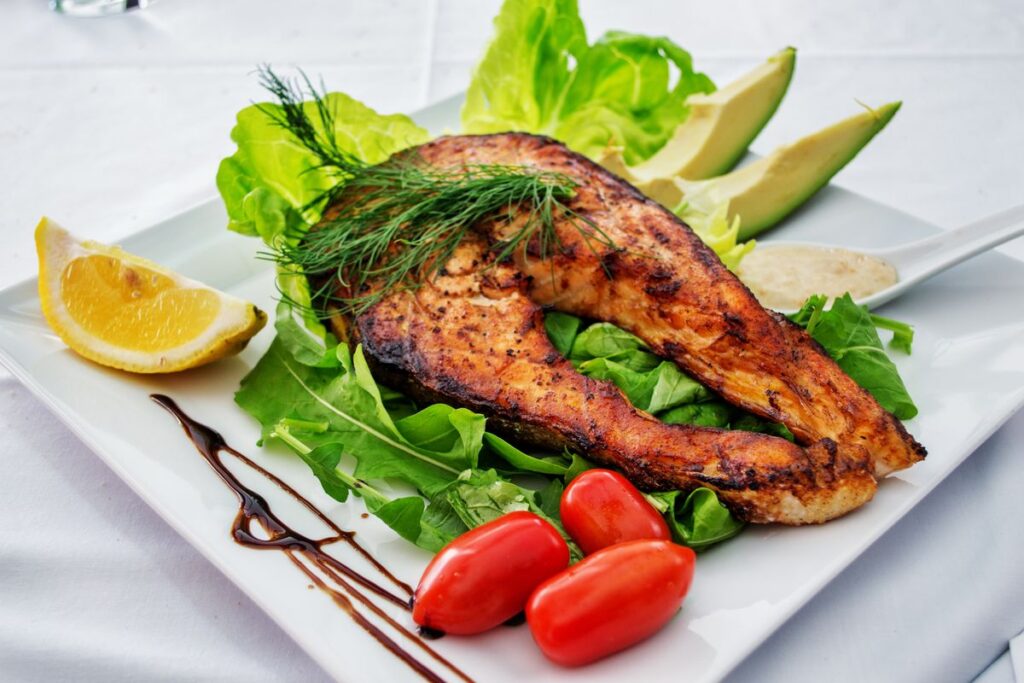
The biggest shift in keto thinking is fat quality. Classic keto treated all fats equally; 2026\’s evidence-informed keto prioritizes monounsaturated and omega-3 fats — extra-virgin olive oil, avocados, fatty fish, nuts — while moderating saturated fat from butter and processed meats. This \”Mediterranean keto\” hybrid keeps ketosis (carbs stay under ~50 g net) but builds meals from the world\’s most heart-studied eating pattern.
Why it matters: keto reliably raises LDL cholesterol in a subset of people, and clinicians increasingly steer patients toward Mediterranean-style fat sources to blunt that effect. In practice, this means cooking with olive oil, eating salmon twice weekly, snacking on macadamias and olives, and treating bacon as a condiment rather than a food group. The food tastes better too.
2. Protein Gets the Respect It Deserves
Old keto feared protein, warning that excess converts to glucose via gluconeogenesis and kills ketosis. Research has softened that stance considerably: gluconeogenesis is demand-driven, not supply-driven, and studies show higher-protein keto (up to ~30–35% of calories) maintains ketosis fine for most people while dramatically improving satiety, muscle retention, and diet satisfaction.
The practical trend is \”protein-prioritized keto\”: build every meal around 30–50 g of protein first, then add fats to satiety. This fixes the most common keto failure mode — under-eating protein, losing muscle along with fat, and stalling out hungry. If your keto has drifted into \”fat bombs and coffee,\” 2026\’s advice is to re-anchor on steak, chicken thighs, eggs, Greek yogurt, and fish.
3. Allulose Replaces Erythritol in Serious Baking
Ingredient technology finally solved keto baking\’s hardest problems. Allulose — the rare sugar that browns, caramelizes, and stays soft when frozen — has moved from specialty import to mainstream keto pantries, with prices falling as production scales. It behaves like sugar in the Maillard reaction, which means keto cookies actually brown and keto ice cream stays scoopable.
The shift accelerated after 2023 observational research raised questions about high blood erythritol levels and cardiovascular markers. Regulators have not changed erythritol\’s safety status, but the perception shift was enough: bakeries, keto brands, and home bakers are reformulating around allulose and allulose blends. Expect \”sweetened with allulose\” to become the premium keto label claim of 2026.
4. Gut Health Joins the Keto Conversation
Early keto culture ignored the microbiome; 2026 keto embraces it. Researchers now recognize that very-low-carb diets can reduce microbial diversity if they skimp on plant foods, and the fix is straightforward: deliberate fiber from low-carb vegetables, avocados, nuts, seeds, and fermented foods like kimchi, sauerkraut, kefir, and aged cheese.
The emerging concept is \”fiber-forward keto\”: hitting 20–30 g of fiber daily entirely from keto-friendly sources. That is entirely achievable — an avocado (10 g), a cup of raspberries (8 g), two cups of broccoli (5 g), and an ounce of almonds (3.5 g) nearly gets you there. Prebiotic fibers like inulin and resistant starch from cooled cauliflower are also getting attention for feeding beneficial bacteria without spiking glucose.
5. Continuous Glucose Monitors Go Mainstream
CGMs — once restricted to diabetics — are now available over the counter in many markets, and keto dieters are their most enthusiastic adopters. Seeing your real-time glucose response to foods replaces dogma with data: you learn exactly which \”keto\” products spike you, how sleep and stress move your numbers, and that individual responses vary enormously.
The trend this enables is personalized keto: instead of one-size-fits-all carb limits, people titrate their own thresholds. Some discover they tolerate 60 g of carbs from whole foods while staying in ketosis; others learn that certain sugar alcohols spike them badly. Two weeks with a CGM teaches more than two years of forum debates.
6. Keto Goes Savory: The Fat-Bomb Era Ends
The 2018 keto internet ran on fat bombs, bulletproof everything, and dessert-for-breakfast. The 2026 version has grown up: the most successful long-term keto eaters now center savory, protein-rich whole foods — the dessert-as-diet approach turned out to keep sweet cravings alive and stall weight loss for many.
Recipe trends reflect this: sheet-pan sausage and vegetable dinners, bunless burger bowls, salmon with cauliflower mash, Greek-inspired chicken skillets. Sweet keto treats still have their place, but as occasional desserts rather than dietary foundations. If your keto feels like a candy store, the 2026 correction is to make 80% of your plate savory whole food.
7. Cyclical and Targeted Keto Get Nuanced
Strict keto 365 days a year is giving way to structured flexibility. Athletes popularized targeted keto (small fast-acting carb doses around workouts) and cyclical keto (planned higher-carb days), and research on metabolic flexibility — the ability to switch smoothly between fuel sources — suggests periodic carb exposure may benefit some people.
The 2026 nuance: these are advanced tools, not excuses. They work for fat-adapted athletes and metabolically healthy maintainers; they backfire for beginners still fighting sugar cravings, for whom \”carb cycling\” quickly becomes \”carb weekends.\” Earn flexibility with 8–12 weeks of strict keto first, then experiment deliberately with glucose monitoring.
8. Electrolytes Become Non-Negotiable Knowledge
\”Keto flu\” — the headaches, fatigue, and cramps of the first week — is finally understood as simple electrolyte depletion: low insulin makes the kidneys excrete sodium, dragging potassium and magnesium with it. The 2026 standard is proactive supplementation from day one: 3–5 g sodium, 3–4 g potassium (from food like avocados and leafy greens), and 300–500 mg magnesium daily.
The trend extends to products: sugar-free electrolyte drinks and mineral salts are now a standard keto grocery item rather than a niche hack. It is one of the highest-leverage changes a beginner can make — most \”keto is not working for me\” stories from week one are actually \”I needed salt\” stories.
9. Longevity Researchers Ask Harder Questions
The most intellectually honest trend: longevity science is pushing back on perpetual keto. Researchers studying metabolic health increasingly distinguish between keto as a therapeutic intervention (powerful for obesity, diabetes, epilepsy) and keto as a permanent lifestyle (where the very-long-term data simply does not exist yet).
The emerging consensus position: use keto strategically — 3–12 month therapeutic phases for fat loss and metabolic repair — then transition many people to a Mediterranean-style low-carb maintenance diet with more plant diversity. This is not anti-keto; it is keto growing up into a tool with defined use cases rather than an identity. As always with health claims, discuss long-term plans with your doctor.
What Is Fading Out in 2026
- Dirty keto as default: fast-food bunless burgers and processed \”keto\” snacks every day — the quality conversation won.
- Fat-chasing: adding butter to everything to \”hit macros\” — protein-first replaced it.
- Keto breath panic: better understood now as transient; hydration and time fix it.
- One true keto: the community has fragmented healthily into therapeutic keto, Mediterranean keto, athletic keto, and maintenance low-carb — pick your lane.
- Fear of all carbs forever: strategic, monitored flexibility is replacing permanent rigidity for maintainers.
How to Apply the 2026 Trends This Week
- Audit your fats: swap one butter-based cooking session for olive oil, add two fish meals this week.
- Protein-first plates: rebuild each meal around 30–50 g protein before adding fats.
- Try allulose: replace half the erythritol in your next baking project and compare browning and texture.
- Count fiber, not just carbs: aim for 20–30 g daily from vegetables, avocado, nuts, and berries.
- Salt proactively: if you are new to keto, start electrolytes on day one, not day five.
- Add one fermented food daily: kimchi, sauerkraut, kefir, or aged cheese for gut diversity.
- Define your lane: therapeutic fat-loss keto, athletic keto, or Mediterranean keto — then eat accordingly.
2 More Emerging Signals Worth Watching
10. Ketone Esters Move Toward the Mainstream
Exogenous ketones — drinks that raise blood ketones without carb restriction — were once an expensive biohacker curiosity. Third-generation ketone esters are now more palatable, cheaper, and the subject of genuine research into athletic performance, cognitive function, and even heart failure. They are not a substitute for the diet (drinking ketones does not produce keto\’s appetite or metabolic adaptations), but targeted use — before endurance events, during cognitively demanding work — is gaining evidence-based traction. Expect clearer guidance as 2026\’s trials publish.
11. The \”Keto Flu\” Gets a Protocol, Not Just Sympathy
Related to the electrolyte trend: clinicians are converging on an actual first-week protocol rather than folk advice. The emerging standard — 5 g sodium, 3.5 g potassium from food, 400 mg magnesium glycinate, 2.5+ liters of water daily, starting before day one — is now being written into keto program materials and medical weight-loss clinics. Early data suggests proper electrolyte management cuts dropout in the first two weeks dramatically, which matters because most keto failures happen before fat adaptation even begins.
The Skeptic\’s Corner: What Keto Still Has Not Proven
Intellectual honesty requires the other side of the ledger. As of 2026, keto still lacks: long-term (5+ year) randomized trials on hard outcomes like heart attacks and mortality; clear answers on LDL hyper-responders\’ actual cardiovascular risk; and data on multi-decade gut microbiome effects of very-low-carb eating. The diet\’s strongest evidence remains in the 6–24 month window for weight loss and diabetes management.
This does not mean keto is dangerous — it means the responsible stance is \”powerful therapeutic tool with defined evidence limits\” rather than \”optimal human diet proven for life.\” That framing should guide how you use it: strategically, monitored, and with an exit plan toward sustainable maintenance eating. Discuss any long-term dietary strategy with your doctor, particularly if you have cardiovascular risk factors. The most credible voices in the keto space in 2026 are the ones who acknowledge these limits openly while championing what the diet genuinely does well.
The bottom line of 2026\’s keto evolution: the diet works best when it is personalized, protein-adequate, plant-inclusive, and strategically flexible — a far cry from the rigid bacon-only stereotype. Adopt the trends that serve your goals, skip the ones that do not, and let your biomarkers and your quality of life be the final judges.
Frequently Asked Questions
Is keto still popular in 2026?
Yes, but it has matured. Search interest has stabilized rather than exploded, the community has fragmented into specialized approaches (therapeutic, Mediterranean, athletic), and the conversation shifted from hype to evidence. Keto is no longer a fad — it is an established dietary tool with defined strengths and limits.
What is Mediterranean keto?
Mediterranean keto keeps keto macros (very low carb, nutritional ketosis) but builds meals from Mediterranean-pattern foods: olive oil as the primary fat, fatty fish, leafy greens, nuts, avocados, and moderate cheese, with limited red and processed meat. Many clinicians now consider it the healthiest formulation of keto.
Is allulose really better than erythritol?
For baking results — browning, caramelization, frozen-dessert texture — yes, noticeably. For cost and availability, erythritol still wins. Many bakers now blend the two. Safety-wise, both hold regulatory approval; the shift is driven by performance and the post-2023 perception change around erythritol.
Do I need a continuous glucose monitor for keto?
No, but it is the fastest way to personalize your diet. A CGM reveals your individual responses to foods, sleep, and stress in real time. If you are data-motivated and can access one affordably, two weeks of wear teaches an enormous amount; if not, ketone meters and how you feel still work fine.
How much protein should I eat on keto in 2026?
Current guidance leans higher than old keto dogma: roughly 1.6–2.2 g per kg of target body weight daily (about 0.7–1.0 g per pound), spread across meals with 30–50 g per meal. This preserves muscle during fat loss and improves satiety without threatening ketosis for most people.
Is long-term keto safe?
Keto has good safety data up to about two years in trials, with the usual caveats about nutrient planning and lipid monitoring. Beyond that, very-long-term data is limited — which is why many researchers now frame keto as a therapeutic phase followed by Mediterranean-style low-carb maintenance. Discuss long-term plans with your doctor.
