
This 7-day Mediterranean meal plan for beginners makes the world\’s most-studied eating pattern genuinely easy: daily menus built on olive oil, vegetables, legumes, whole grains, fish, and herbs, with macro estimates and a complete shopping list. No calorie counting, no exotic ingredients, no cooking skills beyond the basics — just real food in a rhythm you can sustain.
The Mediterranean diet isn\’t a \”diet\” in the restrictive sense — it\’s the traditional eating pattern of Greece, southern Italy, and Spain, consistently linked in research to heart health and longevity. Its principles are simple: plants first, olive oil as the main fat, fish twice a week, modest dairy and poultry, red meat rarely, and herbs and lemon where others reach for salt. As always, this is general nutrition information, not medical advice — talk to your doctor or a registered dietitian before making major dietary changes, especially if you manage diabetes, heart disease, or take medication.
Mediterranean Basics for Beginners
- Fat: extra-virgin olive oil replaces butter and most other oils — for cooking, dressing, and finishing.
- Protein: fish and seafood twice weekly, legumes several times weekly, poultry and eggs in moderation, red meat only occasionally.
- Plants: vegetables at every meal, fruit for dessert, whole grains (farro, brown rice, whole-wheat bread), nuts daily in small handfuls.
- Flavor: garlic, lemon, oregano, basil, parsley, and other herbs do the heavy lifting instead of heavy sauces.
- Dairy: yogurt and cheese (especially feta and Parmesan) in modest amounts, not as main events.
Day 1 — Monday
Breakfast: Greek yogurt with honey, walnuts, and sliced pear. Lunch: Greek village salad — tomatoes, cucumber, red onion, olives, and feta with olive oil and oregano, plus whole-wheat pita. Snack: Apple slices with almond butter. Dinner: Baked lemon-herb salmon with roasted zucchini and farro.
| Meal | Protein | Calories |
|---|---|---|
| Breakfast | 20g | 400 |
| Lunch | 18g | 520 |
| Snack | 7g | 280 |
| Dinner | 42g | 640 |
| Day 1 total | 87g | 1,840 |
Day 2 — Tuesday
Breakfast: Whole-grain toast with mashed avocado, lemon, and a soft-boiled egg. Lunch: Lentil soup with carrots, celery, and cumin, served with crusty whole-grain bread. Snack: Hummus with carrot and cucumber sticks. Dinner: Chicken souvlaki skewers with tzatziki, Greek salad, and warm pita.
| Meal | Protein | Calories |
|---|---|---|
| Breakfast | 16g | 380 |
| Lunch | 22g | 480 |
| Snack | 8g | 250 |
| Dinner | 45g | 680 |
| Day 2 total | 91g | 1,790 |
Day 3 — Wednesday
Breakfast: Oatmeal cooked in milk with figs (or dates), pistachios, and cinnamon. Lunch: Leftover lentil soup with a side of olives and feta. Snack: A small handful of mixed nuts and an orange. Dinner: Shrimp saganaki-style — shrimp baked with tomatoes, feta, and oregano — over whole-wheat couscous.
| Meal | Protein | Calories |
|---|---|---|
| Breakfast | 14g | 420 |
| Lunch | 20g | 500 |
| Snack | 8g | 300 |
| Dinner | 44g | 620 |
| Day 3 total | 86g | 1,840 |
Day 4 — Thursday
Breakfast: Veggie frittata (eggs with spinach, tomatoes, and feta) with whole-grain toast. Lunch: Tuna and white bean salad with red onion, parsley, lemon, and olive oil. Snack: Greek yogurt with berries. Dinner: Eggplant Parmesan (light, baked) with a big arugula salad.
| Meal | Protein | Calories |
|---|---|---|
| Breakfast | 22g | 400 |
| Lunch | 38g | 480 |
| Snack | 18g | 220 |
| Dinner | 26g | 640 |
| Day 4 total | 104g | 1,740 |
Day 5 — Friday
Breakfast: Smoothie — Greek yogurt, banana, frozen berries, spinach, and a drizzle of honey. Lunch: Falafel wrap with tahini, lettuce, tomato, and pickled turnips in whole-wheat flatbread. Snack: Marinated olives and a small piece of Parmesan. Dinner: Grilled sea bass (or cod) with lemon potatoes and steamed green beans.
| Meal | Protein | Calories |
|---|---|---|
| Breakfast | 20g | 380 |
| Lunch | 18g | 560 |
| Snack | 8g | 240 |
| Dinner | 44g | 620 |
| Day 5 total | 90g | 1,800 |
Day 6 — Saturday
Breakfast: Shakshuka — eggs poached in spiced tomato sauce with feta, served with crusty bread. Lunch: Antipasto-style plate: white bean salad, roasted peppers, artichoke hearts, and whole-grain crackers. Snack: Fresh figs (or dates) with walnuts. Dinner: Herb-roasted chicken thighs with Mediterranean roasted vegetables and brown rice.
| Meal | Protein | Calories |
|---|---|---|
| Breakfast | 22g | 450 |
| Lunch | 16g | 520 |
| Snack | 6g | 280 |
| Dinner | 42g | 680 |
| Day 6 total | 86g | 1,930 |
Day 7 — Sunday
Breakfast: Whole-grain toast with ricotta, sliced tomatoes, basil, and olive oil. Lunch: Leftover herb-roasted chicken in a grain bowl with farro and roasted vegetables. Snack: Tzatziki with whole-wheat pita triangles. Dinner: Pasta puttanesca (whole-wheat spaghetti with tomatoes, olives, capers, and garlic) with a side salad.
| Meal | Protein | Calories |
|---|---|---|
| Breakfast | 16g | 380 |
| Lunch | 34g | 540 |
| Snack | 10g | 260 |
| Dinner | 22g | 640 |
| Day 7 total | 82g | 1,820 |
Weekly Shopping List
Proteins and dairy
- Salmon fillets (2), sea bass or cod (2 fillets), shrimp (8 oz), canned tuna (1 can)
- Chicken breast (1 lb), chicken thighs (1 lb), eggs (18)
- Greek yogurt (32 oz), feta (8 oz), Parmesan, ricotta, mozzarella (for eggplant dish)
Produce, grains, and pantry
- Tomatoes, cucumbers, zucchini, eggplant, bell peppers, red onions, carrots, celery, spinach, arugula, green beans, potatoes, lemons, garlic
- Pears, apples, oranges, bananas, berries, figs or dates, avocado
- Farro, brown rice, whole-wheat couscous, whole-wheat spaghetti, oats, whole-grain bread, pita, flatbread
- Red lentils, white beans, chickpeas (dried or canned), olives, capers, artichoke hearts, roasted peppers
- Extra-virgin olive oil, tahini, hummus, tzatziki, honey, almonds, walnuts, pistachios, mixed nuts
- Oregano, basil, parsley, cinnamon, cumin, smoked paprika
Beginner Tips for Sticking With It
- Start with swaps, not overhauls: olive oil for butter, fish twice a week, a vegetable added to every dinner. The pattern builds itself.
- Keep the flavor trinity stocked: good olive oil, lemons, and garlic make almost any vegetable delicious.
- Batch the legumes: cook a big pot of lentils or chickpeas Sunday; they become soups, salads, and wraps all week.
- Embrace the snack plate: olives, nuts, cheese, and vegetables with hummus is a legitimate Mediterranean meal, not a compromise.
- Don\’t fear the bread: whole-grain bread is a staple, not a cheat — it\’s what you put on it (olive oil vs. butter) that follows the pattern.
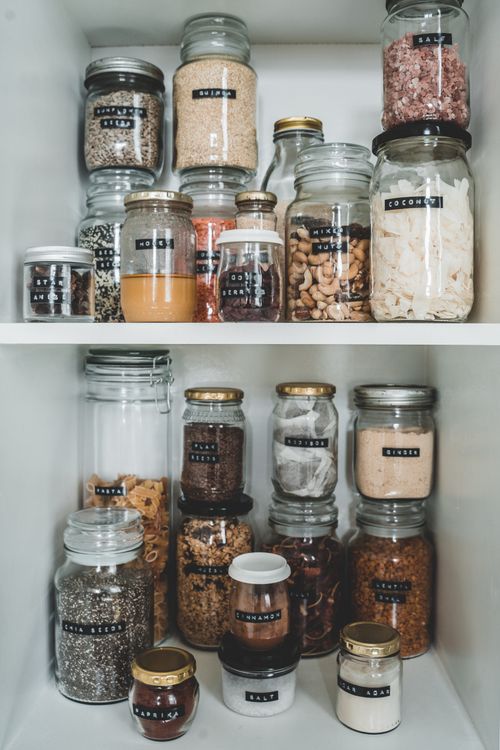
The Beginner\’s Mediterranean Pantry Setup
You don\’t need a specialty store — one good grocery trip stocks the foundation. The non-negotiables:
- Extra-virgin olive oil (one bottle for cooking, and if budget allows, a fruitier one for finishing and dressings)
- Canned tomatoes, chickpeas, white beans, and lentils — the backbone of a dozen quick meals
- Whole grains: farro, brown rice, and whole-wheat pasta or couscous
- The flavor kit: garlic, lemons, dried oregano, cumin, smoked paprika, red wine vinegar, tahini, and olives
- Tinned fish: tuna and sardines in olive oil for instant protein
- Nuts: walnuts and almonds for snacks and toppings
With this pantry, a \”Mediterranean meal\” is never more than 20 minutes away: pasta with canned tomatoes, garlic, and olives; chickpea and tuna salad; lentil soup; grain bowls with whatever vegetables are on hand. The pattern\’s reputation for being expensive comes from the fish and fresh produce — but its actual foundation is humble pantry food.
5 Foundational Recipes to Learn First
Master these five techniques and you can improvise Mediterranean meals indefinitely:
- The grain bowl formula: whole grain + legume + roasted vegetables + feta or egg + olive oil-lemon dressing. Endlessly variable, nutritionally complete.
- Sheet-pan Mediterranean chicken: chicken thighs, cherry tomatoes, red onion, olives, and oregano roasted together at 425°F — one pan, 30 minutes, minimal cleanup.
- White bean and tuna salad: canned white beans + tuna + red onion + parsley + olive oil and lemon. Fifteen grams of protein in ten minutes, no cooking.
- Lentil soup: the plan\’s Tuesday lunch — red lentils, carrots, celery, onion, cumin, and olive oil simmered 25 minutes. Makes enough for days and freezes beautifully.
- Greek salad (horiatiki): tomatoes, cucumber, red onion, olives, and a slab of feta with oregano and olive oil — no lettuce. The authentic version is greater than the sum of its parts.
Eating Out and Social Situations
The Mediterranean pattern is arguably the easiest to maintain at restaurants — it is restaurant food in much of the world. At Italian, Greek, or Middle Eastern restaurants, order grilled fish or chicken, vegetable sides, salads with olive oil, and legume dishes; you\’re eating the pattern without trying. At other cuisines, apply the principles: vegetables first, olive oil over butter where you have the choice, fish when it looks good, and enjoy bread without guilt.
For social events, the pattern\’s flexibility is the point — no foods are banned, so there\’s nothing to \”cheat\” on. Eat the birthday cake. Have the steak at the barbecue. The Mediterranean diet works because of what you eat most of the time, not because of perfect compliance. Beginners who internalize this sustain the pattern for years; beginners who treat it as a diet with rules burn out in weeks.
Your First Mediterranean Grocery Run
Walking into the store with the full shopping list can feel overwhelming — here\’s the priority order if you\’re building the pantry from scratch. Trip one (the foundation): extra-virgin olive oil, canned tomatoes, chickpeas, lentils, tuna, farro or brown rice, whole-wheat pasta, garlic, lemons, dried oregano, and olives. This alone unlocks a dozen meals.
Trip two (fresh, weekly): the week\’s vegetables, salad greens, fresh herbs, feta, Greek yogurt, eggs, and fish for two dinners. Buy fish the day you\’ll cook it or the day before — freshness matters more with fish than any other protein. Ongoing: restock nuts, tahini, and grains as they run out; they\’re the slow-burn staples that make the pattern effortless. Within a month, the pantry runs itself and the weekly shop is just fresh produce and proteins.
Frequently Asked Questions
Is the Mediterranean diet good for beginners?
It\’s one of the most beginner-friendly eating patterns because nothing is banned and there\’s no counting or measuring required. The rules are directional — more vegetables, olive oil instead of butter, fish twice a week — which makes it far easier to sustain than restrictive diets. Most beginners succeed by making two or three swaps per week.
Can you lose weight on the Mediterranean diet?
Yes, though it\’s not designed as a rapid weight-loss diet. Its high fiber and healthy fats promote satiety, which naturally reduces calorie intake for many people. Studies show modest, sustainable weight loss — typically more durable than crash diets because the eating pattern is enjoyable enough to maintain long-term.
What foods are not allowed on the Mediterranean diet?
Technically nothing is forbidden, but the pattern minimizes red and processed meats, refined sugars, heavily processed foods, butter and refined oils, and sugary drinks. Think \”rarely\” rather than \”never\” — the traditional pattern includes occasional red meat and sweets, just not daily.
How much olive oil should I use per day?
Traditional Mediterranean intakes are generous — often 3–4 tablespoons daily across cooking, dressings, and finishing. Olive oil is calorie-dense, so if weight loss is a goal, measure for a while to calibrate your pouring hand. Quality matters more than quantity: choose extra-virgin with a peppery bite, a sign of polyphenol content.
Is the Mediterranean diet expensive?
It can be, if you buy imported everything — but the traditional pattern is actually peasant food: lentils, beans, seasonal vegetables, and whole grains are among the cheapest foods available. Save money by eating seasonally, buying frozen fish, choosing canned beans, and treating the pricier items (fish, nuts, good olive oil) as accents rather than foundations.
Can I drink wine on the Mediterranean diet?
The traditional pattern includes moderate wine with meals, but it\’s optional — not a requirement. Current health guidance is increasingly cautious about alcohol, and no one should start drinking for health reasons. If you don\’t drink, you lose nothing; the diet\’s benefits come from the food pattern, not the wine.
How is this different from a regular healthy diet?
The distinctive features are olive oil as the primary fat (rather than a mix of fats), legumes as a core protein source several times weekly, the specific rhythm of fish twice weekly and red meat rarely, and the cultural elements — herbs for flavor, meals eaten socially, and an emphasis on minimally processed foods.
Do I need to count calories on this plan?
No — that\’s part of the appeal. The plan\’s macro tables are estimates for the curious, not targets to hit. Eat to comfortable fullness, prioritize the pattern\’s foods, and let the fiber, protein, and healthy fats regulate your appetite. If you have specific weight goals, tracking temporarily can help calibrate portions.
