
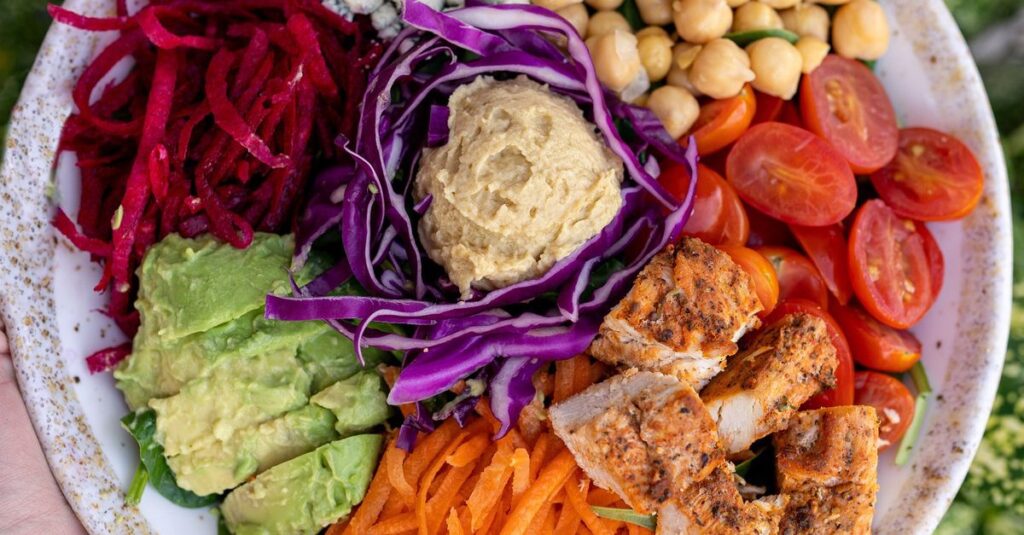
Healthy one-bowl salads for easy lunches finally answer the sad-desk-salad problem: these 20 salads are built like meals, with hearty proteins, satisfying grains, crunchy textures, and dressings worth craving. From chopped Italian salads to warm grain bowls, every recipe eats like a real lunch — not a punishment.
A salad that satisfies follows the hearty bowl formula: greens or grains as the base, 20g+ protein, something crunchy, something creamy, and a bold dressing. Every salad below checks those boxes, with most holding up beautifully for meal prep.
Building a Salad That Actually Fills You Up
Start with a substantial base (chopped romaine, kale, quinoa, or farro), add a real protein portion (chicken, salmon, eggs, beans, or tofu), layer in textures (nuts, seeds, crispy chickpeas, croutons), and dress boldly — undressed greens are why salads have a bad reputation. Pack dressing separately for meal-prepped versions.
1. Chopped Italian Salad
Romaine, salami, mozzarella, chickpeas, tomatoes, and olives in red wine vinaigrette. Lunch when you want deli flavors in a bowl. Tip: chop everything to similar bite-size pieces so every forkful has a bit of everything.
2. Grilled Chicken Cobb
Chicken, bacon, egg, avocado, blue cheese, and tomato over romaine. Lunch when only the classic will do. Tip: arrange in rows for the iconic look, then toss at the table.
3. Quinoa Power Bowl
Quinoa, roasted sweet potato, kale, avocado, and tahini dressing. Lunch when you want plant-powered energy. Tip: massage the kale with olive oil and salt — it transforms the texture completely.
4. Asian Sesame Chicken Salad
Napa cabbage, chicken, mandarin oranges, almonds, and sesame-ginger dressing. Lunch when you crave takeout-fresh crunch. Tip: add crispy wonton strips just before eating for the signature crunch.
5. Salmon Niçoise (Modern)
Salmon, green beans, potatoes, eggs, olives, and Dijon vinaigrette. Lunch when you want French-bistro elegance. Tip: cook the salmon to just medium — overcooked fish ruins the delicacy.
6. Taco Salad Bowl
Seasoned turkey, romaine, black beans, corn, and Greek yogurt \”sour cream.\” Lunch when it\’s Taco Tuesday at noon. Tip: crush tortilla chips on top at serving time for crunch.
7. Greek Village Salad with Quinoa
Cucumber, tomatoes, olives, feta, and red onion over lemony quinoa. Lunch when you want Mediterranean brightness. Tip: this improves overnight — ideal for meal prep.
8. Kale Caesar with Grilled Chicken
Hearty kale, grilled chicken, parmesan, and Greek-yogurt Caesar dressing. Lunch when you want Caesar without the guilt. Tip: let the dressed kale sit 10 minutes — it softens to the perfect bite.
9. Thai Peanut Noodle Salad
Rice noodles, shredded chicken, carrots, and peanut dressing. Lunch when you want slurpable satisfaction. Tip: rinse noodles cold after cooking so they don\’t clump.
10. Harvest Grain Bowl
Farro, roasted butternut squash, apples, pecans, and maple-Dijon dressing. Lunch when fall flavors call. Tip: warm the grains slightly — this bowl is best not-quite-cold.
11. Buffalo Chicken Salad
Buffalo-tossed chicken, celery, carrots, and blue cheese over romaine. Lunch when game-day flavors meet lunch. Tip: toss the chicken in sauce while hot so it absorbs maximum flavor.
12. Mediterranean Chickpea Salad
Chickpeas, cucumber, tomatoes, feta, and lemon-oregano dressing — no cooking. Lunch when you need zero-effort. Tip: keeps 5 days and improves with time — the ultimate prep salad.
13. Steak and Arugula Salad
Sliced flank steak over peppery arugula with parmesan and balsamic. Lunch when you want steakhouse lunch. Tip: slice steak thin against the grain for tenderness in every bite.
14. Edamame Crunch Salad
Edamame, cabbage, carrots, and peanuts in soy-ginger dressing. Lunch when you want plant protein with crunch. Tip: this sturdy salad holds 4–5 days dressed — rare for salads.
15. Caprese Quinoa Salad
Quinoa, tomatoes, mozzarella pearls, and basil with balsamic glaze. Lunch when summer produce peaks. Tip: add the balsamic glaze at serving so it doesn\’t stain everything brown.
16. Southwest Black Bean Bowl
Brown rice, black beans, corn, avocado, and chipotle-lime dressing. Lunch when you want smoky satisfaction. Tip: char the corn in a dry skillet for smoky depth.
17. Tuna White Bean Salad
Oil-packed tuna, cannellini beans, red onion, and lemon over arugula. Lunch when pantry staples must become lunch. Tip: good tuna makes this — oil-packed Italian tuna is worth it.
18. Roasted Vegetable Grain Bowl
Farro topped with whatever roasted vegetables need using, plus hummus. Lunch when the crisper needs clearing. Tip: a swoosh of hummus on the bowl bottom acts as both sauce and glue.
19. Shrimp and Avocado Salad
Chili-lime shrimp, avocado, and grapefruit over butter lettuce. Lunch when you want light luxury. Tip: segment the grapefruit over the bowl to catch the juices for the dressing.
20. Autumn Apple Walnut Salad
Mixed greens, apples, walnuts, blue cheese, and cider vinaigrette. Lunch when fall arrives. Tip: toast the walnuts — 5 minutes in a dry skillet doubles their flavor.
Salad Prep Tips
- Dressing on the side: always pack dressings separately for meal-prepped salads.
- Sturdy greens last: kale, cabbage, and romaine outlast delicate spring mix by days.
- Protein portions: 4–6 ounces of protein per bowl keeps you full until dinner.
- Crunch at serving: nuts, seeds, and croutons go on last so they stay crisp.
- Acid is essential: lemon, vinegar, or citrus in every dressing — it makes vegetables taste alive.
Homemade Dressings: 5 Formulas Worth Memorizing
Bottled dressing can\’t compete with five-minute homemade — and these five formulas cover every salad above. 1. Classic vinaigrette — 3 parts olive oil, 1 part vinegar (red wine or apple cider), 1 teaspoon Dijon, salt, pepper; shake in a jar. 2. Lemon-tahini — tahini, lemon juice, garlic, maple syrup, water to thin; creamy without dairy. 3. Greek yogurt Caesar — Greek yogurt, lemon, garlic, anchovy paste (or Worcestershire), parmesan; all the flavor, half the calories. 4. Sesame-ginger — soy sauce, rice vinegar, sesame oil, grated ginger, honey; made for Asian salads. 5. Chipotle-lime — Greek yogurt or mayo, chipotle in adobo, lime juice, honey; smoky heat for Southwestern bowls.
The ratio principle frees you forever: most vinaigrettes are 3:1 oil to acid, plus an emulsifier (mustard, honey, or tahini) and seasoning. Once you internalize it, you\’ll never buy dressing again — you\’ll whisk one in the time it takes to find the bottle. Storage: vinaigrettes keep 2 weeks refrigerated; dairy-based dressings keep 1 week. Always shake or whisk before using.
Dress to the salad: delicate greens need light vinaigrettes; hearty kale and grain bowls stand up to thick, bold dressings; warm salads love warm dressings (bacon vinaigrette on spinach is a classic for a reason). And the cardinal rule — dress at serving time, tossing with just enough to glisten, never drown.
Meal Prep Salad Jar Guide
The mason jar method keeps salads crisp for 4–5 days through strategic layering. Bottom layer: dressing (2–3 tablespoons). Second: hardy ingredients that can marinate — chickpeas, black beans, diced cucumbers, shredded carrots, red onion. Middle: grains, proteins (chicken, eggs, tofu), and softer vegetables like tomatoes and peppers. Top: delicate greens, herbs, and anything that must stay dry. Separate: crunchy toppings (nuts, croutons, tortilla strips) in a small container.
At lunchtime, shake or flip the jar into a bowl — the dressing distributes perfectly on the way down. Wide-mouth quart jars work best; they\’re easy to fill, easy to eat from, and the layers stay visually appealing all week. Best jar candidates from this roundup: Greek village salad, taco salad, Asian sesame chicken, edamame crunch, and Mediterranean chickpea — all sturdy enough for days.
Food safety note: keep jars refrigerated at 40°F or below, and add avocado or fresh fruit the morning of rather than at prep time. With proper layering, Friday\’s jar is as crisp as Monday\’s — the method genuinely works.
Protein Add-Ons: Turn Any Salad into a Meal
The difference between a side salad and a lunch salad is protein — these add-ons each bring 15–30g: grilled chicken breast (26g per 3.5 oz) — batch-grill on Sunday; salmon (25g) — baked fillets flake beautifully over greens; shrimp (24g) — cooks in minutes, excellent chilled; steak slices (26g) — leftover grilled steak is salad luxury; hard-boiled eggs (6g each) — two or three per bowl; tuna (25g per can) — oil-packed for flavor; tofu or tempeh (15–20g) — crispy-baked cubes; edamame (17g per cup); chickpeas or black beans (12–15g per cup) — roasted for crunch; Greek yogurt dressings (8g per serving) — protein in the sauce itself.
Prep proteins in bulk: Sunday grill session (chicken breasts, salmon fillets, steak) covers the week\’s salads; hard-boil a half-dozen eggs; press and bake a block of tofu; open and rinse canned beans as needed. Store separately from greens and add at serving time — warm protein on cold salad is actually delightful (warm chicken on kale Caesar, warm shrimp on butter lettuce), so don\’t fear the temperature contrast.
Vegetarian power combos: chickpeas + tahini dressing, edamame + peanut dressing, black beans + chipotle-lime, tofu + sesame-ginger — each pairing delivers 20g+ protein with complete amino acids. The 30g rule: aim for a palm-and-a-half of protein per bowl, and your salad will satisfy like any other lunch — no 3 p.m. vending machine visit required.
Seasonal Salad Calendar: What to Make When
Salads follow the seasons — eating with them means better flavor, lower prices, and natural variety across the year. Spring: asparagus, peas, and strawberries shine — try a strawberry-spinach salad with goat cheese, or shaved asparagus with lemon-parmesan. Tender spring greens (butter lettuce, arugula) need only light vinaigrettes. Summer: the glory season — tomatoes, corn, peaches, and berries at peak. Caprese, corn-tomato-avocado salads, and peach-burrata bowls practically make themselves.
Fall: harvest salads take over — roasted butternut squash, apples, pears, kale (which sweetens after frost), and toasted nuts with maple-Dijon dressing. Warm grain bowls with roasted root vegetables replace cold greens as temperatures drop. Winter: citrus season saves salads — blood oranges, grapefruit, and mandarins brighten kale, cabbage, and hearty grain bowls; roasted beets and fennel add earthy sweetness. Shaved Brussels sprout salads with pecorino prove winter produce can be salad stars.
The year-round anchors — Greek salads, Caesar variations, taco salads, and grain bowls — work in every season with small swaps: change the fruit, roast instead of serving raw, or switch the grain. Shop the sales: whatever\’s abundant and cheap is what\’s in season, and building your week\’s salads around it guarantees peak flavor at the lowest price. A seasonal approach means your lunch salads never fall into a year-round rut.
Quick Pickles and Ferments for Salad Toppings
Quick pickles are the salad topping most people overlook — 10 minutes of work, infinite brightness. Pickled red onions: thin-sliced onion in a jar with ½ cup apple cider vinegar, 1 tablespoon sugar, 1½ teaspoons salt, and warm water to cover — ready in 30 minutes, keeps for weeks, and elevates every Southwestern and grain bowl. Quick-pickled cucumbers: same brine, ready even faster. Pickled jalapeños: sliced peppers in the brine for taco salads with real kick.
Beyond pickles: a spoonful of kimchi or sauerkraut adds probiotics and funky depth to grain bowls; marinated artichokes and roasted red peppers (both from jars) are instant Mediterranean salad upgrades; olives bring briny punch. Keep two or three of these in the fridge at all times and even the simplest green salad tastes intentional. Acidity is the difference between a flat salad and a vibrant one — and pickles deliver it with crunch included.
Frequently Asked Questions
How do I meal prep salads without them getting soggy?
Use sturdy greens like kale, romaine, or cabbage, pack dressing completely separately, and layer wet ingredients (tomatoes, cucumbers) away from the greens. Mason jar layering — dressing on the bottom, greens on top — keeps salads crisp for 4–5 days.
What makes a salad filling enough for lunch?
Protein (20g+), fiber-rich carbs like quinoa, beans, or farro, healthy fats from avocado, nuts, or olive oil, and generous volume. A salad with 4 ounces of chicken, half a cup of quinoa, and avocado delivers 500+ satisfying calories — a genuine meal.
Are grain bowls healthier than green salads?
Neither is inherently healthier — it depends entirely on composition. Grain bowls tend to be more filling and easier to balance with protein and fiber. Green salads shine when loaded with vegetables and protein. Both beat a sad, tiny side salad.
How long do prepped salads last?
Most prepped salads last 3–5 days depending on ingredients: kale and cabbage salads keep 5 days, romaine 3–4, delicate greens only 2–3. Always store dressing separately, and add proteins like eggs or avocado within 3 days for best quality. Proper layering keeps every jar fresh all week.
What\’s the best high-protein salad dressing?
Greek yogurt-based dressings like Caesar, ranch, or green goddess add 5–8g protein per serving while cutting calories versus mayo-based versions. Tahini and peanut dressings also contribute meaningful protein and keep you fuller for longer. One homemade dressing beats any bottle from the store.
Can salads help with weight loss?
Yes, when built properly — high-volume, high-protein salads satisfy hunger on fewer calories than most lunches. The trap is drowning healthy greens in high-calorie dressings, cheese, and fried toppings, which can easily exceed a burger\’s calories. Build them right and salads become a genuine advantage.
What is the best container for taking salads to work?
A large mason jar or a bento-style container with a separate dressing compartment. Layer dressing on the bottom, hearty vegetables next, and delicate greens on top — flip it into a bowl at lunchtime for a crisp, perfectly dressed salad every time.
