
Intro
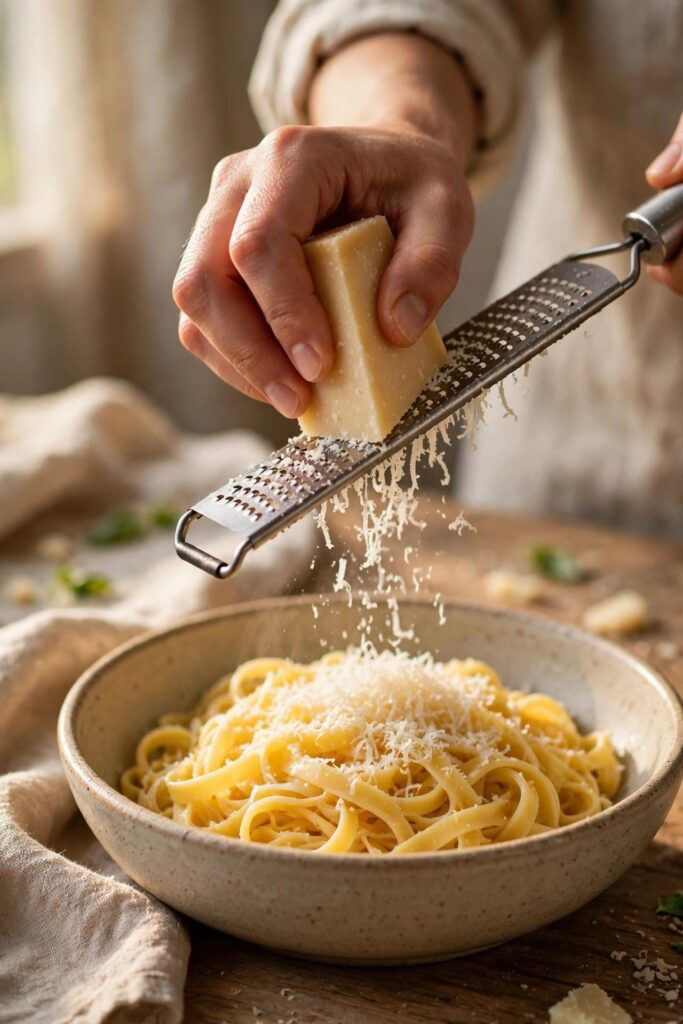
The best cheese grater for parmesan is the one that turns a hard wedge into fluffy, snow-like shreds that melt the second they touch hot pasta — not damp clumps, not dusty powder, and not a knuckle. Parmesan is the hardest test a grater faces: the wedge is rock-hard from the fridge, the shreds need to be fine enough to melt, and the tool has to do it without clogging, without smearing, and without taking skin off your fingers. The style of grater decides the texture you get: a rasp shaves feathery curls, a rotary drum cranks out a steady pile with your knuckles nowhere near the blade, and a box grater does a bit of everything at the cost of finesse.
For parmesan specifically, the rasp is the gold standard and the rotary is the workhorse. The 2026 roundups agree on the shape of the field: the Microplane Premium Classic Zester is the gold standard for fine, fluffy parmesan, the Zyliss Classic Rotary is the America’s Test Kitchen winner for speed and safety, the Geedel rotary is the best-value drum with three blades and a suction base, the Cambom 5-in-1 is the multi-blade pick for big batches, and the KitchenAid Gourmet box grater is the versatile pick with a measuring container. Below, we have compared five cheese graters available right now, weighing blade sharpness, style, texture, and the cleaning that decides whether the grater earns its drawer space.
Our Top Picks
Microplane Premium Classic Zester
The Microplane Premium Classic Zester is our best overall pick. It is the grater 2026 roundups keep naming first: the best overall for parmesan at KitchenWareSets, which tested five models for three weeks on blocks of aged Parmigiano Reggiano, and the best for fine grating at Oak Rowan, which put 16 graters through everything from soft mozzarella to rock-hard parmesan. The photo-etched blade cuts fine, fluffy parmesan that melts into a sauce instead of sitting on top of it, and the same teeth take zest off a lemon without dragging the bitter white pith along. The blade is photo-etched from 18/8 surgical-grade stainless steel, made in the USA, with 400 micro teeth, and Tactical Gear Guy reports a 4.5-plus-star average across more than 49,000 verified ratings.
At 12 inches long and 110 grams, the Classic sits in the hand like a small paddle and stores in a drawer without a fight, and the included protective cover keeps the teeth safe — and your fingers safe from the teeth. It is dishwasher safe, and the stainless body is magnetic, so it hangs on a magnetic knife strip. The honest trade-off is that this is a one-job tool: it smears soft cheese rather than shredding it, and grating enough parmesan for four people takes a minute of work rather than seconds. For parmesan, zest, garlic, and nutmeg, nothing else in this guide comes close on texture.
Pros:
- The gold standard for fine parmesan — photo-etched teeth make fluffy, melt-ready shreds
- 18/8 surgical-grade stainless steel blade, made in the USA, with a protective cover included
- 4.5-plus stars across more than 49,000 verified ratings, per Tactical Gear Guy
- Doubles as a zester for citrus, garlic, ginger, and nutmeg; dishwasher safe
Cons:
- A one-job tool — it smears soft cheese like mozzarella instead of shredding it
- Narrow 1.31-inch width means more strokes for big batches
- The blade is genuinely sharp, so the cover earns its place; loose in a drawer, the teeth will find a bare hand
Zyliss Classic Rotary Cheese Grater
The Zyliss Classic Rotary Cheese Grater is our best rotary pick. It is the rotary grater America’s Test Kitchen named its winner: in ATK’s testing the Classic grated parmesan faster than the other rotary models, took large chunks in its hopper, and was comfortable to hold, with a crank that goes on either side. TheRateLab names it the best overall rotary grater for 2026, and notes it is NSF certified to meet restaurant food safety standards — the only pick in its review with that credential. The compact design folds for drawer storage, comes apart easily for cleaning, and grates table-side or directly over a bowl rather than on the counter.
The Zyliss difference is that it keeps your hands away from the blade entirely: the cheese goes in the drum, the crank turns, and the shreds fall out — no knuckles near sharp teeth, which is the whole point of a rotary grater for hard cheese. The trade-off is scope: it ships with a single blade and drum, with no interchangeable drums included, and there is no suction base, so it cannot lock to the counter surface. For fast, safe parmesan at the table or over a pot of pasta, this is the pick.
Pros:
- America’s Test Kitchen winner — grated parmesan faster than the rival rotary models in ATK testing
- NSF certified to restaurant food safety standards, the only pick in TheRateLab’s review with that credential
- Compact folding design with a crank that fits either side; takes large chunks in the hopper
- Keeps hands away from the blade entirely; easy to disassemble for cleaning
Cons:
- Single blade only, with no interchangeable drums included
- No suction base, so it cannot lock to the counter surface
- Smaller capacity than the countertop rotary models — better for finishing than for big batches
Geedel Rotary Cheese Grater
The Geedel Rotary Cheese Grater is our best value rotary pick. It is the best overall rotary grater at FoodsGuy, which calls it the first grater its tester reaches for after working through a small mountain of parmesan, and the best for big batches at Oak Rowan. The Geedel pairs a suction base with three interchangeable 430 stainless steel blades — coarse shred, fine shred, and slicing — in a BPA-free ABS body with a transparent barrel, so you can see how much cheese is left without opening it. FoodsGuy rates it 4.6 stars, and TheRateLab names it the best three-blade suction pick for cooks who regularly grate hard cheeses like parmesan or romano.
The suction base is the feature that separates it from the Zyliss: it locks to a smooth counter and stays put while you crank, which matters when you are grating a hard wedge that fights back. The trade-off is the body: plastic construction throughout rather than the Zyliss’s more premium feel, and the suction base needs a smooth, clean surface to hold reliably — it will not grip a textured or wet counter. For big batches of parmesan on a budget, with three textures from one tool, this is the pick.
Pros:
- The best overall rotary grater at FoodsGuy, rated 4.6 stars, and the best for big batches at Oak Rowan
- Three interchangeable 430 stainless steel blades: coarse shred, fine shred, and slicing
- Suction base locks to the counter; transparent barrel shows how much cheese is left
- BPA-free ABS body; the fine blade handles parmesan and romano well
Cons:
- Plastic construction throughout, without a premium metal body
- Suction base needs a smooth, clean surface to hold reliably
- The chute is narrower than the upgraded Geedel, so very large chunks need trimming first
Cambom 5-in-1 Rotary Cheese Grater
The Cambom 5-in-1 Rotary Cheese Grater is our best multi-blade pick. It is the best overall pick for most home cooks at All Things Backyard, which names it the top spot for its speed, safety, and versatility, backed by tens of thousands of happy users, and the best countertop grater at KitchenWareSets. The Cambom is less a simple grater than a manual food processor: five blades cover fine shredding for snow-like parmesan, coarse shredding, and slicing, with a suction base that holds it steady and a cleaning brush included in the box. The extra-fine drum is the one to reach for when the parmesan needs to disappear into a sauce.
The Cambom difference is completeness: three blade options plus the brush and the suction base in one box, with nothing extra to order. The trade-off is bulk — at around a pound and a half in some listings, it is heavier to move and store than the Zyliss, and seller listings disagree on its size and weight, so check the listing before buying. For a household that grates hard cheese often and wants every texture from one crank, this is the pick.
Pros:
- The best overall pick for most home cooks at All Things Backyard, with tens of thousands of users
- Five blades cover fine, coarse, and slicing, with a cleaning brush included
- Suction base holds it steady on the counter; extra-fine drum makes snow-like parmesan
- The best countertop grater at KitchenWareSets for speed and versatility
Cons:
- Bulkier than the Zyliss — heavier to move and store
- Seller listings disagree on size and weight, so check the listing before buying
- Plastic body, like the Geedel, rather than a premium metal build
KitchenAid Gourmet 4-Sided Box Grater
The KitchenAid Gourmet 4-Sided Box Grater is our best box grater pick. It is the best box grater for versatility at All Things Backyard and the best for measuring at Oak Rowan: four sides in rust-resistant stainless steel — fine, medium, coarse, and a slicing blade — over a detachable 3-cup container with measurement markings at half-cup intervals up to 2 cups and a lid for storing leftovers. The container catches the grated cheese so it never scatters across the counter, and the non-slip rubber bottom keeps the grater planted while you work. The Amazon listing shows a 4.7-star average across 10,929 ratings, and an October 2026 roundup listed it at $19.99. KitchenAid backs it with a one-year hassle-free replacement and a lifetime limited warranty.
The KitchenAid is the only grater here that measures as it grates, which matters when a recipe calls for exactly a cup of parmesan — grate, read the marking, lid it, and freeze or microwave the rest in the same container. The trade-off is finesse and size: at 10 inches tall and 1.1 pounds it is the heaviest box here, and Oak Rowan notes the fine side handles parmesan competently but will not produce the feathery pile a rasp does — if hard cheese is most of what you grate, the Microplane is the better tool. For a cook who wants one grater that shreds, slices, measures, and stores, this is the pick.
Pros:
- Four sides — fine, medium, coarse, and slicing — in rust-resistant stainless steel
- Detachable 3-cup container with measurement markings and a lid for storing leftovers
- 4.7 stars across 10,929 ratings on Amazon; an October 2026 roundup listed it at $19.99
- Dishwasher safe, with a one-year hassle-free replacement and lifetime limited warranty
Cons:
- The fine side will not match the Microplane’s feathery parmesan
- At 10 inches tall and 1.1 pounds, it is the heaviest grater here
- The container is plastic, and the grater is bulky for a small drawer
Buying Guide
Start with the style, because style decides texture: A rasp like the Microplane shaves parmesan into feathery curls that melt instantly — the gold standard for finishing pasta, risotto, and salads. A rotary drum like the Zyliss, Geedel, or Cambom cranks out a steady pile with your knuckles nowhere near the blade, and the fine drum gets close to rasp texture with far less effort. A box grater like the KitchenAid does a bit of everything, including slicing, but its fine side cannot match a rasp’s fluff. If parmesan is the main job, buy the rasp first and add a rotary for volume; if you grate a lot of cheese for a family, start with the rotary.
Check the blade, not the brand: For parmesan, the blade is everything. Photo-etched teeth, like the Microplane’s, cut cleanly instead of tearing, which is what makes the shreds fluffy rather than powdery. Rotary drums should be stainless steel — the Geedel’s 430 stainless blades and the Zyliss’s drum hold an edge and resist rust, while cheap stamped drums clog and dull. More blades means more textures: the Cambom’s five blades and the Geedel’s three cover fine, coarse, and slicing, while the Zyliss’s single drum does one texture very well. If you want a fifth-blade option, the Zulay Kitchen 5-blade rotary is the most versatile newcomer at FoodsGuy, listed at $22.99 with a 4.4-star average across more than 6,400 reviews.
Think about cleaning before you buy: A grater that is hard to clean is a grater that stays in the drawer. Rinse a rasp right after use and run a brush along the underside of the blade where fine particles hide — the Microplane is dishwasher safe, but a quick rinse is faster. Rotary graters should come apart: the Zyliss disassembles easily, and the Cambom includes a cleaning brush. Box graters trap cheese in the corners, so look for a removable base or a container that lifts out, like the KitchenAid’s. Never soak a wooden-handled grater, and never put a blade loose in a drawer without its cover.
Safety and storage: The sharpest graters are the most dangerous in a drawer. The Microplane’s included cover earns its place — loose in a drawer, those teeth will find a bare hand. Rotary graters are the safest style by design, since the cheese goes in the drum and the crank keeps your hands clear; they suit cooks with limited hand strength or anyone who has met a box grater’s teeth the hard way. A suction base, like the Geedel’s and Cambom’s, adds safety by holding the tool still, but only on a smooth, clean counter. Store rasps with their covers on, rotary graters folded or disassembled, and box graters upright where the blades cannot catch a reaching hand.
Size and capacity: A rasp is a finishing tool — it grates what you need for one dish, and grating a whole block takes a minute of work. A rotary is a batch tool: the Geedel and Cambom barrels hold enough for a lasagna’s worth of mozzarella or a week’s parmesan in one session. A box grater sits in between, and the KitchenAid’s 3-cup container tells you exactly how much you have grated. Match the tool to the job: finishing at the table means a rasp or a handheld rotary like the Zyliss; cooking for a crowd means a countertop rotary.
FAQs
What is the best cheese grater for parmesan? The Microplane Premium Classic Zester is our top pick — its photo-etched blades make fluffy, snow-like parmesan that melts the second it touches hot pasta, and KitchenWareSets named it the best overall after three weeks of testing on aged Parmigiano Reggiano. For speed and safety, the Zyliss Classic Rotary is the America’s Test Kitchen winner.
Rotary grater or rasp — which is better for parmesan? A rasp makes the finest, fluffiest parmesan and is best for finishing dishes at the table. A rotary is faster, safer, and better for big batches, since your knuckles never come near the blade. Most well-stocked kitchens end up with both: the rasp for finishing, the rotary for volume.
Can I grate parmesan in a food processor? You can, but the texture is different: a food processor makes a sandy powder rather than fluffy shreds, and it is easy to over-process a hard wedge into dust. For finishing pasta, a rasp or rotary gives a far better melt. Save the processor for large amounts of hard cheese going into a sauce.
How do I clean a cheese grater? Rinse it right after use, before the cheese dries on the teeth, and run a brush along the underside of a rasp blade where fine particles hide. Rotary graters should come apart for washing, and the Cambom includes a cleaning brush. Most graters here are dishwasher safe, but a quick hand rinse is faster and kinder to the edge.
How do I keep grated parmesan from clumping? Grate it fresh and use it right away — pre-grated parmesan clumps because it dries out and because anti-caking agents are missing. If you must grate ahead, toss the shreds with a pinch of cornstarch and store them in the KitchenAid’s lidded container in the fridge, or freeze the shreds flat in a bag and crumble them as needed.