
Affiliate Disclosure: As an Amazon Associate I earn from qualifying purchases.
n
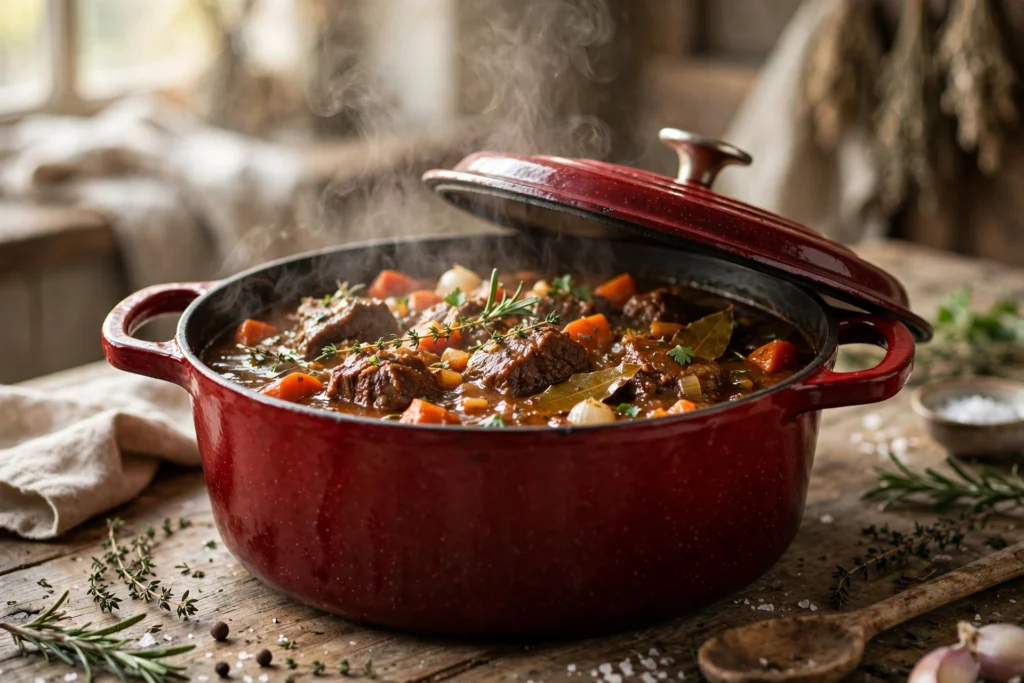
The best braisers in 2026 are 3.5 to 5-quart enameled cast iron braisers with a tight-fitting lid, wide base, and low profile — and the best overall is a 3.5-quart enameled cast iron braiser that sears like a skillet and braises like a Dutch oven. The braiser is the hybrid pan most kitchens are missing: wide enough to sear meat in a single layer (no steaming, no batches), shallow enough for fast reduction, and lidded for the long, slow, moisture-locked braise that turns tough cuts silky.
Our research team compared lid fit, base construction, capacity, and owner reviews to rank the seven best braisers you can buy this year. You’ll also learn the braiser-vs-Dutch-oven distinction, what size suits your household, and the braising technique that makes the pan shine.
Quick Picks: Best Braisers of 2026
- Best overall: 3.5-quart enameled cast iron braiser — the perfect sear-to-braise hybrid. Best Overall 3.5-Quart Enameled Cast Iron Braiser Check Price on Amazon →
- Best budget: 3-quart enameled cast iron braiser — genuine braising for little money. Budget 3-Quart Enameled Cast Iron Braiser Check Price on Amazon →
- Best large: 5-quart enameled cast iron braiser — for families and dinner parties. 5-Quart Enameled Cast Iron Braiser Check Price on Amazon →
- Best stainless: 4-quart tri-ply stainless braiser — lighter, dishwasher-safe, precise. Tri-Ply Stainless Steel Braiser with Lid Check Price on Amazon →
- Best premium: 4-quart premium enameled braiser — heirloom fit, finish, and lid seal. Premium Enameled Cast Iron Braiser Check Price on Amazon →
- Best for induction: 3.5-quart magnetic-base enameled braiser — fast, even heating. Induction-Ready Enameled Cast Iron Braiser Check Price on Amazon →
Braiser vs. Dutch Oven vs. Sauté Pan: What’s the Difference?
A Dutch oven is tall and deep — built for big-volume braises, soups, and bread baking, where depth contains large cuts and gallons of liquid. A sauté pan is wide and shallow with a long handle — built for stovetop searing and quick pan sauces, but its thin walls and loose lids aren’t ideal for hours of braising. A braiser sits exactly between: the wide base and low sides of a sauté pan (maximum searing surface, easy access) combined with the heavy walls, tight lid, and oven-going mass of a Dutch oven.
The practical difference shows in the sear. Braising starts with browning meat hard — and in a tall Dutch oven, you’re reaching down into a deep pot, often steaming the second batch because the meat is crowded. In a braiser’s wide, shallow pan, everything sits in a single layer with room to breathe, browns evenly, and then the lid goes on for the slow cook. If you braise often and own a Dutch oven, the braiser isn’t redundant — it’s the better tool for anything that starts with a sear.
What to Look for in a Braiser
Size: 3.5 quarts is the sweet spot
Braisers are measured by capacity, but the meaningful dimension is base diameter — you want enough surface to sear 4–6 pieces of meat in one layer. A 3.5-quart braiser (roughly 11–12 inches across, 2.5–3 inches deep) serves 3–4 generously and fits standard ovens and burners. Go 5-quart for families of five-plus or dinner parties; the larger surface also speeds reduction. Under 3 quarts, you’re in large-skillet territory without enough depth for a real braise.
Lid fit is everything
Braising is controlled, moist heat — the lid must seal tightly enough that a 3-hour braise doesn’t evaporate into dryness. Test: the lid should sit flush with minimal rocking, feel weighty, and ideally have a self-basting design (drips or ridges on the underside that rain condensation back onto the food). A loose lid is the single most common braiser failure; read owner reviews specifically about lid fit before buying.
Material: enameled cast iron is the standard
Enameled cast iron dominates braisers for good reason: the heavy iron holds a steady low temperature for hours, the enamel is non-reactive with wine and tomato braising liquids, and it needs no seasoning. Stainless tri-ply braisers are lighter, heat faster, and go in the dishwasher — better for cooks who value responsiveness and easy cleanup over maximum heat retention. Bare cast iron braisers exist but are rare; the seasoning maintenance plus acidic braising liquids make enamel the pragmatic choice here.
The 7 Best Braisers of 2026
1. Best overall: 3.5-quart enameled cast iron braiser
The goldilocks braiser: wide enough to sear six chicken thighs in a single layer, deep enough for a proper braise, with a tight self-basting lid and an enamel interior that shrugs off red wine and tomatoes. It moves from stovetop sear to 325°F oven without a pause and serves at the table beautifully. For the cook who braises weekly — short ribs, coq au vin, osso buco — this size and construction is the definitive answer. Best Overall 3.5-Quart Enameled Cast Iron Braiser Check Price on Amazon →
2. Best budget: 3-quart enameled cast iron braiser
Braising doesn’t require a luxury budget. This 3-quart enameled braiser delivers the essential formula — heavy iron, tight lid, non-reactive enamel — at a fraction of premium prices. The enamel is thinner than top-tier (treat it gently: wood utensils, no thermal shock), but the braising performance per dollar is outstanding. The ideal first braiser. Budget 3-Quart Enameled Cast Iron Braiser Check Price on Amazon →
3. Best large: 5-quart enameled cast iron braiser
For households of five-plus and enthusiastic entertainers: a 5-quart braiser sears a whole cut-up chicken or 8 short ribs in one layer and holds dinner-party quantities of cioppino or bouillabaisse. The wide surface also reduces sauces noticeably faster. It’s heavy (plan for two-handed lifting when full) and needs a large burner, but for big-batch cooking it’s unmatched. 5-Quart Enameled Cast Iron Braiser Check Price on Amazon →
4. Best stainless: 4-quart tri-ply stainless braiser
The contrarian pick that many professional cooks prefer: tri-ply stainless heats faster, responds instantly to burner changes, weighs significantly less, and goes in the dishwasher. You trade some of cast iron’s steady, stored heat — but gain precision for dishes where you actively manage the braise. The stainless interior also shows fond development beautifully for deglazing. Tri-Ply Stainless Steel Braiser with Lid Check Price on Amazon →
5. Best premium: 4-quart heirloom enameled braiser
Thicker, more chip-resistant multi-layer enamel, a lid machined for a near-perfect seal, and a finish that looks like art on the stove. The premium buys measurable durability gains in the coating — the part of an enameled braiser most likely to fail — plus the deep, even heat of a heavier casting. For the cook who braises weekly and wants the last braiser they’ll buy, the investment is defensible. Premium Enameled Cast Iron Braiser Check Price on Amazon →
6. Best for induction: 3.5-quart magnetic-base enameled braiser
Induction and enameled iron are natural partners — the iron is inherently ferromagnetic — but base flatness and magnetic strength vary. This pick’s machined-flat magnetic base couples firmly with induction coils for fast, even heating, and the heavy casting smooths induction’s cycling. Verify the base diameter against your cooktop’s recommendations for best results. Induction-Ready Enameled Cast Iron Braiser Check Price on Amazon →
7. Best versatile: braiser with grill-pan lid
A clever two-in-one: the lid’s underside is ridged like a grill pan, so flipped over it becomes a griddle for searing while the base works as a shallow roaster. It’s a compromise — neither function is best-in-class — but for small kitchens and campers, one piece doing double duty earns its keep. Check that the lid seals well in braising orientation; that’s the non-negotiable. Enameled Braiser with Grill-Pan Lid Check Price on Amazon →
Braiser Comparison Table
| Braiser | Capacity | Material | Best for |
|---|---|---|---|
| Best overall | 3.5 qt | Enameled cast iron | Weekly braising, 3–4 servings |
| Budget | 3 qt | Enameled cast iron | First braiser, value |
| Large | 5 qt | Enameled cast iron | Families, entertaining |
| Stainless | 4 qt | Tri-ply stainless | Precision, easy cleanup |
| Premium | 4 qt | Premium enameled iron | Heirloom, heavy use |
| Induction | 3.5 qt | Enameled, magnetic base | Induction cooktops |
| Grill-lid combo | 3.5 qt | Enameled cast iron | Small kitchens, versatility |
Technique: The Perfect Braise, Step by Step
- Sear hard, in one layer. Pat meat very dry, salt generously, sear in hot oil until deeply browned on all sides. Crowding steams — work in batches if needed. This Maillard browning is where braised flavor is born.
- Build the aromatic base. In the rendered fat, soften onions, carrots, celery; add tomato paste and cook until darkened; bloom spices and herbs.
- Deglaze. Pour in wine, stock, or beer, scraping up every bit of fond — that’s concentrated flavor dissolving into your sauce.
- Liquid halfway. Braising is not boiling — liquid should come one-third to halfway up the meat. The exposed top browns while the submerged bottom tenderizes.
- Low and slow, lidded. 300–325°F oven (or the barest stovetop simmer) for 2–4 hours depending on the cut. Tough, collagen-rich cuts (chuck, shank, thighs) need time for collagen to convert to gelatin — that’s the silkiness.
- Reduce and finish. Remove the meat, reduce the braising liquid by a third or more until it coats a spoon, skim fat, adjust seasoning, and return the meat to warm through.
Care for Enameled Braisers
- Cleaning: soap, hot water, non-scratch sponge. Soak stuck spots; simmer water with baking soda for stubborn residue.
- Utensils: wood and silicone protect the enamel. Metal is the fastest way to chip it.
- Heat: medium is plenty — the heavy iron does the work. Never heat empty on high; never plunge hot into cold water (thermal shock cracks enamel).
- Stains: light enamel stains with use — cosmetic. Baking soda paste or enamel cleaner restores it.
- Storage: protect the rim with a cloth if stacking; chips start at edges.
Frequently Asked Questions
What size braiser should I buy?
A 3.5-quart braiser (11–12 inches across) suits most households — it sears 4–6 portions in one layer and braises for 3–4 people. Choose 5 quarts for families of five or more or frequent entertaining. Smaller than 3 quarts, you lose the depth needed for a real braise.
Is a braiser better than a Dutch oven?
For dishes that start with searing, yes — the braiser’s wide, shallow shape browns meat in a single layer where a tall Dutch oven crowds and steams. For big-volume soups, stocks, and bread baking, the Dutch oven’s depth wins. They complement rather than replace each other.
Can I use a braiser on induction?
Yes — enameled cast iron is ferromagnetic and works beautifully on induction. Choose a braiser with a flat, fully magnetic base, match the base diameter to your cooktop’s guidelines, and lift rather than slide it on glass surfaces.
What can I cook in a braiser besides braises?
Plenty: shallow-frying, paella, frittatas, roasted chicken (lid off), baked pasta, tarte tatin, and even pizza in a pinch. The wide heavy base plus oven-safe construction makes it one of the most versatile pans you can own.
Why is my braised meat tough?
It’s undercooked, not overcooked — tough cuts need more time, not less. Collagen converts to gelatin only with sustained low heat; pulling the braise early leaves the connective tissue intact and chewy. Give it another 30–60 minutes and test again.
Do I need to preheat an enameled braiser?
Yes, gently — 2–3 minutes over medium heat before adding oil. Never blast an empty enameled pan on high; the enamel can craze from thermal stress. The heavy iron holds heat well once warmed, so moderate preheating is plenty.
How do I keep the lid seal tight over years?
Avoid thermal shock (the main lid warper), don’t drop the lid, and store it seated on the pot rather than stacked sideways. If a lid rocks slightly, a sheet of parchment under it during braising compensates — but a truly warped lid means replacement.
Can I braise on the stovetop instead of the oven?
Yes — use the lowest simmer your burner holds, with a diffuser if your burner runs hot. The oven is more forgiving because heat surrounds the pot evenly, but a careful stovetop braise with occasional stirring works well. Keep the lid on and the bubble barely perceptible.
The 3.5-quart enameled braiser is the pan braising was designed for — sear in a single layer, lid on, and let time do the work. Best Overall 3.5-Quart Enameled Cast Iron Braiser Check Price on Amazon →
