
Intro
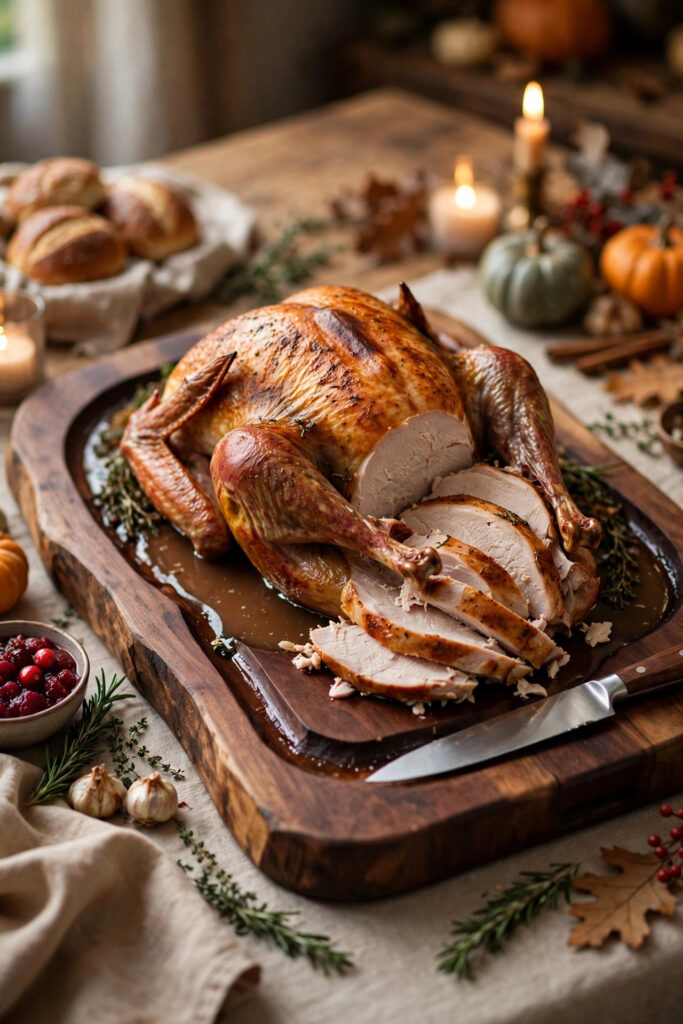
A turkey releases a surprising amount of juice as it rests and is carved — a really large bird can give up as much as a cup. On a flat board, that juice runs straight onto your counter, your tablecloth, and your floor. A proper carving board stops it: a deep juice groove (or trench) around the edge, enough weight to stay put under a long knife, and room for both the bird and the slices coming off it. The best carving board for turkey holds the juices, steadies the bird, and still fits your counter.
We compared the best-selling and best-reviewed carving boards available right now, looking at juice-groove capacity first, then weight and stability, working area, material, and how easy each board is to clean and store after the feast.
Our Top Picks
J.K. Adams Maple Reversible Carving Board
The J.K. Adams reversible board is the long-time favorite of America’s Test Kitchen’s carving-board tests: a Vermont-made maple board heavy enough to sit securely on the counter but still light enough to lift with a large bird on it. One side is a large, flat cutting surface for breaking down roasts; the other has a poultry well that steadies a turkey or chicken during carving without obstructing your knife. Its trenches hold an impressive volume of liquid — about 5 ounces on one side and 10 ounces on the other — so even a juicy bird stays contained.
Pros:
- America’s Test Kitchen’s longtime favorite carving board
- Poultry well steadies a turkey without blocking the knife
- Trenches hold 5 ounces on one side and 10 on the other
- Reversible: flat side for roasts, well side for birds
Cons:
- Wood needs hand washing and regular oiling
- No pour spout, so you tip the board to decant juices
- Premium price for a hardwood board
J.K. Adams Maple Reversible Pour Spout Carving Board
The pour-spout sibling of the winner above trades a little trench capacity for convenience: a spout cut into one corner of each side lets you decant drippings neatly into a gravy pan instead of tipping a heavy, juice-laden board. At 20 by 14 inches (with a 24 by 16 inch version also available), it is sized for a whole turkey with room to work, and it is made from the same North American maple in Vermont. Pick this one if gravy from the drippings matters as much as the carving itself.
Pros:
- Pour spouts on both sides decant drippings into a gravy pan
- Juice grooves on both sides plus a poultry well on one side
- Vermont-made maple, built to last for years
- Available in 20 by 14 and larger 24 by 16 inch sizes
Cons:
- Spout can let juices escape if the board is tilted carelessly
- Slightly smaller trench capacity than the non-spout version
- Hand wash and oil only — no dishwasher
Teakhaus Professional Carving Board With Juice Canal (XL)
The Teakhaus XL is America’s Test Kitchen’s best carving-and-cutting board pick: a large teak board with a deep juice canal around the perimeter, chosen for cooks who want one board that carves the turkey and then doubles as an everyday cutting board. Teak’s natural oils make it resistant to moisture, and the board is bigger and heavier than the J.K. Adams, so it stays put under serious carving pressure. The smaller Large version (20 by 15 by 1.5 inches) is a good fit if the XL feels like too much board.
Pros:
- Deep juice canal captures drippings from even the juiciest roasts
- Teak resists moisture naturally and lasts for years
- Big, heavy build stays put while you carve
- Doubles as an everyday cutting board, not just a holiday tool
Cons:
- Heavier than the J.K. Adams, so harder to lift and store
- Hand wash only, with occasional oiling
- Larger size needs real counter and storage space
OXO Good Grips Carving & Cutting Board
The OXO is the practical plastic pick — and the standout in Allrecipes’ multi-round meat-board testing. At about 21 by 14.5 inches it is generously sized for a large turkey, with a grooved side that catches juices, non-slip feet that keep it planted, and grippy edges that double as handles. Unlike wood boards it is non-porous, resists odors, and is far easier to clean after a greasy carve. If you want low maintenance over heirloom looks, this is the board.
Pros:
- Large 21 by 14.5 inch surface fits a whole turkey comfortably
- Deep drip groove keeps juices off the counter
- Non-slip feet and grippy edges keep it stable and easy to lift
- Non-porous plastic resists odors and is easy to clean
Cons:
- Plastic is too thin for the deepest trenches wood boards offer
- Knife marks show after just a few uses
- Lacks the presentation appeal of a hardwood board
Lipper International Acacia Carving Board
The Lipper acacia board is the beautiful-and-functional pick: at 20 by 15 inches it is a practical size for turkey and large hams, with a wide, deep juice well that testers singled out as a favorite feature, and a grain handsome enough to carry straight to the table for serving. At around 7 pounds it is heavy enough to stay put while you slice, and deep recessed handles make it easy to lift and carry even with a bird on it.
Pros:
- Wide, deep juice well praised in independent testing
- Beautiful acacia grain looks great for table-side serving
- 7-pound weight keeps it stable under the knife
- Recessed handles make a loaded board easy to carry
Cons:
- Weight is a drawback in small kitchens or for weaker grips
- Acacia needs hand washing and oiling like other hardwoods
- No pour spout for decanting drippings
Greener Chef Extra Large Bamboo Cutting Board (36 x 24 Inch)
The Greener Chef 4XL is the go-big pick: a 36 by 24 inch bamboo board with a wider, deeper juice groove and a 5-ounce corner spout for retaining spills, big enough for a turkey plus room for slices, sides, and garnish. Bamboo is harder and less porous than most hardwoods, so it resists knife scars, and the board doubles as a stovetop cover or over-sink board the other 364 days of the year. If your Thanksgiving table is a production, this is the board that keeps up.
Pros:
- Massive 36 by 24 inch surface — room for bird, slices, and sides
- Deep, wide juice groove with a corner spout for drippings
- Bamboo resists knife scars and moisture
- Doubles as a stovetop cover or over-sink board year-round
Cons:
- Very large — needs serious counter and storage space
- Bamboo is harder on knife edges than maple or teak
- Hand wash only; no dishwasher
Buying Guide: How to Choose a Carving Board for Turkey
Juice-groove capacity comes first. A board that cannot hold the juices off a roast does not make the list, however well built it is. Look for a deep, wide trench — not a decorative etched line — and check the capacity if the maker publishes it: America’s Test Kitchen preferred trenches holding at least half a cup, and more is better, since a large turkey can release up to a cup of liquid as it rests.
Size: at least 20 by 15 inches. That size fits a large turkey with room to work and stack slices. Smaller boards force you to carve in cramped quarters and let slices slide off the edge. If you regularly cook 20-pound birds, step up to 24 by 16 inches or larger.
Weight is stability. At 7 to 10 pounds a board stops sliding under a long knife on its own; under that, you are relying on non-slip feet or a damp towel underneath. Heavy is good here — but make sure you can still lift the board with a bird on it, or pick one with recessed handles.
Wood versus plastic versus bamboo. Wood (maple, teak, acacia) has the deepest trenches and the best looks, but needs hand washing and oiling. Plastic (OXO) is light, non-porous, odor-resistant, and easy to clean, but its trenches are shallower. Bamboo is hard, durable, and resists scars, but it is tougher on knife edges and cannot go in the dishwasher either.
Poultry well or flat? A poultry well cradles the bird and stops it rolling while you carve — a real help on a round, greasy turkey. The trade-off is that the well makes that side less useful for flat slicing, which is why reversible boards (flat one side, well the other) are such a smart design.
Pour spout or not? A spout lets you decant drippings into a gravy pan without tipping a heavy board, but it can also let juices escape if the board tilts the wrong way. If gravy from drippings is a priority, get the spout; if maximum containment matters more, get the plain trench version.
Care decides lifespan. Wood and bamboo boards need hand washing, prompt drying, and occasional food-grade mineral oil. Never soak a wood board, and never put it in the dishwasher — it will warp and crack. A well-oiled maple or teak board can last decades; a neglected one will not survive many Thanksgivings.
FAQs
What size carving board do I need for a turkey? At least 20 by 15 inches for a large turkey with room to work. For a 20-pound bird, 24 by 16 inches or larger is more comfortable, and oversized boards like the 36-inch Greener Chef give you room for slices and sides too.
Do I really need a juice groove on a carving board? Yes — a resting turkey releases a lot of liquid, up to a cup for a very large bird. Without a deep groove, that juice runs onto your counter and table. A decorative shallow line is not enough; you want a deep trench that holds at least half a cup.
Is a wood or plastic carving board better for turkey? Wood boards have deeper trenches and better presentation, but need hand washing and oiling. Plastic boards are lighter, non-porous, and easier to clean, but their trenches are shallower. For a once-a-year turkey, either works — pick wood for looks and capacity, plastic for easy cleanup.
What is a poultry well on a carving board? A shallow, bird-shaped depression on one side of the board that cradles a turkey or chicken and stops it rolling while you carve. Reversible boards pair a well side with a flat side, so you get both a carving surface and a general slicing surface.
How do I clean a wooden carving board after Thanksgiving? Scrape off food, wash with hot soapy water (never soak it), dry it promptly and thoroughly, and stand it on edge to air-dry. Re-oil with food-grade mineral oil when the surface looks dry or pale. Never put a wood board in the dishwasher.
Can I use a carving board as an everyday cutting board? Yes, especially reversible and larger boards — use the flat side for everyday prep and keep the grooved or well side for roasts. Just remember that a board used for raw meat should be washed thoroughly, and many cooks keep a separate board for raw poultry.
