
Affiliate Disclosure: As an Amazon Associate I earn from qualifying purchases.
n
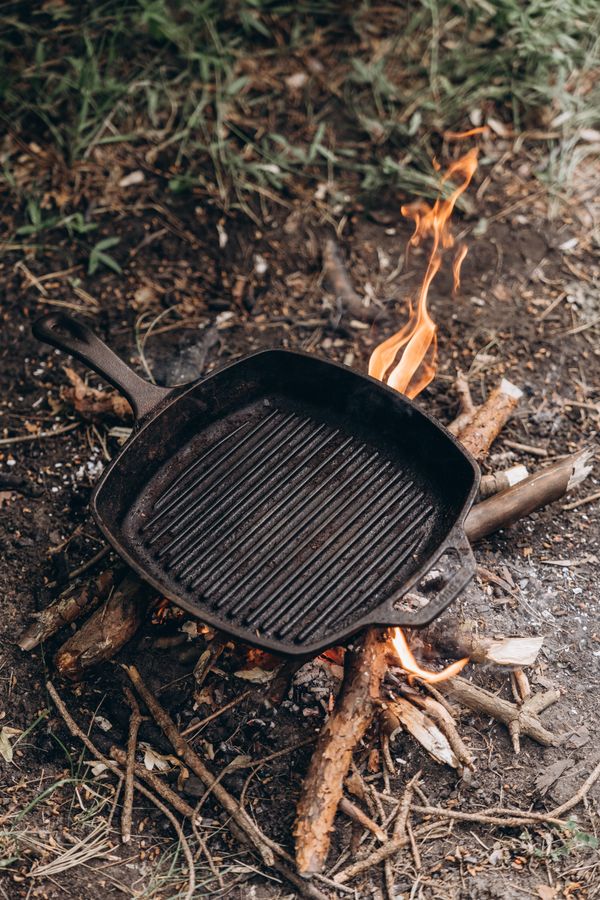
The best grill pans in 2026 are 10 to 12-inch cast iron grill pans with deep ridges, a pour spout, and an oven-safe handle — and the best overall is a 12-inch pre-seasoned cast iron grill pan that delivers real char marks and smoky flavor without a backyard. A grill pan can’t fully replace outdoor grilling (no smoke, no flare-ups), but for searing steaks, chops, burgers, and vegetables with genuine grill character in any weather, the ridged design lifts food above rendering fat while branding it with caramelized marks.
Our research team compared ridge depth, heat retention, handle design, and owner reviews to rank the seven best grill pans you can buy this year. You’ll also learn when a grill pan beats a flat skillet (and when it doesn’t), cast iron vs. nonstick vs. stainless, and the technique that gets you closest to real grilled flavor indoors.
Quick Picks: Best Grill Pans of 2026
- Best overall: 12-inch pre-seasoned cast iron grill pan — deepest ridges, best sear. Best Overall 12-Inch Cast Iron Grill Pan Check Price on Amazon →
- Best budget: 10-inch cast iron grill pan — classic performance, minimal price. Budget 10-Inch Cast Iron Grill Pan Check Price on Amazon →
- Best nonstick: 11-inch hard-anodized grill pan — easy release for fish and vegetables. Nonstick Hard-Anodized Grill Pan Check Price on Amazon →
- Best square: 12-inch square cast iron grill pan — maximum cooking surface. Square Cast Iron Grill Pan 12-Inch Check Price on Amazon →
- Best premium: enameled cast iron grill pan — beautiful, low-maintenance, table-ready. Premium Enameled Cast Iron Grill Pan Check Price on Amazon →
- Best for induction: 11-inch tri-ply stainless grill pan — fast, even, warp-resistant. Induction-Ready Stainless Grill Pan Check Price on Amazon →
Grill Pan vs. Skillet vs. Outdoor Grill: Honest Expectations
A grill pan’s ridges do three things: they brand food with caramelized sear marks (the Maillard reaction concentrated on contact lines), they elevate food above rendering fat and juices (so meat grills rather than fries in its own fat), and they create the visual and textural cues we associate with grilling. What ridges can’t do: produce smoke flavor, replicate the intense radiant heat of coals, or cook with lid-down convection like a covered grill.
Versus a flat skillet: the grill pan wins for presentation and for fatty meats (the fat drains away instead of pooling). The flat skillet wins for overall crust — full surface contact means more Maillard browning across the whole piece of meat, which is why steakhouse crusts come from flat surfaces, not ridges. Honest take: grill pans are about the grilled experience — marks, texture, reduced greasiness — while skillets are about maximum crust. Many cooks own both and choose by mood.
What to Look for in a Grill Pan
Ridge height and spacing
Deeper, sharper ridges (around 3–5mm tall) produce more defined marks and better fat drainage; shallow, rounded ridges barely register. Spacing matters too — ridges 8–12mm apart give classic grill-mark proportions. Cast iron holds the sharpest ridges; nonstick coatings soften ridge definition slightly.
Material: cast iron dominates for a reason
Cast iron’s heat retention is ideal for grill pans — the ridges stay screaming hot when cold meat hits them, which is what sets marks instead of steaming. Pre-seasoned cast iron is the default recommendation. Enameled cast iron trades some peak-heat tolerance for easier cleanup and no seasoning. Nonstick grill pans release delicate foods (fish, vegetables) beautifully but can’t take the ripping heat that makes the best marks, and the coating wears faster on ridges. Stainless grill pans exist but food welds to the ridges without impeccable technique — not recommended for most cooks.
Size, shape, and pour spouts
Round 10–12 inch pans suit most burners; square pans offer ~25% more cooking surface in the same footprint — meaningful when grilling for four. Look for pour spouts on at least one side: rendered fat collects in the valleys and needs draining between batches. A long handle (not two loop handles) gives the control you need to press and reposition food; it must be oven-safe since grill pans often finish under the broiler.
The 7 Best Grill Pans of 2026
1. Best overall: 12-inch pre-seasoned cast iron grill pan
The complete package: deep, sharp ridges for defined marks, 12 inches of room for four burgers or two steaks without crowding, pour spouts on both sides for draining fat, and a long handle with a hanging hole. Pre-seasoned and ready to cook, it goes from stovetop to broiler without blinking. For apartment dwellers and winter grilling, this is the closest indoor approximation of the real thing. Best Overall 12-Inch Cast Iron Grill Pan Check Price on Amazon →
2. Best budget: 10-inch cast iron grill pan
Same fundamental performance as the premium picks — cast iron is cast iron — in a smaller, lighter, far cheaper package. The 10-inch size suits 1–3 person households and smaller burners (better ridge-to-burner heat match, in fact). You give up some batch capacity, not quality. The best value in the category by a wide margin. Budget 10-Inch Cast Iron Grill Pan Check Price on Amazon →
3. Best nonstick: 11-inch hard-anodized grill pan
For fish fillets, shrimp, and vegetables that would weld to bare iron ridges: a hard-anodized body with quality PFOA-free nonstick that releases delicate foods cleanly while still branding respectable marks. Keep it at medium-high max — screaming heat is for cast iron — and hand wash. The right specialist for the delicate half of indoor grilling. Nonstick Hard-Anodized Grill Pan Check Price on Amazon →
4. Best square: 12-inch square cast iron grill pan
Geometry matters: a 12-inch square pan offers roughly 144 square inches vs. ~113 for a 12-inch round — room for six chicken thighs or a full flank steak. The corners run slightly cooler than the center (burners are round), so rotate food, but the capacity advantage is real for families. Pour spouts and a helper handle manage the extra weight. Square Cast Iron Grill Pan 12-Inch Check Price on Amazon →
5. Best premium: enameled cast iron grill pan
All the heat retention of cast iron with none of the seasoning ritual — the enamel interior releases food well and washes with soap. It goes from stove to table looking beautiful, and acidic marinades won’t touch it. The trade-offs: respect the 450–500°F enamel ceiling, use non-metal utensils, and pay more. For cooks who want grill-pan results with Dutch-oven convenience, this is the pick. Premium Enameled Cast Iron Grill Pan Check Price on Amazon →
6. Best for induction: 11-inch tri-ply stainless grill pan
Induction’s intense, localized heat warps thin pans and demands magnetic flat bases — a heavy tri-ply grill pan answers both. The clad construction spreads the coil’s heat across the ridges more evenly than raw cast iron on induction, and the flat machined base couples strongly. Stainless ridges need good technique (hot pan, oiled food, patience), but the responsiveness pairs beautifully with induction’s control. Induction-Ready Stainless Grill Pan Check Price on Amazon →
7. Best double-sided: grill/griddle combo pan
Ridged grill on one side, flat griddle on the other — flip the pan to switch. It’s heavier and the handle design is a compromise, but for small kitchens it’s two tools in one footprint: grill marks tonight, smash burgers and pancakes tomorrow. Make sure your burner and your wrists are up to the weight before committing. Reversible Cast Iron Grill and Griddle Pan Check Price on Amazon →
Technique: Getting Real Grill Character Indoors
- Preheat thoroughly — 5–8 minutes over medium-high. Underheated ridges steam; properly heated ridges sear. The pan is ready when a water drop dances and evaporates in seconds.
- Oil the food, not the pan. Brushing oil directly on meat/vegetables prevents pooling in the valleys (which fries instead of grills) and reduces smoke.
- Don’t move it. Place food at a 45° angle to the ridges, press gently for 10 seconds for full contact, then leave it alone 2–4 minutes. Lift — don’t drag — to check marks.
- Rotate 90° for crosshatch. For the classic diamond pattern, rotate the food a quarter-turn halfway through each side’s cooking.
- Drain fat between batches. Tilt and pour off accumulated fat via the spouts — pooled fat defeats the ridges’ purpose.
- Manage smoke. Indoor grilling smokes — that’s the price of high heat. Use your range hood on high, and choose high-smoke-point oils (avocado, grapeseed) on the food.
Cleaning a Grill Pan (The Part Nobody Loves)
Ridges trap food — accept it and have a system. For cast iron: while the pan is still warm, pour in hot water and scrub along the ridges with a stiff brush (a dedicated grill-pan brush with angled bristles is worth owning). Chain-mail scrubbers conform to ridges well. For carbonized buildup, simmer water in the pan for 5 minutes to loosen, then scrub. Dry over heat, light oil. For enameled: soak with hot soapy water, then scrub with a non-scratch pad — never metal. Nonstick: soft sponge only, and accept that ridge coatings wear faster than flat ones.
5 Grill Pan Buying Mistakes to Avoid
- Buying nonstick as your only grill pan. Nonstick can’t take the ripping heat that makes the best marks, and coatings wear fastest on ridges. It’s a fine second pan for fish — not the primary.
- Choosing shallow, rounded ridges. Soft ridges barely mark food and drain poorly. Look for deep (3–5mm), well-defined ridges in product photos — they’re the whole point of the pan.
- Oversizing for your burner. A 12-inch pan on an 8-inch burner leaves the outer ridges lukewarm — the center burns while the edges steam. Match pan diameter to your largest burner.
- Ignoring the pour spout. Fat pools in the valleys; without a spout, draining between batches means awkward tilting and spills. It’s a small feature with outsized daily importance.
- Expecting zero smoke. Indoor grilling at proper searing heat smokes — period. If your ventilation is poor, a grill pan will frustrate you regardless of quality. A strong range hood is part of the setup.
Frequently Asked Questions
Are grill pans worth it, or should I just use a skillet?
They’re worth it if you want grill marks, fat drainage, and grilled texture indoors — especially for burgers, chops, and vegetables. But a flat skillet produces more total browning (full contact = more Maillard), so for pure crust, the skillet wins. They do different jobs; neither replaces the other.
Can a grill pan replace an outdoor grill?
Not fully. A grill pan replicates sear marks and fat drainage but can’t produce smoke flavor, the intense radiant heat of coals, or lid-down convection cooking. Think of it as excellent indoor grilling for weeknights — not a substitute for barbecue.
What is the best material for a grill pan?
Cast iron, by consensus — its heat retention keeps ridges screaming hot for defined marks, it’s affordable, and it lasts forever. Enameled cast iron is the low-maintenance alternative; nonstick suits delicate foods but can’t take maximum heat.
Why does my grill pan smoke so much?
Usually oil pooled in the valleys overheating, or the heat is simply too high for the oil used. Oil the food instead of the pan, use high-smoke-point oils, keep the heat at medium-high rather than maximum, and run your range hood on high.
How do I clean between the ridges?
Scrub along the ridges (not across) with a stiff brush while the pan is warm — an angled grill-pan brush is ideal. For stuck carbon, simmer water in the pan for 5 minutes to loosen it first. Chain-mail scrubbers conform to ridges nicely on bare cast iron.
Can I use a grill pan on induction?
Yes — cast iron is ferromagnetic and works on induction. Choose a pan with a flat, stable base, lift rather than slide it to protect the glass, and expect excellent responsiveness. Tri-ply stainless grill pans are also excellent on induction.
Do grill marks actually add flavor?
The marks themselves are caramelization — concentrated Maillard browning — so yes, where the ridges contact food there’s deeper flavor than the unmarked areas. But total browning is less than a flat sear, which is why grill-pan food tastes “grilled” while skillet food tastes “crusty.”
For year-round indoor grilling, the 12-inch cast iron grill pan remains the benchmark — deep ridges, honest heat, and marks that look like summer. Best Overall 12-Inch Cast Iron Grill Pan Check Price on Amazon →
