Intro
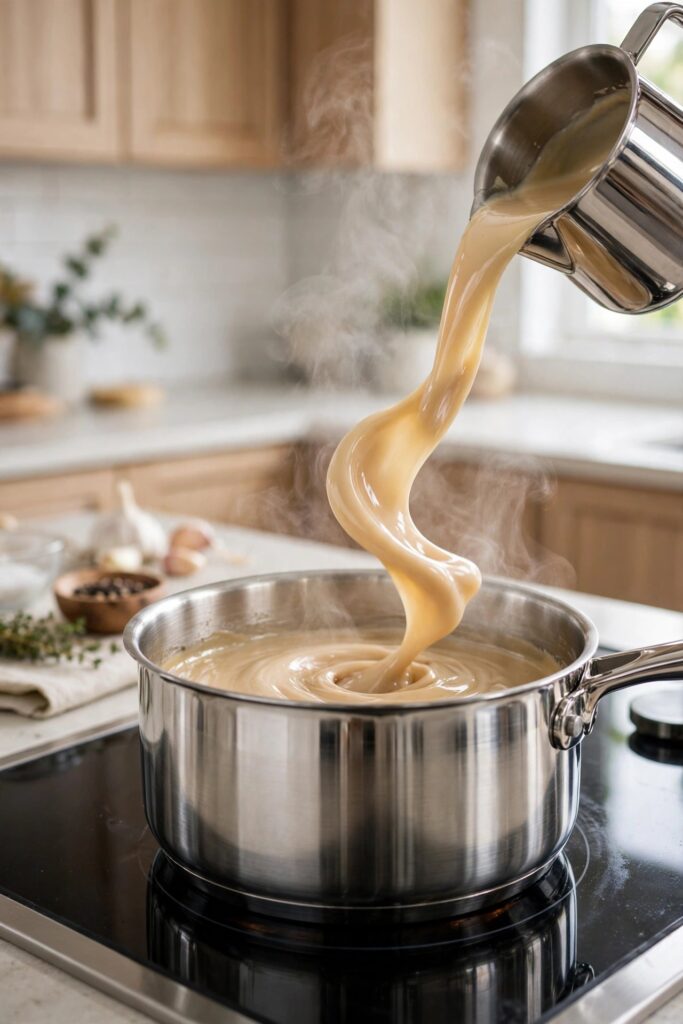
The best saucepans for sauces are the quiet workhorses of the kitchen: they turn butter and flour into a smooth roux, reduce a pan sauce without scorching, and hold a gravy at a gentle simmer while the turkey rests. A sauce pan lives or dies on even heating — a thin base creates hot spots that burn a béchamel in one corner while the rest stays raw, and a pan that reacts sluggishly to the burner makes it impossible to pull a reduction back from the edge.
What matters most is construction. Fully-clad stainless steel — a layer of aluminum bonded between two layers of stainless steel, running all the way up the sides — heats evenly and responds quickly when you turn the burner down. A 2- to 3-quart size is the sweet spot for sauces: big enough for a batch of gravy or cheese sauce for the family, small enough to whisk comfortably with one hand. Below, we have compared six saucepans available right now, weighing construction, heat control, size, and how forgiving each one is when a sauce needs attention.
Our Top Picks
All-Clad D3 3-Quart Stainless Steel Saucepan
The All-Clad D3 3-Quart is our best overall pick and the consensus choice for sauce work. Its fully bonded tri-ply construction — stainless steel inside and out with an aluminum core running rim to rim — delivers even heating with no hot spots, which is exactly what a roux or a reduction needs. At 3 pounds it feels substantial without being unwieldy, the flared pouring edge drips less than a straight rim, and it is oven and broiler safe to 600°F and induction compatible. Made in the USA, it is built to last decades rather than years.
Pros:
- Fully bonded tri-ply construction — even heat with no hot spots
- 3-quart size is the most versatile for sauces, grains, and reheating
- Oven and broiler safe to 600°F, induction compatible
- Non-reactive stainless interior — safe for acidic tomato sauces
Cons:
- Premium price — the most expensive pan in this roundup
- Hand wash only; the polished finish scratches if you are not careful
- No nonstick — sauces need attention and a whisk, not a set-and-forget
All-Clad Copper Core 2-Quart Stainless Steel Saucepan
The All-Clad Copper Core 2-Quart is our best premium pick. It adds a copper core to the tri-ply build, and copper responds to temperature changes faster than aluminum — which matters when a caramel is seconds from burning or a hollandaise needs the heat pulled back instantly. The 2-quart size is the right scale for caramel, reductions, and sauces for one or two people, and it shares the D3’s 600°F oven rating, induction base, and made-in-USA build.
Pros:
- Copper core gives the fastest, most precise heat response in this roundup
- Best choice for caramel, reductions, and other temperature-sensitive sauces
- 2-quart size is ideal for small batches and single servings
- Oven and broiler safe to 600°F, induction compatible
Cons:
- The priciest per-quart pan here — copper costs more
- 2 quarts is too small for a family batch of gravy
- Hand wash only, like the D3
Cuisinart Chef’s Classic 3-Quart Stainless Steel Saucepan
The Cuisinart Chef’s Classic 3-Quart is our best budget tri-ply pick. It offers the same fully-clad, triple-ply construction as the All-Clad D3 — stainless steel with an aluminum core bonded up the sides — at a fraction of the price, with solid heat distribution and no hot spots for everyday sauces. The 3-quart size covers gravy, cheese sauce, and grains for a family, and it works on induction. For a cook who wants real tri-ply performance without the premium price, this is the value pick.
Pros:
- Fully clad tri-ply construction at a budget price
- 3-quart size handles family-size sauces and grains
- Induction compatible
- Good heat distribution with no scorching hot spots
Cons:
- Thinner cladding than All-Clad — slightly less even at very low heat
- Handle heats up more than premium rivals on long simmers
- Not the same lifetime build quality as the D3
HexClad Hybrid Nonstick 2-Quart Saucepan
The HexClad Hybrid Nonstick 2-Quart is our best pick for easy-release sauces. Its hybrid surface — a laser-etched stainless steel hexagon pattern over a nonstick base — releases cheese sauce and caramelized sugar far more easily than bare stainless steel, while still tolerating metal utensils better than a plain nonstick pan. It is oven safe to 900°F, the highest rating in this roundup, dishwasher safe, and works on induction. The 2-quart size suits sauces for one or two and small-batch reductions.
Pros:
- Hybrid nonstick surface releases sticky sauces easily
- Oven safe to 900°F — the highest in this roundup
- Dishwasher safe, unlike the All-Clad pans
- Metal-utensil tolerant, unlike plain nonstick
Cons:
- Premium price, close to the All-Clad D3
- 2 quarts is small for family-size gravy
- The hybrid surface still needs gentle care to keep its nonstick working
Tramontina Tri-Ply Clad 2-Quart Saucepan
The Tramontina Tri-Ply Clad 2-Quart is our best value pick. Like the All-Clad D3, it is a fully clad tri-ply pan — 18/10 stainless steel with an aluminum core bonded to the rim — so heat spreads evenly up the sides instead of pooling at the base, and it is induction compatible and oven safe. Tramontina’s clad line has earned a reputation as the closest thing to All-Clad performance at a mid-range price, and the 2-quart size is right for sauces, oats, and reheating for one or two.
Pros:
- Fully clad tri-ply construction like the premium pans
- Even heating up the sides — good for reductions and roux
- Induction compatible and oven safe
- Mid-range price for near-premium performance
Cons:
- 2 quarts is too small for large batches
- Heavier than it looks for its size
- Finish and fit are a step below All-Clad
Farberware Classic 2-Quart Stainless Steel Saucepan
The Farberware Classic 2-Quart is our best budget pick. It is a no-frills, dependable pan that has been in American kitchens for decades: a full cap base that sandwiches aluminum between layers of stainless steel, a comfortable handle, and a tight-fitting lid. It will not match a fully clad pan for evenness at the lowest simmer, but for everyday gravy, reheating soup, and cooking grains it is reliable, cheap, and easy to replace. For a first saucepan or a second pan for the cupboard, it is hard to beat.
Pros:
- Lowest price in this roundup by a wide margin
- Durable, dependable build with decades of owner praise
- Full cap base spreads heat well for the price
- Light and easy to handle one-handed
Cons:
- Capped base only — not fully clad, so the sides heat less evenly
- Less precise heat control for delicate sauces than tri-ply pans
- Plainer looks and thinner steel than the premium picks
Buying Guide
Buy fully clad, not just a clad base: The single biggest difference in a saucepan is whether the aluminum core runs all the way up the sides (fully clad) or sits only in the base (capped base). Fully clad pans — All-Clad D3, Copper Core, Cuisinart Chef’s Classic, Tramontina Tri-Ply — heat evenly across the whole pan, so a sauce simmers uniformly instead of scorching at the bottom. A capped-base pan like the Farberware heats fine for the price, but the sides stay cooler and delicate sauces need more stirring.
Pick 2 or 3 quarts for sauces: A 2-quart saucepan suits sauces for one or two people, caramel, and reductions. A 3-quart is the most versatile size — big enough for a family batch of gravy, cheese sauce, or soup, small enough to whisk with one hand. A 1-quart is handy for melting butter or heating milk but too small for real sauce work, and a 4-quart starts to feel like a small stockpot.
Match the pan to your stovetop: If you cook on induction, buy only pans that state induction compatibility — every pan in this roundup qualifies. On gas or conventional electric, any of them works. Stainless steel is non-reactive, so acidic tomato sauces will not pick up metallic tastes the way they can in unlined aluminum or copper.
Mind the pouring edge and the handle: A flared pouring edge (All-Clad) drips less when you pour a sauce into a gravy boat. A long, riveted handle that stays cool matters when you are whisking a roux for ten minutes. And check the weight: a 3-pound pan feels reassuring on the burner but tiring if you lift it one-handed to pour.
Stainless vs. nonstick for sauces: Bare stainless steel gives the best browning and the most precise heat control, and it lasts decades — but sauces stick and need a whisk and attention. A hybrid nonstick like the HexClad releases sticky sauces easily and cleans faster, but the coating will eventually wear. For a cook who makes sauces weekly, stainless is the long-term pick; for a cook who hates scrubbing, hybrid is the easier life.
FAQs
What is the best saucepan for sauces? The All-Clad D3 3-Quart is the consensus pick: fully clad tri-ply stainless steel with even heat, no hot spots, and a 3-quart size that handles family batches. For temperature-sensitive sauces like caramel, the All-Clad Copper Core 2-Quart responds faster. On a budget, the Cuisinart Chef’s Classic 3-Quart gives tri-ply performance for far less.
What size saucepan is best for sauces? A 2- or 3-quart saucepan is ideal. Two quarts suits sauces for one or two people and small reductions; three quarts is the most versatile size, handling gravy, cheese sauce, and grains for a family. One quart is too small for most sauce work, and four quarts is more of a small stockpot.
Is stainless steel or nonstick better for sauces? Stainless steel is better for most sauce work: it browns well, handles high heat, and lasts decades, and it is non-reactive with acidic sauces. Nonstick and hybrid pans release sticky sauces more easily and clean faster, but they cannot match stainless for browning or longevity. Many cooks keep one of each.
Do I need an induction-compatible saucepan? Only if you cook on an induction burner — a non-magnetic pan simply will not heat on induction at all. Every saucepan in this roundup is induction compatible. On gas or conventional electric, induction compatibility does not matter, but it does not hurt either.
Why does my sauce burn in my saucepan? Usually a thin base creating hot spots, or heat set too high. A fully clad pan spreads heat evenly and fixes the first cause; cooking on medium-low and whisking constantly fixes the second. A roux or cheese sauce should never be left unattended on high heat in any pan.
Can I put a stainless steel saucepan in the dishwasher? Most stainless saucepans tolerate the dishwasher, but the All-Clad pans in this roundup are hand wash only — dishwasher cycles dull the polished finish and can loosen the handle rivets over time. Hand washing a saucepan takes a minute and keeps a lifetime pan looking new.