
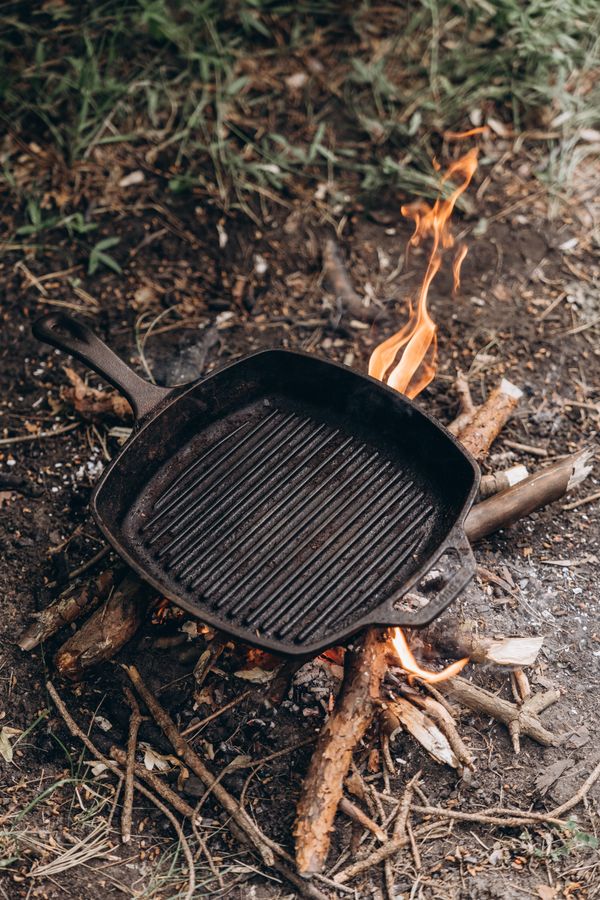
The ceramic vs cast iron skillet debate pits modern convenience against old-school performance. Ceramic-coated skillets promise easy release without traditional nonstick chemicals, while cast iron promises a lifetime of searing power and naturally improving seasoning. The honest answer: cast iron is the better long-term performer, but ceramic is the easier pan to live with day to day. Here is how they compare across heat, durability, health, maintenance, and cost.
Ceramic vs Cast Iron Skillets: The Quick Verdict
Choose cast iron if you sear meat, bake, and want cookware that lasts generations. Choose ceramic nonstick if you cook eggs, fish, and delicate foods and want effortless cleanup without a learning curve. Cast iron rewards technique with unmatched browning; ceramic rewards you with convenience from day one. Most well-equipped kitchens eventually hold both.
| Feature | Ceramic-Coated Skillet | Cast Iron Skillet |
|---|---|---|
| Food release | Excellent when new | Good once well-seasoned |
| Searing and browning | Fair — moderate heat only | Excellent — extreme heat tolerance |
| Max safe heat | Usually 450–500°F | Virtually unlimited |
| Durability | Coating wears in 2–4 years | Decades to generations |
| Weight | Light (2–3 lbs) | Heavy (5–8 lbs) |
| Maintenance | Hand wash, gentle utensils | Seasoning, dry thoroughly |
| Oven and broiler | Limited by coating and handle | Fully safe, ideal for baking |
What a Ceramic Skillet Actually Is
A ceramic skillet is typically an aluminum pan coated with a silica-based sol-gel coating marketed as \”ceramic.\” It contains no PTFE and no PFOA, which is its main selling point for health-conscious buyers. The coating is slick and genuinely nonstick when new — eggs slide, fish releases, and cleanup is a quick wipe. Ceramic coatings are also free of the forever-chemical concerns that have driven PFAS regulation in 2026.
The catch is longevity. Ceramic coatings are thinner and more fragile than PTFE coatings. They lose their nonstick properties faster, often within one to three years of regular use, and they are sensitive to thermal shock, high heat, and abrasive cleaning. Manufacturers recommend low to medium heat only, which limits what the pan can actually do. A ceramic skillet is a short-to-medium-term convenience product, not an heirloom.
What a Cast Iron Skillet Actually Is
A cast iron skillet is a single piece of cast iron — no coating, no layers, no wear item except its seasoning. That seasoning is polymerized oil baked onto the surface in thin layers, built up over months and years of cooking. A well-seasoned skillet develops a naturally slick surface that handles fried eggs, cornbread, and seared steaks with minimal sticking, and it only gets better with use.
Cast iron\’s superpower is thermal mass. Once hot, it stays hot: laying a cold steak in the pan barely dents the surface temperature, which means deeper, more even crusts. It goes from stovetop to a ripping-hot oven to the broiler to a campfire without complaint. The tradeoffs are weight (a 12-inch skillet weighs around 8 pounds), a learning curve, and maintenance rules — dry it promptly, keep it lightly oiled, and avoid long soaks.
Heat Performance: Where Cast Iron Dominates
In the ceramic vs cast iron skillet matchup, heat is the most lopsided category. Cast iron thrives at temperatures that would destroy a ceramic coating. Searing, blackening, stir-frying, and oven-baking at 500°F are its home turf. The heavy mass also means remarkably even heat once preheated, with no hot spots.
Ceramic skillets are explicitly designed for gentle heat. Most manufacturers cap recommended stovetop use at medium, and high heat degrades the coating rapidly — the number one reason ceramic pans lose their nonstick finish. If your cooking lives at medium and below (eggs, pancakes, sautéed vegetables, reheating), ceramic performs beautifully. The moment you want a hard sear, it is the wrong tool.
Food Release: New Ceramic vs Seasoned Iron
A brand-new ceramic skillet releases food better than almost anything, including well-seasoned cast iron. That is its peak, and it is genuinely impressive. But the comparison flips over time: ceramic release degrades steadily, while cast iron release improves steadily as seasoning builds. At year three, the average cast iron skillet outperforms the average ceramic skillet for sticking — and the iron pan is just getting started on a decades-long career.
For cooks who want perfect release on day one with zero learning curve, ceramic wins the first year. For cooks willing to invest a few months of regular use, cast iron wins every year after that.
Durability and Lifespan
This category is not close. Cast iron skillets from the early 1900s are still in daily use — the material simply does not wear out. It can rust if neglected, but rust is reversible with scrubbing and re-seasoning. Drops can crack it, but that is rare in normal kitchen use.
Ceramic coatings, by contrast, are consumable. Micro-scratches accumulate, the sol-gel layer thins, and eventually food starts sticking no matter how gently you treat the pan. Dishwashers, metal utensils, and thermal shock accelerate the decline. Expect two to four years from a quality ceramic skillet, less from a cheap one. Over a twenty-year horizon, you might buy six ceramic skillets — or one cast iron skillet.
Health and Safety Considerations
Ceramic coatings market themselves on being free of PTFE, PFOA, lead, and cadmium, and reputable brands test accordingly. They are a reasonable choice for cooks who want to avoid fluoropolymer coatings entirely. One caveat: independent testing has occasionally found quality-control issues in bargain ceramic pans, so buying from established brands matters.
Cast iron is one of the oldest and most studied cookware materials. It can leach dietary iron into food — generally considered harmless or even beneficial, though people with iron-overload conditions should be aware. Acidic foods like tomato sauce can strip seasoning and pick up a metallic taste during very long simmers, which is why many cooks keep an enameled pot for those dishes. Neither material raises meaningful safety flags with normal use.
Weight, Handling, and Everyday Practicality
Ceramic skillets win on ergonomics. At two to three pounds, they are easy to lift, toss, and maneuver one-handed — a real advantage for cooks with wrist or strength limitations, and for techniques like flipping omelets. They heat up fast thanks to their aluminum bodies.
Cast iron demands respect: heavy, slow to heat, and in need of two hands for a 12-inch pan. But that weight is also stability — the pan sits planted on the burner and holds heat like a battery. Preheating takes longer (give it a full five minutes over medium heat), but the payoff is cooking performance no lightweight pan can match.
Maintenance: What Each Pan Asks of You
- Ceramic: hand wash with a soft sponge, use wood or silicone utensils, avoid aerosol cooking sprays, never plunge a hot pan into cold water, and store with pan protectors. Low-to-medium heat only.
- Cast iron: clean while warm with hot water and a brush (a little soap is fine on modern seasoning), dry immediately on heat, wipe with a thin layer of oil, and cook with it often — regular use is the best maintenance. Avoid long acidic simmers until seasoning is well established.
Neither routine is onerous, but they fail differently: ceramic dies from heat abuse, cast iron suffers from neglect and moisture. Honest self-assessment matters — buy the pan whose care routine you will actually follow.
Cost Over Time
A good ceramic skillet costs $30 to $70; a good cast iron skillet costs $25 to $60 (classic American-made options remain remarkably affordable). The sticker prices look similar, but the lifetime economics diverge hard. Replacing a $50 ceramic skillet every three years costs $500 over thirty years. A $35 cast iron skillet bought once costs $35 over thirty years — and will likely outlive the cook. If budget matters long-term, cast iron is one of the best value purchases in the entire kitchen.
Which Foods Suit Each Skillet?
- Reach for ceramic: fried and scrambled eggs, omelets, crepes, delicate fish fillets, grilled cheese, and any sticky, low-heat task where easy release matters most.
- Reach for cast iron: seared steaks and chops, smash burgers, fried chicken, cornbread, deep-dish pizza, roasted vegetables, campfire cooking, and anything finished under the broiler.
- Either works: sautéed vegetables, quesadillas, grilled sandwiches, and reheating leftovers.
The 2026 Context: Coatings Under Scrutiny
The ceramic vs cast iron skillet question lands differently in 2026 than it did five years ago. Expanding PFAS regulations have made ceramic coatings more attractive to shoppers avoiding fluoropolymers, and coating chemistry keeps improving incrementally. Still, no coating reform has solved the fundamental tradeoff: a sprayed-on slick layer wears out, while a seasoned iron surface renews itself every time you cook. If your priority is buying fewer pans over your lifetime, cast iron remains unmatched.
Breaking In Each Pan: The First 30 Days
The ceramic vs cast iron skillet choice plays out differently in the first month than in the third year. A ceramic skillet peaks on day one — unbox it, wash it gently, and it releases eggs like a dream from the very first breakfast. The break-in advice for ceramic is really break-in protection: keep heat at medium or below from the start, avoid the temptation to sear in it \”just once,\” and hand wash from day one. Every high-heat session in the first weeks permanently subtracts from the coating\’s lifespan.
Cast iron asks for the opposite mindset: the first month is an investment. Cook fatty foods early — bacon, roasted vegetables, fried chicken, grilled cheese — because each session deposits seasoning. Do not judge the pan\’s egg performance in week one; judge it in week six. Clean gently while warm, dry on heat every single time, and wipe the faintest film of oil over the surface before storing. Around the one-month mark, most cooks notice the turning point: food starts releasing, the surface darkens evenly, and the skillet begins to feel like a partner rather than a project.
When to Replace vs When to Restore
Knowing when a pan is done saves money and frustration. A ceramic skillet is done when food sticks despite proper heat and adequate fat, or when the coating shows visible wear, scratches through to the base, or a stubborn gummy residue. No restoration exists — ceramic cannot be re-seasoned or recoated at home. Recycle it through a take-back program if available and replace it.
Cast iron is almost never done. Rust? Scrub it off and re-season. Flaky, gummy seasoning? Strip it with oven cleaner or a lye bath and start fresh. A warped skillet (rare, from thermal shock) is the one true death, and even then the pan still works on gas. Estate sales and flea markets are full of century-old cast iron waiting for restoration — the most sustainable and economical \”new\” pan you can buy. In the longevity contest, ceramic is a subscription and cast iron is a purchase.
Final Verdict: Which Is Better?
Cast iron is the better skillet for performance, versatility, and lifetime value — it sears harder, lasts essentially forever, and costs less over time. Ceramic is the better skillet for immediate convenience, light weight, and cooks who want nonstick release without a learning curve. If you are building a kitchen for the long haul, start with cast iron and add a ceramic pan as a dedicated egg and fish specialist. If you want the easiest possible daily cooking right now, ceramic delivers — just budget for its replacement.
Frequently Asked Questions
Is ceramic cookware safer than cast iron?
Both are considered safe for normal cooking. Ceramic coatings are free of PTFE and PFOA, appealing to cooks avoiding fluoropolymers. Cast iron can leach small amounts of dietary iron, generally harmless. Buy ceramic from reputable brands, as bargain pans have occasionally failed independent heavy-metal testing.
Why is my ceramic pan sticking after a year?
Ceramic coatings degrade with high heat, thermal shock, metal utensils, and dishwasher cycles — the most common culprit is cooking above medium heat. Once the sol-gel layer wears, the nonstick performance cannot be restored, and the pan needs replacement.
Can you use metal utensils on cast iron?
Yes. Metal spatulas are fine on well-seasoned cast iron and even help smooth the seasoning over time. Avoid aggressive gouging or scraping at the seasoning with sharp edges, but normal metal spatula use is not a problem.
Is cast iron too heavy for everyday cooking?
A 10-inch skillet weighs about 5 pounds and a 12-inch about 8 pounds. Most cooks adapt quickly, using two hands for larger pans. If weight is a genuine limitation, a ceramic or carbon steel pan is the more practical daily choice.
Can ceramic skillets go in the oven?
Many are oven-safe to 450°F, but verify the manufacturer\’s rating — some handles and lids lower the limit. Cast iron has no such constraint and excels at oven and broiler cooking, including baking.
Does cast iron really get nonstick?
A well-seasoned skillet used regularly develops a surface that releases fried eggs and other sticky foods with minimal fat. It never matches a brand-new ceramic pan\’s frictionless release, but it improves with age while ceramic declines.
Which is better for induction cooktops?
Cast iron is naturally induction-compatible and its flat, heavy base makes excellent contact. Ceramic-coated aluminum skillets need a magnetic stainless base layer to work on induction — check the specifications before buying.
