
Affiliate Disclosure: As an Amazon Associate I earn from qualifying purchases.
n
Enameled vs bare cast iron — which deserves your money? The short answer: choose enameled cast iron if you braise, simmer acidic sauces, and want low-maintenance versatility; choose bare (seasoned) cast iron if you sear at maximum heat, want a lighter wallet hit, and enjoy building seasoning. Both are cast iron at heart — superb heat retention in a nearly indestructible vessel — but the glass-like enamel coating changes what you can cook and how you care for it.
This 2026 guide compares the two finishes across the eight factors that matter: searing, acidic foods, maintenance, durability, weight, versatility, looks, and price. Based on materials science and aggregated owner experience — no fabricated test claims — you’ll know exactly which finish (or combination) fits your cooking.
Enameled vs Bare Cast Iron: At-a-Glance
| Factor | Enameled Cast Iron | Bare Cast Iron | Winner |
|---|---|---|---|
| Best for searing | Very good | Best in class | Bare |
| Acidic foods (tomato, wine) | Excellent — non-reactive | Strips seasoning, metallic taste | Enameled |
| Braising & stews | Ideal — self-basting lids | Good, needs more care | Enameled |
| Maintenance | Soap and water, no seasoning | Season, dry, oil | Enameled |
| Max heat tolerance | ~450–500°F (enamel limits) | No limit | Bare |
| Durability | Enamel can chip | Nearly indestructible | Bare |
| Weight | Heavier (thicker casting) | Heavy | Bare (slightly) |
| Price | $80–$400+ | $25–$60 | Bare |
| Looks / table service | Beautiful colors | Rustic black | Enameled |
What “Enameled” Actually Means
Enameled cast iron is the same iron casting fused with a glass-like porcelain enamel coating — typically two to three layers fired at 1,400°F+. The enamel is non-reactive, so acidic tomato sauces and wine braises never touch raw iron, and it needs no seasoning: the smooth glass surface releases food reasonably well and washes with ordinary soap. Light-colored (cream/white) interiors let you monitor browning and fond development; black matte enamel interiors behave more like seasoned iron and hide staining.
Bare cast iron is raw iron protected only by seasoning — polymerized oil baked into the pebbly surface. It sears harder (no temperature ceiling from a coating), costs a fraction of the price, and can be fully restored from any abuse. But it demands ritual: dry it over heat, keep it oiled, and keep long acidic simmers away from young seasoning.
Difference #1: Searing Performance
Bare cast iron wins searing, and it’s not close at the extremes. With no coating to protect, you can preheat bare iron to 600°F+ and get the deepest Maillard crust of any pan material. Enameled iron sears very well — the iron beneath holds heat identically — but manufacturers cap most enamel at 450–500°F sustained, and thermal shock (a screaming-hot enameled pot plunged into cold liquid) can craze or crack the glass coating. For steak-searing fanatics, bare iron is the tool. For everything up to a hard sear, enamel keeps pace.
Difference #2: Acidic Foods
This is enamel’s signature victory. Simmer tomato sauce, chili, or wine-braised short ribs for hours in enameled iron with zero reaction. In bare iron, prolonged acid contact strips seasoning and can lend a metallic taste — fine for a quick deglaze, risky for a three-hour ragù. If your cooking leans Italian, braised, or tomato-heavy, enamel isn’t just nicer; it’s the correct tool. (Bare-iron devotees keep a stainless or enameled pot for these dishes — there’s no shame in it.)
Difference #3: Maintenance and Daily Care
Enameled iron cleans like a normal pot: soap, sponge, done. No seasoning rounds, no post-wash heat drying ritual, no rust anxiety. The trade-off is fragility of a different kind — the enamel chips if you bang metal utensils, drop the lid, or shock it thermally. Use wood or silicone utensils, avoid stacking without protection, and never heat it empty for long.
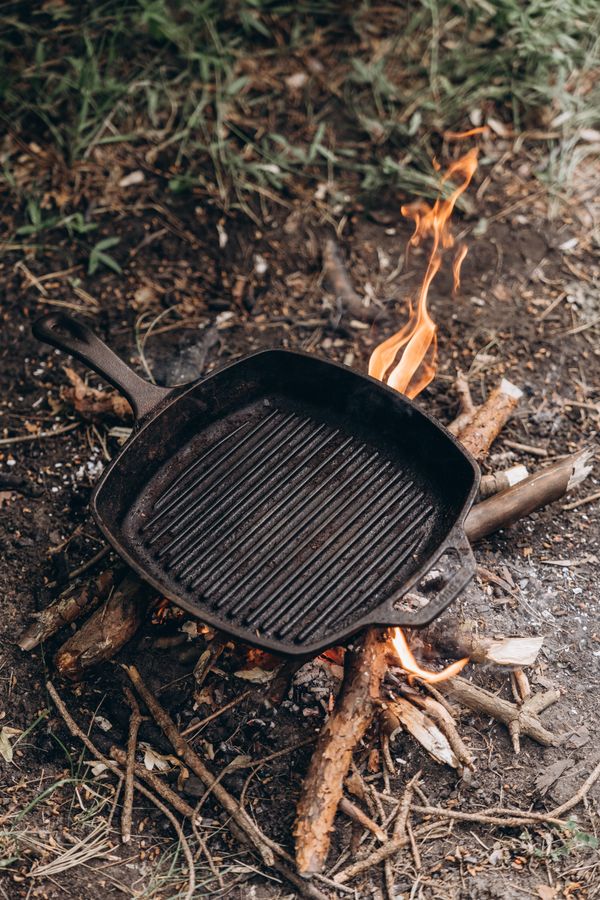
Bare iron’s maintenance is a short ritual: clean while warm, dry over heat, whisper of oil. It takes two minutes and becomes automatic. The payoff is a pan that shrugs off metal spatulas, campfires, and decades of abuse — and if you ever neglect it into rust, scrubbing and re-seasoning fully restores it. Enamel, once chipped to the iron, can’t be truly repaired at home (chips can rust and spread).
Difference #4: Durability and Lifespan
Bare iron is the durability champion — there is essentially nothing you can do to it that scrubbing and seasoning won’t fix. Enameled iron lasts decades with care, but the enamel is glass: chips from drops and utensil strikes are permanent, and severe thermal shock can crack it. Premium enamel (thicker, multi-layer) resists chipping far better than thin budget enamel, which is the main thing your money buys in the $300+ tier. Buy cheap enamel and the coating is the weak link; buy premium and the iron will outlive you.
Difference #5: Weight
Both are heavy, but enameled pieces run heavier — the castings are typically thicker, and a 5.5-quart enameled Dutch oven can top 13–14 pounds empty (20+ full). Bare iron skillets are heavy but the shapes are smaller. If lifting a full Dutch oven is a concern, look at lighter-weight enameled lines or smaller capacities — a 3.5-quart enameled oven handles most braises for 2–4 people at far less strain.
Difference #6: Versatility Across Your Cooking
Enameled iron is the broader tool: braises, stews, soups, bread baking (the heavy lid traps steam for crackling crusts), deep-frying (excellent heat stability), and even serving at the table in attractive colors. Bare iron dominates searing, campfire cooking, cornbread, pizza, and anywhere you want maximum heat with zero coating anxiety. The classic well-equipped kitchen holds both: an enameled Dutch oven for wet cooking and a bare skillet for searing.
Difference #7: Price and Value
Bare iron is the best value in cookware — $25–$60 for a skillet that lasts forever. Enameled iron spans $80 for decent budget ovens to $400+ for premium French-made pieces. The premium buys thicker, more chip-resistant enamel, better lid fit, and prettier colors — real differences, but diminishing returns past ~$150 for most cooks. A mid-range enameled Dutch oven is the value sweet spot.
The Science: Why Enamel Behaves Like Glass (Because It Is)
Porcelain enamel is powdered glass fused to metal at around 1,400°F — chemically, it’s a silicate glass, which explains all of its behavior. Like glass, it’s non-porous and chemically inert: acids, bases, and salts can’t react with it, which is why tomato sauce tastes clean after hours of simmering. Like glass, it’s hard but brittle: it resists scratching from soft utensils yet chips under sharp impact, because the glass layer can’t flex with the iron beneath it when struck. And like glass, it hates thermal shock — rapid, uneven temperature change creates internal stress that can craze (fine cracks) or pop chips off the surface.
This is also why enamel color matters functionally, not just decoratively. Dark interiors (black or dark gray matte enamel) are typically thinner, single-purpose coatings that behave closer to seasoned iron — they develop a patina-like character and hide staining. Light interiors (cream, white, sand) are usually glossier, multi-layer coatings that show fond beautifully — a real advantage when you’re judging the browning on a braise — but they stain visibly and show every speck. Neither is objectively better; it’s a trade between monitoring your cooking and low-maintenance looks.
What Professional Kitchens Actually Use
Walk through restaurant kitchens and you’ll see both finishes, chosen by station. The sauté and grill stations run bare carbon steel and bare cast iron — maximum heat, metal utensils flying, pans that get abused and re-seasoned without a second thought. The braising station, soup kettles, and sauce pots are enameled cast iron or stainless — long, unattended simmers of acidic stocks and sauces where reactivity and easy cleaning matter more than peak searing. Pastry runs enameled ovens for bread. The pattern mirrors the home advice: bare iron where heat and abuse are extreme, enamel where time, acid, and cleanup dominate. Professionals don’t pick a “winner” — they pick the right tool per task, which is exactly why this guide recommends the pairing.
Which Should You Buy?
- Buy enameled if: you braise and stew often, cook lots of tomato/wine-based dishes, want low-maintenance cookware, bake bread, or love serving from pot to table. Start with a 5.5-quart round Dutch oven. Top-Rated 5.5-Quart Enameled Cast Iron Dutch Oven Check Price on Amazon →
- Buy bare if: searing is your priority, you want the toughest pan possible, you cook over campfires, or budget matters most. Start with a 12-inch skillet. Best-Selling 12-Inch Pre-Seasoned Cast Iron Skillet Check Price on Amazon →
- Buy both if: you cook seriously — they answer different questions, and together they cover 90% of stovetop and oven cooking.
Care Cheat Sheet
- Enameled: soap + non-scratch sponge; soak stubborn spots; avoid metal utensils, thermal shock, and empty high-heat preheating. Bar Keeper’s Friend removes stains on light interiors.
- Bare: hot water + brush while warm; heat-dry always; thin oil film for storage; re-season when food sticks or gray patches appear.
- Both: lift, don’t drag, on glass cooktops; match pot size to burner; never plunge a hot pot into cold water.
Frequently Asked Questions
Is enameled cast iron safer than bare cast iron?
Both are safe for normal cooking. Enameled iron’s glass coating prevents any iron transfer into food, which some people prefer for acidic dishes. Bare iron transfers small amounts of dietary iron — generally considered safe and even beneficial. Neither contains PFAS or synthetic nonstick coatings.
Can enameled cast iron go in the oven?
Yes — typically to 450–500°F, limited by the enamel and any phenolic (plastic) knobs. Swap to a steel knob for higher-heat bread baking. Bare cast iron has no temperature limit whatsoever, including broilers and campfires.
Why is my enameled Dutch oven staining?
Light-colored enamel stains from browned foods and oils — it’s cosmetic and normal. A paste of baking soda, or a soak with a specialized enamel cleaner, lifts most staining. Black matte enamel hides it entirely, which is why many cooks prefer it.
Can you repair chipped enamel?
Not truly — once enamel chips to bare iron, home repair kits are cosmetic at best and the chip can rust or spread. Small rim chips are usually harmless; chips on the cooking surface mean it’s time to retire the pot to non-food use or replace it.
Do I need to season enameled cast iron?
No — that’s the point of the enamel. The glass coating needs no seasoning and shouldn’t be oiled for storage. (Black matte “satin” enamel benefits from an occasional light oiling, but it’s optional, not required like bare iron.)
Which is better for bread baking?
Enameled cast iron — the heavy, tight lid traps steam for a crackling crust, and the non-reactive interior won’t affect dough. It’s the standard vessel for no-knead artisan loaves. Bare iron works but the lid seal is usually looser.
Can I use metal utensils on enameled cast iron?
Gentle use of metal is okay on high-quality enamel, but wood and silicone are safer — metal can chip or scratch the glass coating, especially on budget enamel. On bare iron, metal utensils are not just fine but beneficial, smoothing the seasoning over time.
Does enameled cast iron need a lower heat setting?
Generally yes — enamel over heavy iron holds and spreads heat so well that medium behaves like medium-high on thinner pans. Start lower than you think for sautéing and let the casting do the work; cranking the burner risks scorching and stresses the coating.
Can I deep-fry in enameled cast iron?
Absolutely — it’s one of the best deep-frying vessels. The heavy iron holds oil temperature remarkably steady between batches, and the enamel wipes clean afterward. Use a clip-on thermometer, never leave hot oil unattended, and fill no more than halfway.
Is expensive enameled cast iron worth it over budget brands?
Up to a point. Premium enamel is thicker, more chip-resistant, and fitted with better-sealing lids — real advantages. But mid-range enameled ovens ($80–$150) perform remarkably close for everyday braising and baking. Past ~$150 you’re paying mostly for colors and branding.
Most kitchens end up with both — an enameled Dutch oven for braises and a bare skillet for searing is the classic pairing our research keeps recommending.
