
Affiliate Disclosure: As an Amazon Associate I earn from qualifying purchases.
n
The best cookware for glass top stoves in 2026 is flat-bottomed, smooth-based cookware in stainless steel, enameled cast iron, or heavy aluminum — and the best overall pick is a tri-ply stainless set with dead-flat, polished bases that heat evenly without scratching. Glass-top (ceramic) cooktops demand two things other stoves don’t: perfectly flat bottoms for full heat contact, and smooth base materials that won’t scratch the glass when (not if) you shift a pan.
Our research compared base flatness, material compatibility, heat responsiveness on radiant elements, scratch risk, and owner reviews to rank the nine best cookware picks for glass top stoves this year. You’ll learn which materials are safe, which to avoid, and the handling habits that keep your cooktop pristine.
Quick Picks: Best Cookware for Glass Top Stoves of 2026
- Best overall: tri-ply stainless cookware set, flat polished bases — the safe standard. Best Tri-Ply Set for Glass Top Stoves Check Price on Amazon →
- Best budget: nonstick aluminum set with smooth bases — affordable, gentle. Budget Nonstick Set for Glass Tops Check Price on Amazon →
- Best skillet: 12-inch tri-ply stainless skillet — flat, even, scratch-safe. 12-Inch Stainless Skillet for Glass Top Check Price on Amazon →
- Best Dutch oven: enameled cast iron Dutch oven — smooth enamel base. Enameled Dutch Oven for Glass Top Check Price on Amazon →
- Best nonstick pan: hard-anodized nonstick skillet, smooth base — everyday eggs. Hard-Anodized Skillet for Glass Top Check Price on Amazon →
- Best stockpot: 8-quart stainless stockpot, flat base — big-batch safe. Stainless Stockpot for Glass Top Check Price on Amazon →
- Best cast iron (safe): enameled cast iron skillet — iron heat, safe base. Enameled Cast Iron Skillet Check Price on Amazon →
- Best saucepan: 3-quart tri-ply saucepan — sauces without scratches. Tri-Ply Saucepan for Glass Top Check Price on Amazon →
- Best value set: 10-piece stainless set, glass-top rated — complete kitchen. Value Stainless Set for Glass Top Check Price on Amazon →
Glass Top Stove Requirements: The Two Rules
Glass-ceramic cooktops heat by radiant elements under glass, which imposes two non-negotiable requirements. Rule one: flat bottoms. Heat transfers through direct contact — a warped or ridged base touches the glass in spots, creating hot spots, slow heating, and potential overheating of the element. Test any pan by placing a straightedge across its base; light should not peek through. Rule two: smooth, non-abrasive bases. Rough cast iron, damaged enamel, and gritty residues scratch glass permanently. Lift pans to move them — never slide — and keep bases clean. Follow these two rules and nearly any quality cookware works; ignore them and you’ll damage a $1,000 cooktop to save $30 on a pan.
Safe Materials for Glass Top Stoves
Stainless steel (including tri-ply)
The ideal glass-top material: naturally smooth, flat bases (quality pieces are machined flat), non-abrasive, and available in tri-ply for excellent heat distribution on radiant elements. Heavy enough to sit stably, light enough to lift easily. The default recommendation — if you own one cookware type for a glass top, make it stainless.
Enameled cast iron
Safe when the enamel base is smooth and undamaged: all the heat retention of cast iron with a glass-friendly bottom. The weight demands care — always lift, never slide or drop — and check the enamel for chips that could expose rough iron. Dutch ovens and braisers in enameled iron are glass-top stars.
Heavy aluminum / hard-anodized
Safe and practical: smooth anodized bases won’t scratch, and aluminum’s conductivity compensates for radiant elements’ slower response. Ensure the base is flat (cheap thin aluminum warps) and the anodizing is intact. Great everyday nonstick options for glass tops.
Copper (with caveats)
Usable but high-maintenance: copper’s softness means it can leave metallic residue marks on glass (removable with cooktop cleaner, but annoying), and it requires flat, well-tinned bases. Beautiful performance; more upkeep than it’s worth for most glass-top owners.
Materials to Avoid on Glass Tops
Rough bare cast iron
The #1 glass-top enemy: rough-cast iron bases scratch glass with any movement, and the extreme weight risks cracks from drops or thermal stress. If you must use cast iron, choose enameled with a smooth base — or polish the bare iron’s cooking surface smooth. Traditional rough skillets belong on gas, not glass.
Warped or damaged pans
Any pan that rocks or spins on a flat surface is disqualified — warped bases heat unevenly and can overheat elements. Likewise, pans with chipped enamel, dented bases, or rough repairs. The cooktop’s flatness demands flat cookware, full stop.
Stoneware and ceramic (for stovetop)
Oven-safe ceramics are not stovetop-safe on glass: they’re poor heat conductors (slow, uneven) and can crack from direct radiant heat. Keep ceramics in the oven where they belong.
Handling Habits That Protect Your Cooktop
Equipment is half the battle; habits are the rest. Always lift pans to reposition — sliding is how scratches happen. Match pan size to element size (oversized pans heat unevenly; undersized waste energy and can damage elements). Keep pan bottoms clean — burnt-on residue becomes abrasive. Never place a hot lid face-down on the glass (it can create a vacuum seal that cracks the top when lifted). Clean spills promptly with a ceramic cooktop cleaner and a razor scraper for burnt spots. And never use the cooktop as a counter — one dropped can ruins the glass.
The 9 Best Cookware Picks for Glass Top Stoves of 2026
1. Best overall: tri-ply stainless cookware set with flat polished bases
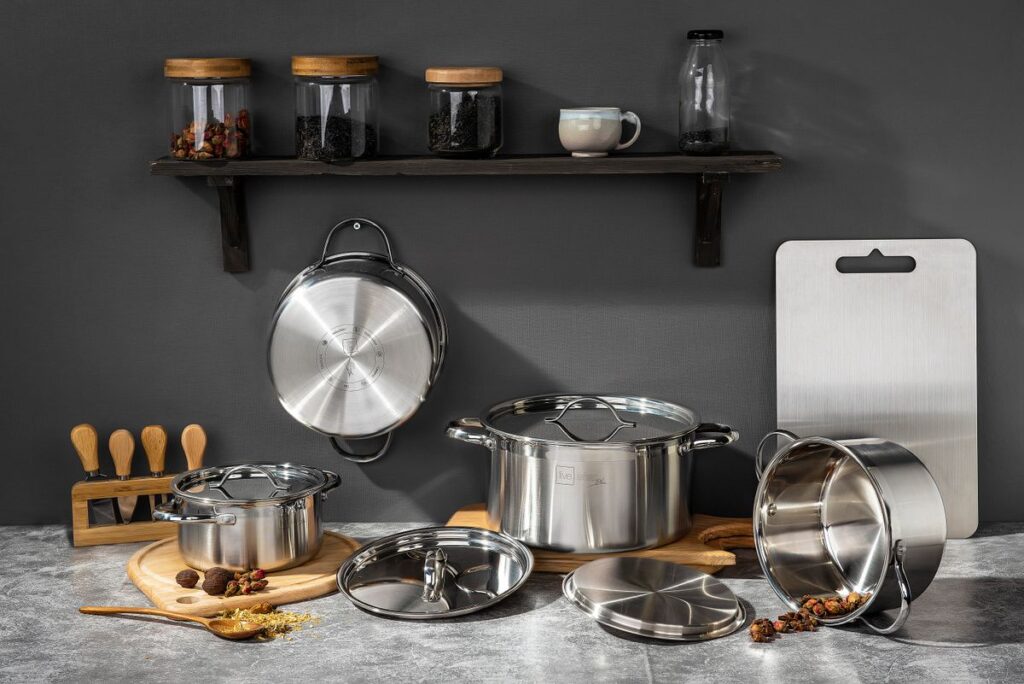
The glass-top gold standard: a tri-ply stainless set (aluminum core for even radiant-element heating) with machined-flat, polished bases that make full contact with the glass. No coating to scratch off onto the cooktop, oven-safe to 500°F, dishwasher-friendly, and the flat bases heat quickly and evenly on radiant elements. It’s the set that treats a glass cooktop exactly as it wants to be treated — and cooks brilliantly doing it. Best Tri-Ply Set for Glass Top Stoves Check Price on Amazon →
2. Best budget: nonstick aluminum set with smooth bases
Gentle on glass, gentle on wallets: a nonstick aluminum set with smooth, flat anodized bases that glide without scratching (still lift to move). The aluminum core compensates for radiant heat’s slower response, and the nonstick makes everyday cooking effortless. Verify base flatness on arrival — budget aluminum varies — and keep heat moderate to protect the coating. Budget Nonstick Set for Glass Tops Check Price on Amazon →
3. Best skillet: 12-inch tri-ply stainless skillet
The daily driver: a 12-inch tri-ply skillet with a dead-flat base, flared sides, and stay-cool handle — searing, sautéing, and pan sauces on glass without a scratch. The tri-ply construction evens out radiant elements’ heat patterns, and stainless takes the high heat that nonstick can’t. If you buy one pan for a glass top, this is it. 12-Inch Stainless Skillet for Glass Top Check Price on Amazon →
4. Best Dutch oven: enameled cast iron Dutch oven
Slow cooking, safely: an enameled cast iron Dutch oven with a smooth, undamaged enamel base — all of cast iron’s braising magic with a glass-friendly bottom. The weight requires disciplined lifting (never slide), but the flat enamel base makes excellent contact for even simmering. Check the base enamel regularly for chips that could expose rough iron. Enameled Dutch Oven for Glass Top Check Price on Amazon →
5. Best nonstick pan: hard-anodized nonstick skillet with smooth base
Eggs without anxiety: a hard-anodized skillet with a smooth, flat base — slick release for delicate foods and a base that won’t mar the glass. The anodized body resists warping better than plain aluminum, keeping the base flat for years. Reserve it for eggs and fish to maximize coating life. Hard-Anodized Skillet for Glass Top Check Price on Amazon →
6. Best stockpot: 8-quart stainless stockpot with flat base
Big batches, safe base: an 8-quart stainless stockpot with a thick, flat encapsulated base that sits stably and heats evenly on large radiant elements. Essential for stocks, pasta, and batch cooking — and the flat base means no rocking under 8 quarts of liquid (a real safety consideration on glass). Stainless Stockpot for Glass Top Check Price on Amazon →
7. Best cast iron (safe): enameled cast iron skillet
Iron heat, glass-safe: an enameled cast iron skillet delivering cast iron’s searing and heat retention with a smooth enamel base that won’t scratch. It’s the only cast iron that belongs on glass — rough bare iron is disqualified. Lift with care (it’s heavy), verify the enamel base is flawless, and enjoy steaks and cornbread without fear. Enameled Cast Iron Skillet Check Price on Amazon →
8. Best saucepan: 3-quart tri-ply saucepan
Sauce work, scratch-free: a 3-quart tri-ply saucepan with flat base and pouring spout — the grains, sauces, and reheating workhorse. Tri-ply’s even heating prevents the scorching that thin pans suffer on radiant elements, and the flat base maximizes contact for responsive temperature control. Tri-Ply Saucepan for Glass Top Check Price on Amazon →
9. Best value set: 10-piece stainless set, glass-top rated
Complete kitchen, cooktop-safe: a 10-piece stainless set explicitly rated for glass-top use — flat bases throughout, no filler pieces, at a value price. The vessels cover daily cooking completely, and stainless’s durability means the set outlasts the cooktop. The rational one-purchase solution for glass-top kitchens. Value Stainless Set for Glass Top Check Price on Amazon →
Cookware for Glass Top Stoves: Comparison
| Pick | Type | Why glass-safe | Best for |
|---|---|---|---|
| Best overall | Tri-ply stainless set | Flat polished bases | Complete setup |
| Best budget | Nonstick aluminum set | Smooth anodized bases | Affordable daily cooking |
| Best skillet | Tri-ply skillet 12 in | Machined-flat base | Searing, sautéing |
| Best Dutch oven | Enameled cast iron | Smooth enamel base | Braising, stews |
| Best nonstick | Hard-anodized skillet | Smooth flat base | Eggs, delicate foods |
| Best stockpot | Stainless 8 qt | Flat encapsulated base | Stocks, pasta |
| Best cast iron | Enameled skillet | Smooth enamel, no roughness | High-heat searing |
| Best saucepan | Tri-ply 3 qt | Flat base, even heat | Sauces, grains |
| Best value set | Stainless 10-pc | Rated flat bases | One-purchase kitchen |
Cleaning and Maintaining Your Glass Cooktop
Protect the investment: clean spills promptly once the top cools — sugary spills can pit glass if left to bake on. Use a dedicated ceramic cooktop cleaner with a soft cloth for daily cleaning; for burnt-on spots, a razor scraper held at 30° shaves residue off without scratching (it’s the pro tool — don’t fear it). Never use abrasive pads, steel wool, or harsh chemicals. Buff with a microfiber cloth for the streak-free finish. A 5-minute wipe-down after cooking prevents 99% of permanent staining.
Frequently Asked Questions
Can I use cast iron on a glass top stove?
Bare rough cast iron: strongly discouraged — it scratches glass and its weight risks cracks. Enameled cast iron with a smooth, undamaged base: yes, with careful lifting (never sliding). If you love cast iron cooking on a glass top, enameled is the safe path; reserve rough bare iron for gas or outdoor cooking.
What happens if I use a warped pan on a glass cooktop?
Poor heat transfer (the pan contacts the glass only in spots), hot spots that scorch food, longer cooking times, and potential damage to the radiant element from concentrated heat reflection. In extreme cases, severely warped pans can contribute to thermal stress on the glass. Test every pan with a straightedge; retire rockers.
Why is my glass top stove scratching?
Usual culprits: sliding pans instead of lifting, rough or dirty pan bottoms (grit acts like sandpaper), dragging across spills, or using the cooktop as a counter. Prevention: lift don’t slide, keep bases clean, clean spills promptly, and never place anything abrasive on the glass. Existing light scratches are cosmetic; deep ones are permanent.
Is stainless steel or nonstick better for glass top stoves?
Stainless (especially tri-ply) is the best all-around: durable flat bases, no coating to degrade, high-heat capable, and excellent on radiant elements. Nonstick is better for eggs and delicate foods and is perfectly glass-safe with smooth bases — but coatings wear and limit high-heat cooking. Most glass-top kitchens benefit from both: stainless for daily work, one nonstick skillet for eggs.
Can I can on a glass top stove?
With caution: water-bath canning works if your canner has a perfectly flat base smaller than the burner and the combined weight is within the cooktop’s rating (check your manual — many cap at 50 lbs). Pressure canners are often discouraged due to weight and heat intensity. Many serious canners use a portable outdoor burner instead — it’s also faster.
How do I remove burnt food from a glass cooktop?
Let it cool completely, apply ceramic cooktop cleaner, then use a razor scraper at a low angle to shave off the residue — this is the manufacturer-recommended method and won’t scratch when done correctly. For stubborn spots, lay a damp cloth with cleaner over the spot for 15 minutes first. Never use abrasive scouring pads.
Choose flat-bottomed stainless or enameled iron, lift — never slide — and wipe the top after every cook. Best Tri-Ply Set for Glass Top Stoves Check Price on Amazon →
