
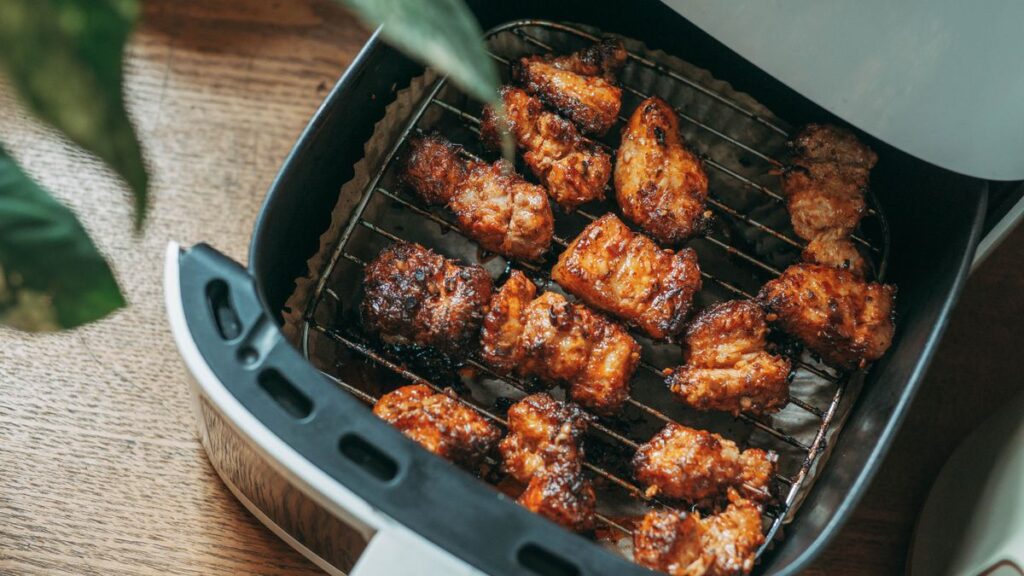
Air fryer vs deep fryer — which is better? For everyday home cooking, the air fryer wins on health, convenience, safety, and cleanup, delivering impressively crispy food with a fraction of the oil. But for peak crispiness, authentic texture, and cooking for a crowd, the deep fryer still reigns supreme. Neither appliance fully replaces the other; they are different tools for different jobs.
In this 2026 comparison, we put air fryer vs deep fryer head-to-head across crispiness and taste, health and oil use, cost, safety, cleanup, capacity, and best uses — plus pro tips for getting the crispiest possible air fryer results. By the end, you will know exactly which fryer deserves your counter space.
How Each Fryer Actually Works
A deep fryer submerges food completely in hot oil, typically 350 to 375°F (175–190°C). The violent heat transfer does three things at once: it rapidly dehydrates the food\’s surface, sets starches and batters into a rigid crust, and triggers deep Maillard browning. Because oil surrounds the food entirely, cooking is fast and supremely even — this is why deep-fried foods achieve that shattering, glassy crispness nothing else quite matches.
An air fryer is really a compact convection oven: a heating element and a powerful fan blast superheated air around the food at high speed. A light coating of oil — a teaspoon or a spritz — lets the surface brown and crisp through the same Maillard reactions, but with roughly 70 to 80 percent less oil than deep frying. The result is genuinely crispy food that tastes \”fried,\” though connoisseurs can tell the difference in blind tastings: air-fried crusts are drier and less rich than their deep-fried counterparts.
The key insight is that an air fryer does not fry at all — it roasts with extreme air circulation. That distinction explains both its health advantages and its texture limitations.
Crispiness and Taste: The Honest Comparison
Let us be blunt: in a side-by-side taste test, deep-fried food tastes better. The full oil immersion creates a thicker, more even crust with a richness and mouthfeel that hot air cannot replicate. French fries from a deep fryer are fluffier inside and crunchier outside; fried chicken has that craggy, juicy, unmistakable crust; tempura achieves its lacy delicacy only in oil.
But the air fryer gets remarkably close — close enough that many households happily made the switch. Air-fried fries, wings, and breaded cutlets score highly on crispiness, and for foods that are already fatty (chicken wings, sausages), the air fryer renders and crisps beautifully. Where the air fryer struggles: wet batters (tempura, beer batter) drip through the basket before they set, and very delicate coatings can blow around in the fan\’s airflow. For breaded and naturally fatty foods, the gap is small; for battered foods, it is a chasm.
Verdict on taste: deep fryer 10/10, air fryer 7.5–8.5/10 depending on the food. Whether that gap matters depends on whether you are chasing perfection or weeknight dinner.
Health and Oil Use
| Factor | Air fryer | Deep fryer |
|---|---|---|
| Oil per batch | 1–2 tsp (or none) | 2–4 quarts |
| Calories (fries, per serving) | ~150–200 | ~300–400 |
| Fat absorbed | Minimal | Significant |
| Acrylamide formation | Lower (less oil, shorter times possible) | Higher in starchy foods |
| Oil reuse concerns | None | Degraded oil if reused too often |
The health case for the air fryer is straightforward and strong: dramatically less oil means significantly fewer calories and less fat per serving, with studies showing fat reductions of 70 percent or more versus deep frying. You also avoid the question of degraded oil — deep fryer oil breaks down with repeated heating, forming polar compounds you would rather not eat, and most home cooks reuse oil far longer than they should.
One nuance: acrylamide, a potentially harmful compound formed when starchy foods brown at high heat, forms in both methods. Air frying tends to produce less because of lower oil uptake and often shorter cook times, but the biggest acrylamide lever is not over-browning — aim for golden, not dark brown, whichever fryer you use.
Cost: Appliance, Oil, and Energy
Upfront, the appliances are comparable: a good basket air fryer runs $80 to $200, while a home deep fryer runs $50 to $150. The real cost difference is oil. A deep fryer needs 2 to 4 quarts of oil per fill — $15 to $30 of oil — and while you can strain and reuse it a few times, regular deep frying becomes a meaningful grocery line. An air fryer uses a teaspoon of oil per batch, effectively zero ongoing cost.
Energy tilts toward the air fryer too: its small chamber heats in 2 to 3 minutes and cooks faster than heating a full oven, while a deep fryer must bring quarts of oil up to temperature (10 to 15 minutes of preheating). Over a year of weekly use, the air fryer\’s lower oil and energy costs add up to substantial savings — often paying for the appliance itself.
Safety and Cleanup
This is the air fryer\’s most decisive victory. Deep frying means a vat of 350°F oil — splash burns, the risk of boil-over fires, and hot oil disposal are real hazards, especially with children around. An air fryer is an enclosed box: the hot surfaces stay inside, there is no open oil to spill, and most models shut off automatically.
Cleanup follows the same pattern. Air fryer baskets are typically nonstick and dishwasher-safe; a quick soak handles most messes. Deep fryer cleanup means dealing with quarts of used oil — cooling it, straining it, storing or disposing of it (never pour it down the drain). The smell lingers too: deep frying perfumes the whole house for hours, while air frying is far less aromatic.
What Each Cooks Best
| Food | Winner | Why |
|---|---|---|
| French fries | Deep fryer (air fryer close) | Fluffier interior, glassier crust |
| Chicken wings | Tie | Air fryer renders fat brilliantly; deep fryer slightly crunchier |
| Fried chicken (breaded) | Deep fryer | Thicker, juicier crust; air fryer dries out thick pieces |
| Tempura / beer-battered fish | Deep fryer, by miles | Wet batters fail in air fryers |
| Doughnuts | Deep fryer | Require full immersion |
| Reheating fried food | Air fryer | Re-crisping is its superpower |
| Roasted vegetables | Air fryer | Not really frying; air fryer excels |
| Cooking for a crowd | Deep fryer | Bigger batches, faster throughput |
Can an Air Fryer Replace a Deep Fryer?
For weeknight cooking for one to four people, yes — an air fryer covers 80 percent of what most households deep-fry, with far less hassle. If your deep frying consists of frozen fries, wings, nuggets, and reheating leftovers, the air fryer does all of it well enough that you will not miss the oil vat.
For enthusiasts and entertainers, no. If you make doughnuts, tempura, proper fried chicken, or fry for parties, the deep fryer\’s capacity and crust quality are irreplaceable. Many serious cooks own both: the air fryer for daily use, the deep fryer (or a Dutch oven with oil and a thermometer) for project cooking a few times a year.
Tips for the Crispiest Air Fryer Results
Air fryer disappointment usually comes from technique, not the appliance. First, do not overcrowd — food needs space for hot air to circulate; cook in batches with a single layer. Second, pat food dry before oiling; surface moisture steams instead of crisps. Third, use a light, even oil coating — a mister or a teaspoon tossed through works better than drenching.
Fourth, shake or flip halfway through cooking for even browning. Fifth, preheat the air fryer for 3 minutes — a hot start sears the surface immediately. Sixth, for breaded foods, let the coating rest 10 minutes after breading so it adheres, and consider a double-coat for extra crunch. Finally, finish with high heat: the last two minutes at maximum temperature drive off surface moisture for peak crispness.
Oil Disposal and Environmental Footprint
An underrated part of the air fryer vs deep fryer comparison is what happens after cooking. Used deep-frying oil cannot go down the drain — it solidifies, clogs pipes, and creates municipal \”fatberg\” blockages. Proper disposal means cooling the oil, funneling it into a sealed container, and taking it to a collection point or putting it in the trash, a genuinely annoying chore that surprises first-time deep fryer owners. Multiply by every few uses, and oil management becomes a lifestyle.
The air fryer sidesteps all of it: a teaspoon of oil is consumed in cooking, leaving nothing to dispose of. Energy-wise, the air fryer\’s small chamber and short preheat use a fraction of the electricity of heating a full oven, and far less energy than bringing quarts of oil to temperature. For the environmentally conscious cook, the air fryer is the clear lower-impact choice — less waste oil, less energy, less packaging from constantly repurchased oil jugs.
Who Should Buy Which?
Buy the air fryer if: you cook weeknight dinners for one to four people, want healthier crispy food with minimal effort, have kids and prioritize safety, hate cleanup, or live in a small kitchen. This describes the majority of home cooks, which is why air fryers became the defining kitchen appliance of the decade.
Buy the deep fryer if: you regularly fry for crowds, make doughnuts or tempura, chase competition-level fried chicken, or run a small food business from home. The deep fryer is a specialist tool that earns its keep through performance, not convenience.
Buy both if: you are a serious cooking enthusiast with counter or storage space. Use the air fryer daily and break out the deep fryer for projects and parties. And remember the budget third option: a heavy Dutch oven, a clip-on thermometer, and a quart of oil replicate deep frying beautifully for the two-or-three-times-a-year fryer.
The Verdict
In the air fryer vs deep fryer debate, buy the air fryer first: it is healthier, safer, cheaper to run, easier to clean, and handles the vast majority of home \”frying\” brilliantly. Keep or add a deep fryer only if you chase ultimate crispiness, fry wet batters, or cook for crowds. For most kitchens in 2026, the air fryer is the everyday workhorse and the deep fryer is the specialist — and that is exactly how they should be used.
Frequently Asked Questions
Is air frying healthier than deep frying?
Yes, significantly. Air frying uses 70 to 80 percent less oil, which translates to far fewer calories and less fat per serving. You also avoid degraded reused oil and tend to form less acrylamide. Air-fried food is not calorie-free — breaded items still carry carbs and some fat — but it is meaningfully lighter than deep-fried.
Does food taste as good in an air fryer?
Close, but not identical. Air-fried food is genuinely crispy and delicious, scoring perhaps 80 percent of deep-fried flavor. The difference is most noticeable with wet batters and thick breaded items, where deep frying\’s full oil immersion creates a richer crust. For wings, fries, and roasted vegetables, many people cannot tell the difference.
Can you put battered food in an air fryer?
Wet batters like tempura or beer batter do not work — they drip through the basket before setting. Thick, well-adhered breadings (flour-egg-breadcrumb) work fine, especially if rested 10 minutes before cooking. For battered foods, deep frying remains the only real option.
Which is cheaper to run: air fryer or deep fryer?
The air fryer, by a wide margin. A deep fryer needs 2 to 4 quarts of oil per fill ($15–$30), plus longer preheating energy, while an air fryer uses about a teaspoon of oil per batch and heats in minutes. Regular deep frying becomes a real grocery expense; air frying costs almost nothing per batch.
Is deep frying dangerous at home?
It carries real risks: 350°F oil can cause severe splash burns, boil over, or ignite if overheated. Never leave a deep fryer unattended, never overfill it, keep a lid nearby to smother flames, and never use water on an oil fire. An air fryer\’s enclosed design eliminates nearly all of these hazards.
Can an air fryer replace my oven too?
Partially. An air fryer excels at small-batch roasting, reheating, and crisping — often better than a full oven for one or two servings, and much faster to preheat. But its small capacity cannot handle a whole chicken, a sheet pan of cookies, or a casserole. Think of it as a complement to your oven, not a replacement.
What oil is best for air frying?
High-smoke-point oils with neutral flavor: avocado oil, refined olive oil, or a light spray of canola. Avoid extra-virgin olive oil in spray form at maximum temperatures for long cooks, though it is fine for typical 15-minute sessions. You need very little — a teaspoon tossed through is usually enough.
How do I clean an air fryer?
Most baskets and trays are nonstick and dishwasher-safe. For stuck-on residue, soak in hot soapy water for 15 minutes, then scrub with a non-abrasive sponge. Wipe the heating element area with a damp cloth once cool. Avoid aerosol cooking sprays, which can damage nonstick coatings over time — use a refillable mister instead.
Do air fryers use a lot of electricity?
No — typically 1,200 to 1,800 watts, but only for short cooking times, making them cheaper per meal than heating a full oven. A 15-minute air fryer session costs a few cents in most regions. They are among the most energy-efficient ways to cook small portions, which is part of their appeal for daily use.
Air fryer vs deep fryer is not a war — it is a division of labor. Let the air fryer handle your weeknights and the deep fryer handle your celebrations, and you get the best of both crunch worlds.
