
Intro
The chef’s knife is the one tool in your kitchen that earns its keep every single day — and here’s the good news: you don’t need to spend $150 to get one that works. Professional kitchens and test kitchens alike keep reaching for a handful of budget chef knives under $50 that sharpen up well, hold an edge for everyday cooking, and cost less than a week’s worth of takeaway coffee.
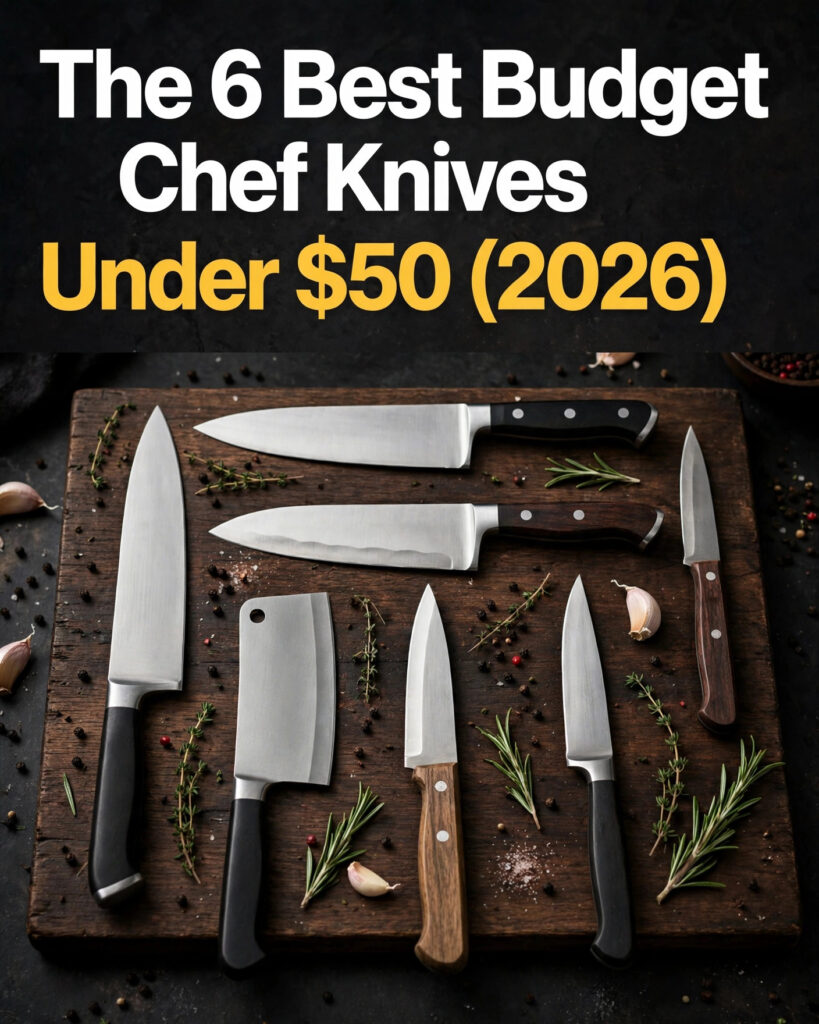
We rounded up the six best budget chef knives under $50 — from the Victorinox Fibrox Pro that America’s Test Kitchen keeps recommending to the $10 Thai knife chefs secretly love. Every pick is a real, currently available product. No inflated “pro” claims, no fake prices: just honest strengths and trade-offs so you can pick the right one for your hand and your cooking style.
Our Top Picks at a Glance
| Pick | Knife | Best for |
|---|---|---|
| ⭐ Best Overall | Victorinox Fibrox Pro 8″ (5.2063.20) | The all-rounder most cooks should buy |
| 💰 Cheapest Great Knife | Mercer Culinary Millennia 8″ (M22608) | Culinary-student favourite on a budget |
| 🇩🇪 Best German Steel | Wüsthof Pro 8″ Chef’s Knife (4302) | Wüsthof quality at the lowest price |
| 🔪 Sharpest for the Money | Kiwi Brand No. 22 8″ Thai Chef’s Knife | Razor-sharp out of the box for under $10 |
| 🛒 Best Value Forged Feel | Amazon Basics Classic 8″ Chef’s Knife | Forged-style weight from Amazon Basics |
| 🔨 Best Starter Forged | Cuisinart Classic Triple Rivet 8″ (C77TR-8CF) | Forged, full-tang first knife with lifetime warranty |
The Reviews
1. ⭐ Victorinox Fibrox Pro 8″ Chef’s Knife — Best Overall
This is the budget chef’s knife everything else gets measured against. The Fibrox Pro’s laser-tested, high-carbon stainless blade comes frighteningly sharp out of the box, the textured Fibrox handle stays grippy even when your hands are wet, and it consistently ranks as one of Amazon’s best-selling chef’s knives with tens of thousands of ratings. At around $45 it sits right at the top of this budget — but it performs like knives costing twice as much, and Victorinox backs it with a lifetime warranty.
Pros
- Razor-sharp, laser-tested blade out of the box
- Grippy Fibrox handle that works well with wet hands
- Lightweight and easy to manoeuvre for long prep sessions
- Dishwasher safe (though hand washing is still kinder)
- Lifetime warranty against defects
Cons
- Stamped, not forged — light in the hand, which some cooks dislike
- No bolster, so less finger protection during rock chops
- Handle looks plain next to riveted or wooden handles
- Softer steel needs regular honing to stay sharp
Best for: most home cooks upgrading from a dull knife block set.
2. 💰 Mercer Culinary Millennia 8″ Chef’s Knife (M22608) — Cheapest Great Knife
The Mercer Millennia is the knife culinary schools hand to students — and America’s Test Kitchen named it a Best Buy. The high-carbon Japanese steel blade holds a fine 15-degree edge, and the textured Santoprene-and-polypropylene handle is one of the most secure grips at any price. It’s typically one of the cheapest knives here, often well under $25, which makes it the safest low-risk pick on this list.
Pros
- Test-kitchen favourite with a long track record
- Excellent grip — deeply textured handle resists slipping
- Sharp 15-degree edge from high-carbon Japanese steel
- Very affordable — often the cheapest pick here
- NSF certified for professional use
Cons
- Hand wash only — the handle doesn’t love the dishwasher
- Handle runs bulky for smaller hands
- Stamped blade; relatively soft steel needs routine honing
- Utilitarian looks — function over form
Best for: new cooks, students, and anyone who wants a proven knife for the least money.
3. 🇩🇪 Wüsthof Pro 8″ Chef’s Knife — Best German Steel
The Wüsthof Pro is the cheapest way to get Solingen, Germany steel with the Wüsthof name on the blade. It’s laser-cut (stamped) rather than forged, which keeps it light and affordable, and because there’s no bolster, you can sharpen the entire length of the edge easily. Reviewers consistently praise how sharp it arrives and how well it holds up to daily use — a genuine entry point into a premium brand without the premium price.
Pros
- Genuine Wüsthof German steel at the lowest price in the range
- Lightweight stamped blade — less wrist fatigue
- No bolster, so the whole edge sharpens easily
- Well finished with a comfortable synthetic handle
- Limited lifetime warranty
Cons
- Less heft than forged Wüsthof lines — not for heavy chopping
- Hardness isn’t published; edge needs regular maintenance
- Hand wash recommended
- Handle is plain compared with the Classic line
Best for: cooks who want the Wüsthof name and German steel on a budget.
4. 🔪 Kiwi Brand No. 22 8″ Thai Chef’s Knife — Sharpest for the Money
Kiwi knives are the open secret of budget cooking: paper-thin, scary-sharp blades that cost about the same as a sandwich. The No. 22 is the classic 8-inch chef’s knife of the line — beloved by Thai street cooks and frugal chefs worldwide for slicing vegetables and boneless proteins with laser-like precision. Professional sharpening is overkill on a knife this cheap; most owners just hone it or replace it guilt-free when it finally tires.
Pros
- Shockingly sharp out of the box for the price
- Ultra-thin blade glides through vegetables
- Very lightweight — effortless for long veggie prep
- Practically disposable pricing, yet lasts years with care
- Easy to hone back to sharp yourself
Cons
- Thin blade can’t handle bones or frozen food
- Wooden handle needs occasional oiling and hand washing
- Needs frequent honing to stay at its best
- Feels flimsy next to a Western chef’s knife
Best for: vegetable-heavy cooks and anyone curious how sharp $10 can be.
5. 🛒 Amazon Basics Classic 8″ Chef’s Knife — Best Value Forged Feel
Amazon’s own brand punched above its weight with this one: a full-tang, high-carbon stainless blade with three rivets and a semi-bolster, styled like classic European chef’s knives at a fraction of the price. With a 4.6-star average across thousands of ratings, reviewers repeatedly say it cuts and balances like knives costing two or three times more — a solid pick if you’d rather not overthink it.
Pros
- Full tang, triple-riveted construction at a rock-bottom price
- Well balanced with reassuring weight in the hand
- Sharp high-carbon stainless blade resists staining
- 4.6-star average across thousands of ratings
- Great value for first apartments and gift lists
Cons
- Hand wash only — not dishwasher safe
- Can be tricky to sharpen for heavy daily users
- Heavier feel may not suit smaller hands
- Limited warranty detail compared with legacy brands
Best for: anyone who wants a classic, weighty chef’s knife without the brand markup.
6. 🔨 Cuisinart Classic Forged Triple Rivet 8″ Chef’s Knife (C77TR-8CF) — Best Starter Forged
Unlike the stamped picks above, the Cuisinart Classic is genuinely forged with a full tang, an extra-wide safety bolster, and triple-riveted handle — the classic European formula, sold open-stock at a budget price. The bolster keeps fingers safely off the edge, the knife has real heft for chopping through squash and root veg, and Cuisinart’s lifetime warranty backs it. Reviewers rate the line highly for sturdy, dependable daily use.
Pros
- Forged, full-tang blade — real heft for tougher prep
- Extra-wide bolster protects fingers and adds stability
- Triple-riveted ergonomic handle feels secure
- Lifetime warranty against defects
- Sold open-stock — buy just the chef’s knife, not a whole set
Cons
- Hand wash recommended to protect the edge
- Can dull faster under heavy daily use than pricier steel
- Tip isn’t the strongest for tough or prying tasks
- Heavier than the stamped knives here
Best for: cooks who want a proper forged knife as their first serious blade.
Buying Guide: How to Choose a Budget Chef’s Knife
Start with 8 inches. It’s the do-everything size: long enough for cabbage and watermelon, manageable enough for onions and herbs. All six picks here are 8-inch blades for that reason.
Stamped vs. forged. Stamped (laser-cut) blades — Victorinox, Mercer, Wüsthof Pro, Kiwi — are lighter, thinner, and cheaper. Forged blades — the Cuisinart and the Amazon Basics’ forged-style build — are heavier with a bolster, which some cooks find more reassuring for chopping. Neither is inherently better; it’s a feel preference.
Steel: German vs. Japanese. German-style steel (Wüsthof Pro, Cuisinart) is softer and tougher — it dulls a bit faster but is easy to hone and resists chipping. Japanese-style steel (Mercer Millennia) takes a finer edge but needs gentler treatment. At this price, both work; the maintenance matters more than the metallurgy.
The handle is half the knife. You’ll hold this more than any other tool. Textured grips (Mercer, Victorinox) are safest with wet hands; classic riveted handles (Amazon Basics, Cuisinart) feel traditional; the Kiwi’s wooden handle is light but needs oiling. If possible, think about your hand size — bulky handles tire small hands.
Budget for maintenance, not just the blade. Every knife on this list needs a honing steel (or a cheap pull-through sharpener), a wooden or plastic cutting board, and hand washing. A $15 knife with a honing routine will out-cut a $60 knife that’s never maintained.
Hand wash, always. Even the dishwasher-safe picks last far longer with hand washing. Dishwasher heat and detergent dull edges and can loosen handles over time.
FAQs
Is German or Japanese steel better in a budget chef’s knife? At this price, the difference is small and mostly about feel. German-style steel (softer, around 56 HRC) is tougher and easier to maintain with a honing steel — a forgiving choice for everyday cooking. Japanese-style steel (harder) holds a finer edge longer but chips more easily if you twist the blade. Either works; what matters more is honing regularly and cutting on wood or plastic, not glass or stone.
What’s the difference between a honing steel and a sharpener? A honing steel doesn’t remove metal — it realigns the microscopic edge that folds over during use. Honing every few uses keeps a knife cutting well for months. A sharpener (whetstone, pull-through, or electric) actually grinds away metal to create a new edge, which you need when honing no longer restores sharpness. Use both: hone often, sharpen occasionally.
Can I put my chef’s knife in the dishwasher? You can with the Victorinox, but you shouldn’t with any of them. Dishwasher detergent is abrasive, the heat cycle is hard on handles, and knives rattle against other items and dull. Hand wash with warm soapy water, dry immediately, and your budget knife will stay sharp far longer.
Is an 8-inch chef’s knife too big for me? For most adults, no — 8 inches is the standard all-purpose size and what test kitchens recommend. If you have small hands or a small cutting board, you may prefer a 6-inch chef’s knife or a santoku, but you’ll lose versatility for larger produce. See our guide to the best chef knife for small hands if that’s you.
Do I really need to spend $50 on a chef’s knife? No — and that’s the point of this list. The Mercer Millennia and Kiwi No. 22 prove that $10–25 buys a genuinely good knife. Spending up to $50 gets you better fit and finish, brand warranties, and (with the Cuisinart) forged construction — but the cutting performance gap is smaller than marketing suggests.
Going beyond budget? If your hands run small, read our best chef knife for small hands guide — fit matters more than price. And for the full premium rundown, see our best chef’s knives of 2026.
