
Affiliate Disclosure: As an Amazon Associate I earn from qualifying purchases.
n
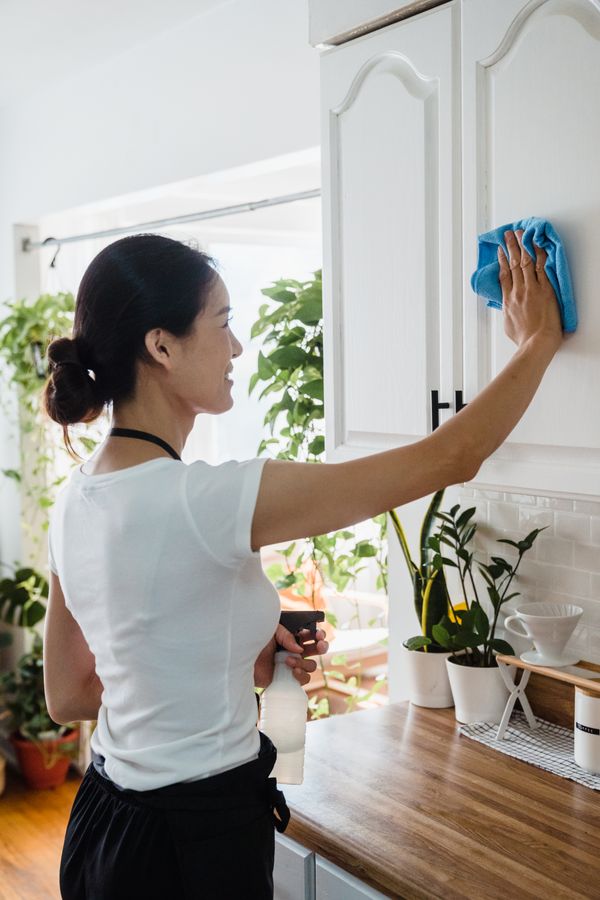
To degrease kitchen cabinets safely, wipe them with a well-wrung cloth dampened in warm water and a few drops of grease-cutting dish soap, working in small sections and rinsing the cloth often. For sticky buildup around handles and the stove, apply a baking soda-and-water paste gently with a soft cloth, then wipe clean and dry. Always test first in a hidden spot, especially on painted or stained wood.
That tacky film on your cabinet fronts isn’t dirt — it’s polymerized cooking grease mixed with dust, and it builds up so gradually you stop noticing it until a visitor opens a cabinet and leaves a fingerprint in the grime. The good news: you don’t need harsh chemicals or a full day. This guide covers the science of kitchen grease, the safest method for every cabinet finish, how to handle heavy buildup, and how to keep cabinets grease-free going forward.
Why Kitchen Cabinets Get Greasy
Every time you heat oil, microscopic droplets aerosolize and drift on kitchen air currents. Your range hood captures some, but the rest settles on the nearest vertical surfaces — overwhelmingly, your cabinet fronts, especially those flanking and above the stove. Over days and weeks, that thin oil layer oxidizes and polymerizes into a sticky, dust-trapping film.
Heat accelerates the process, which is why the cabinets closest to the range always look worst. Frying, searing, and wok cooking produce far more airborne grease than simmering or baking. If you cook with oil most days and only wipe cabinets “when they look dirty,” you’re fighting months of cured grease every time — the core argument for a regular light wipe-down instead.
Know Your Cabinet Finish Before You Start
The wrong cleaner on the wrong finish causes permanent damage. Identify yours first:
| Finish | How to identify | Safe cleaners | Avoid |
|---|---|---|---|
| Painted wood | Opaque color, slight texture, may show brush marks | Dish soap solution, diluted all-purpose spray | Abrasive pads, ammonia, undiluted vinegar on some paints |
| Stained/varnished wood | Visible grain under a clear or tinted coating | Dish soap solution, mineral-spirits-dampened cloth for heavy grease | Excess water, steam, abrasive scrubbers |
| Laminate/thermofoil | Smooth plastic-like surface, often white or wood-look | Dish soap, all-purpose spray, baking soda paste | Abrasive powders, excessive heat, harsh solvents |
| Unfinished wood | Raw matte wood, rare in kitchens | Dry or barely-damp wiping only | Water, soap soaking, steam |
When in doubt, test your cleaner on the inside of a cabinet door or another hidden area, wait a few minutes, and check for dulling, discoloration, or tackiness before proceeding.
The Safe Dish-Soap Method (Start Here)
This handles light to moderate grease on every finish and should be your default:
- Mix the solution: a few drops of grease-cutting dish soap in a bowl or bucket of warm (not hot) water. You’re aiming for lightly sudsy, not a bubble bath.
- Wring the cloth nearly dry: excess water is the enemy, especially on wood. The cloth should feel damp, not dripping.
- Wipe with the grain on wood finishes, using light pressure in overlapping passes. On laminate, small circles are fine.
- Rinse the cloth frequently in clean water, re-wring, and continue. A dirty cloth just redistributes grease.
- Follow with a clean damp cloth (water only) to remove soap residue, which otherwise attracts dust.
- Dry immediately with a fresh microfiber cloth. Standing moisture swells wood and lifts thermofoil edges.
Work one or two cabinet doors at a time, including the frame around each door — grease settles on rails and stiles too, not just the flat panels. Don’t forget the areas you touch: handles, knobs, and the door edges where fingers grip.
Tackling Heavy, Sticky Buildup
When the dish-soap method leaves a tacky residue, escalate in this order — stopping at the mildest step that works:
Level 1: Baking soda paste
Mix baking soda with just enough water to form a spreadable paste. Apply with a soft cloth or your fingers to the sticky areas, rub gently in small circles, then wipe away with a damp cloth and dry. Baking soda is a mild abrasive that cuts through polymerized grease without scratching most finishes. This resolves the majority of neglected-cabinet cases.
Level 2: Dedicated degreaser
For grease that laughs at baking soda, use a kitchen degreaser spray formulated for the job. Spray onto the cloth (not directly onto the cabinet) to control the amount, wipe, and rinse well. kitchen degreaser spray Check Price on Amazon → products based on alkaline surfactants are the workhorses here. Ventilate the kitchen and wear gloves.
Level 3: Mineral spirits (varnished wood only)
On oil-based varnished wood with extreme buildup, a cloth barely dampened with odorless mineral spirits dissolves old grease fast. Use sparingly, ventilate thoroughly, keep away from open flame, and follow with a soap-and-water wipe. Never use this on painted, laminate, or water-based finishes — test first, always.
Problem Areas That Need Extra Attention
- Around handles and knobs: hand oils plus cooking grease create the stickiest spots. Remove hardware if you’re comfortable — cleaning underneath is far easier — or detail around it with an old toothbrush.
- Cabinet tops: the horizontal tops collect grease-laden dust. Lay down newspaper, wipe with dish-soap solution, and consider lining them with washable shelf liner afterward.
- Above the range: the cabinet or microwave directly over the stove takes the heaviest hit. Clean it monthly, not quarterly.
- Crevices and moldings: decorative routing traps grease. A soft toothbrush with dish-soap solution reaches where cloths can’t.
- Hinges: wipe visible hinge surfaces; a drop of food-safe mineral oil on squeaky hinges afterward keeps them smooth.
What NOT to Do
- Don’t soak wood cabinets. Standing water swells joints, raises grain, and can delaminate veneer. Damp-wipe and dry promptly.
- Don’t use abrasive pads (steel wool, harsh scouring pads) on any cabinet finish — they leave permanent micro-scratches that trap future grease faster.
- Don’t steam-clean wood cabinets. The heat-moisture combo is brutal on joints and finishes.
- Don’t use undiluted vinegar on natural stone-adjacent areas and be cautious with it on some painted finishes; it can dull certain paints with repeated use.
- Don’t mix cleaners. Finish one product and rinse before trying another, especially anything containing bleach.
- Don’t ignore the range hood filter. Degreasing cabinets while the filter is saturated is bailing water with a hole in the boat — clean it first so less grease goes airborne.
Keeping Cabinets Grease-Free Going Forward
Prevention beats cure, and it’s mostly about the range hood:
- Run the range hood every time you cook — not just when frying. Turn it on before the pan heats and leave it running 10–15 minutes after you finish to clear residual aerosols.
- Clean the hood filter monthly if you cook with oil regularly. A saturated filter barely filters.
- Wipe cabinet fronts near the stove weekly with a damp microfiber cloth — 90 seconds while something simmers. Fresh grease wipes off; month-old grease needs a project.
- Use lids and splatter screens when searing and frying to cut airborne grease at the source. A stainless steel splatter screen Check Price on Amazon → is cheap insurance.
- Keep cooking temperatures moderate where the recipe allows — oil at its smoke point aerosolizes far more than oil below it.
How Often Should You Degrease Cabinets?
| Cooking intensity | Quick wipe (damp cloth) | Full degrease |
|---|---|---|
| Light (a few meals/week, little frying) | Monthly | Twice a year |
| Moderate (daily cooking, some frying) | Every 1–2 weeks | Quarterly |
| Heavy (daily frying/searing, wok cooking) | Weekly | Every 6–8 weeks |
Natural Degreaser Recipes That Actually Work
If you prefer mixing your own cleaners, these recipes are effective because they match chemistry to the soil — unlike the viral baking soda-plus-vinegar volcano, which neutralizes itself into salty water:
- Everyday cabinet spray: 2 cups warm water + 1 teaspoon grease-cutting dish soap + 1 teaspoon washing soda (sodium carbonate, stronger alkali than baking soda). Spray onto a cloth, wipe, rinse-wipe, dry. The washing soda boosts grease-cutting significantly.
- Heavy-buildup paste: baking soda mixed with just enough dish soap to form a spreadable paste. Apply to sticky areas, wait 10 minutes, scrub gently with a soft cloth, wipe clean.
- Rinse aid: plain water with a splash of white vinegar on a clean cloth removes soap residue and adds shine on laminate — use sparingly on wood.
Label and date homemade mixes, and never store them in unmarked containers. Homemade cleaners lack preservatives, so mix small batches you’ll use within a week or two.
Degreasing Hardware, Hinges, and Crevices
Cabinet hardware collects a concentrated ring of hand oils and cooking grease that’s often the dirtiest part of the whole cabinet. For the thorough version, remove knobs and pulls (keep screws in a labeled bag per door), soak the hardware in hot soapy water for 15 minutes, scrub with an old toothbrush, rinse, and dry completely before reinstalling. You’ll be startled by the color of the soak water.
For hinges, wipe visible surfaces with your dish-soap solution and detail the crevices with a toothbrush — then add a single drop of food-safe mineral oil to each hinge pin and work the door back and forth. This quiets squeaks and prevents the stiffness that makes people slam cabinet doors. Decorative routed moldings get the same toothbrush treatment; the grooves trap grease that cloths glide right over.
Frequently Asked Questions
What is the best homemade degreaser for kitchen cabinets?
Warm water with a few drops of grease-cutting dish soap is the best all-around homemade degreaser — effective on fresh grease and safe for every cabinet finish. For heavier buildup, a baking soda-and-water paste adds gentle abrasion. Skip internet recipes involving straight vinegar on wood; dish soap is both safer and more effective against grease.
How do you remove sticky residue from kitchen cabinets?
Apply a baking soda paste to the sticky area, rub gently with a soft cloth in small circles, then wipe clean with a damp cloth and dry immediately. For residue that resists paste, step up to a commercial kitchen degreaser applied to the cloth, not sprayed directly on the cabinet. Patience and dwell time beat aggressive scrubbing.
Can I use vinegar to degrease kitchen cabinets?
Vinegar is mediocre at cutting grease compared to dish soap, and it can dull some painted finishes with repeated use. It’s fine as a secondary rinse on laminate or for mineral deposits, but dish soap should be your primary degreaser. Never use vinegar on natural stone, and always dilute it.
Will degreasing damage painted cabinets?
Not if you use mild cleaners and minimal water. Painted cabinets tolerate dish-soap solution and baking soda paste well. Damage comes from abrasive pads, harsh solvents, excessive water left standing, and aggressive scrubbing at edges where paint is thinnest. Always test in a hidden spot first.
How do I clean grease off the top of kitchen cabinets?
Lay newspaper or old towels below to catch falling debris, then wipe with a cloth dampened in warm dish-soap solution — the grease-dust layer up there is usually thick. For heavy accumulation, a plastic scraper lifts the worst before wiping. Consider washable shelf liner on cabinet tops afterward to make next time a 30-second job.
Why do my cabinets feel sticky after cleaning?
Stickiness after cleaning usually means soap residue was left behind — it attracts dust and feels tacky. Fix it by wiping again with a clean cloth dampened in plain water, then drying thoroughly. Using too much dish soap in your solution is the usual cause; a few drops per bowl of water is plenty.
Should I remove cabinet hardware before degreasing?
If you’re doing a thorough deep clean, yes — removing knobs and handles lets you clean the grimiest area (underneath the hardware) properly and avoids cleaner seeping behind the plates. Keep screws in a labeled bag per door. For routine wipe-downs, just detail around the hardware with a toothbrush.
Does a range hood really reduce cabinet grease?
Yes, significantly — a properly sized hood vented to the outside captures a large share of airborne grease before it settles. But only if you actually use it: turn it on before cooking starts, use the appropriate fan speed, and clean or replace the filter regularly. A neglected filter makes even a good hood nearly useless.
